




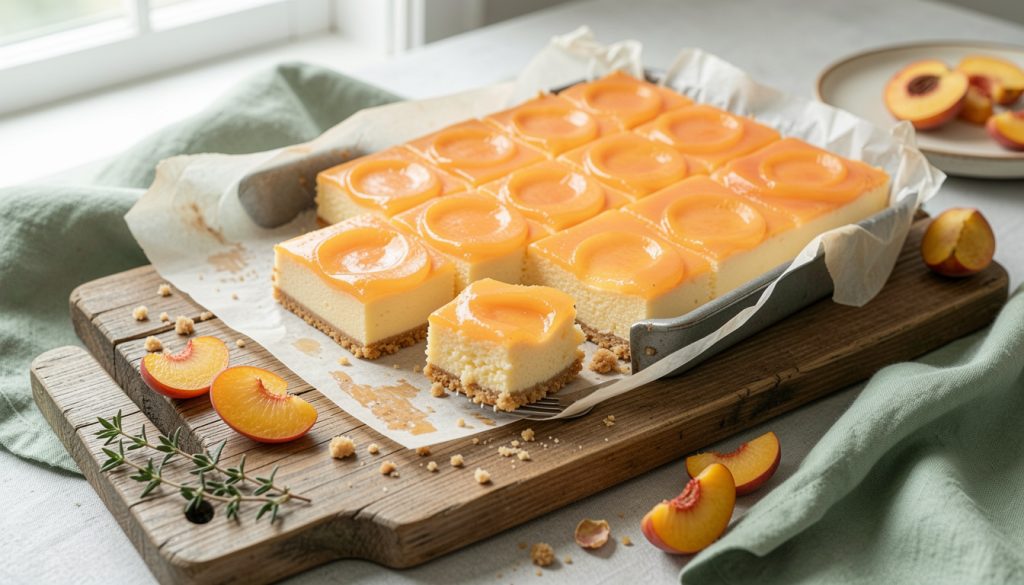

My first attempt at how to make peach cheesecake bars ended in a soggy crust and a cheesecake that cracked like a dried pond.
I learned the hard way that temperature, chilling, and a glossy peach finish are the difference between homey and bakery-clean slices.
You’ll learn a reliable crust, a silky no-fuss cheesecake filling, a glossy peach layer that sets, and the slicing and chilling tricks pros use. Total active time about 45 min, bake + chill 6 hr to overnight, beginner friendly with one technical step.
Peach cheesecake bars sit squarely in summer baking. The peaches add bright, juicy sweetness to classic East Coast cheesecake richness. Expect creamy, slightly tangy filling with a fresh peach top that keeps slices clean.
Peaches peak mid-June to August according to USDA reports, so use fresh fruit when you can for best texture and color. I lean on a little cornstarch or unflavored gelatin to keep the peach layer glossy and sliceable.
1. The Firm Crust That Holds Up
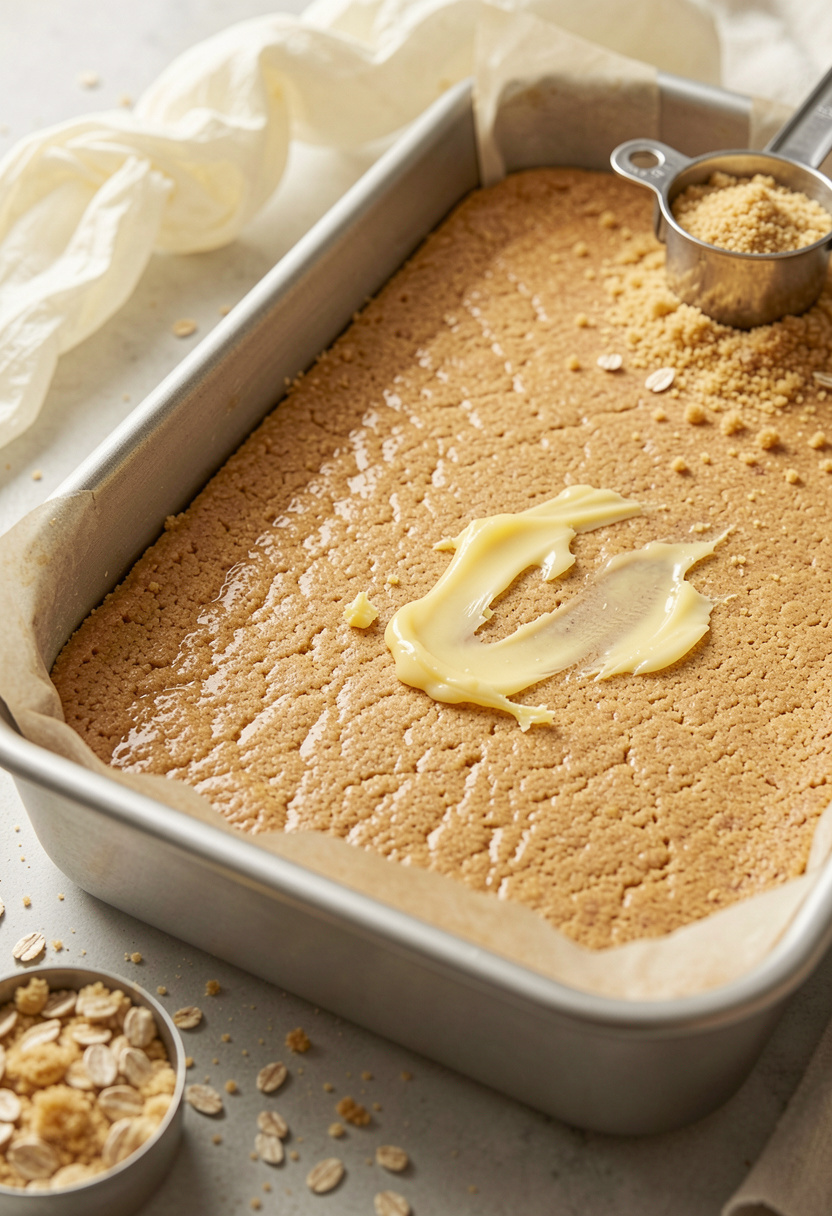

Pressing a dense crust first gives you bakery slices that do not crumble when cut.
Use 2 cups finely crushed graham crackers, 6 tbsp melted unsalted butter, and 2 tbsp sugar, pressed until compact in a lined 9×13 pan. I use a flat-bottom measuring cup to compact the crumbs for even density.
The principle is simple: compacted crumb plus some bake time firms the base via butter solidifying and sugar caramelizing. Bake at 350°F for 10 min until edges are golden.
Common mistake: under-pressing so crumbs separate. Do this instead: press firmly and chill 15 min before filling. Tools I reach for are a Cuisinart food processor for fine crumbs and a Nordic Ware 9×13 baking pan with parchment sling.
2. The Silky Cheesecake Filling Without Air Pockets
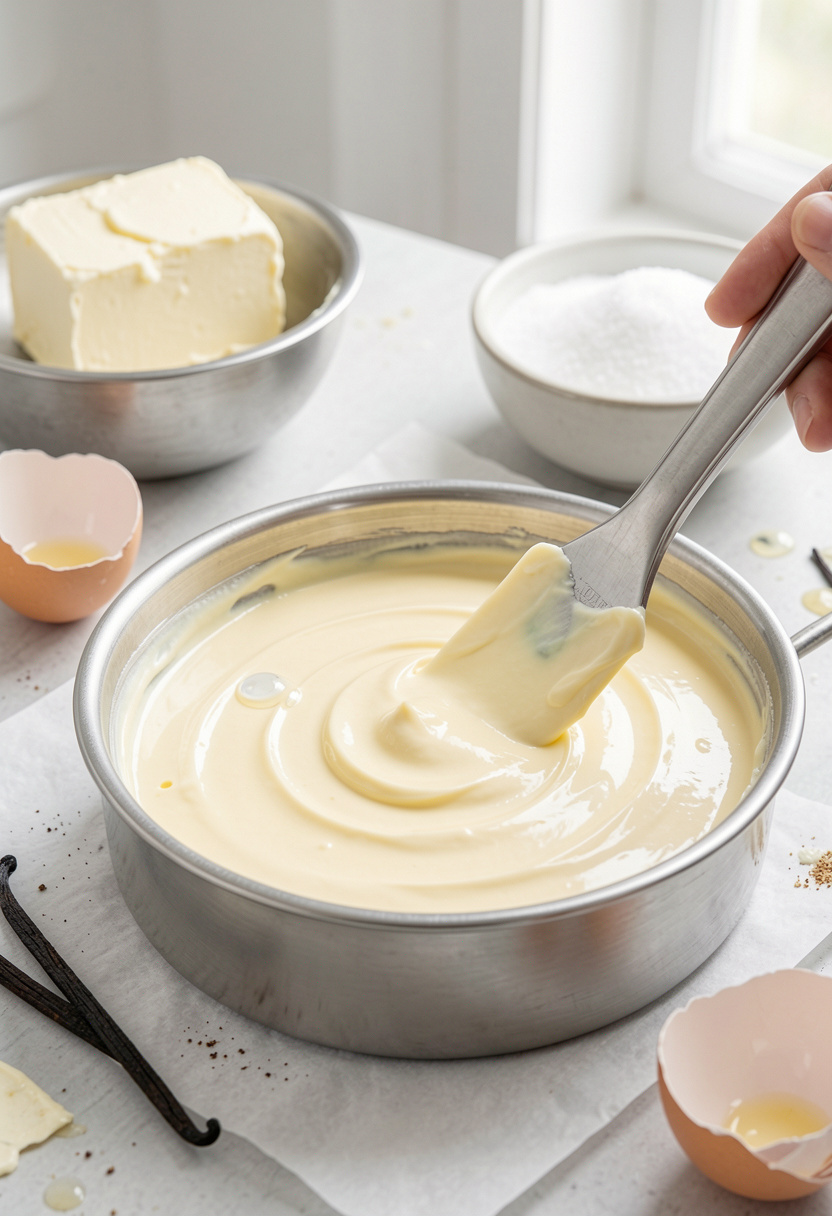

Room-temperature cream cheese makes a silky batter with minimal air.
Beat 24 oz cream cheese (three 8 oz blocks) with 1 cup sugar until smooth, add 2 large eggs one at a time, 1/2 cup sour cream, 1 tsp vanilla, and 1 tbsp lemon juice. Low and slow mixing prevents excess air. Scrape the bowl frequently.
The principle: overdrawing air causes cracks and tunnels. For creamy texture, stop mixing when the batter is smooth and homogenous. Bake at 325°F for 30 to 35 min until the center jiggles but does not flow. Internal temp around 150°F yields set but tender filling.
Mistake: high-speed whipping for a light cake. That creates bubbles. Use a KitchenAid tilt-head mixer or a sturdy metal spatula to finish by hand.
3. The Peach Layer That Glazes and Slices Clean
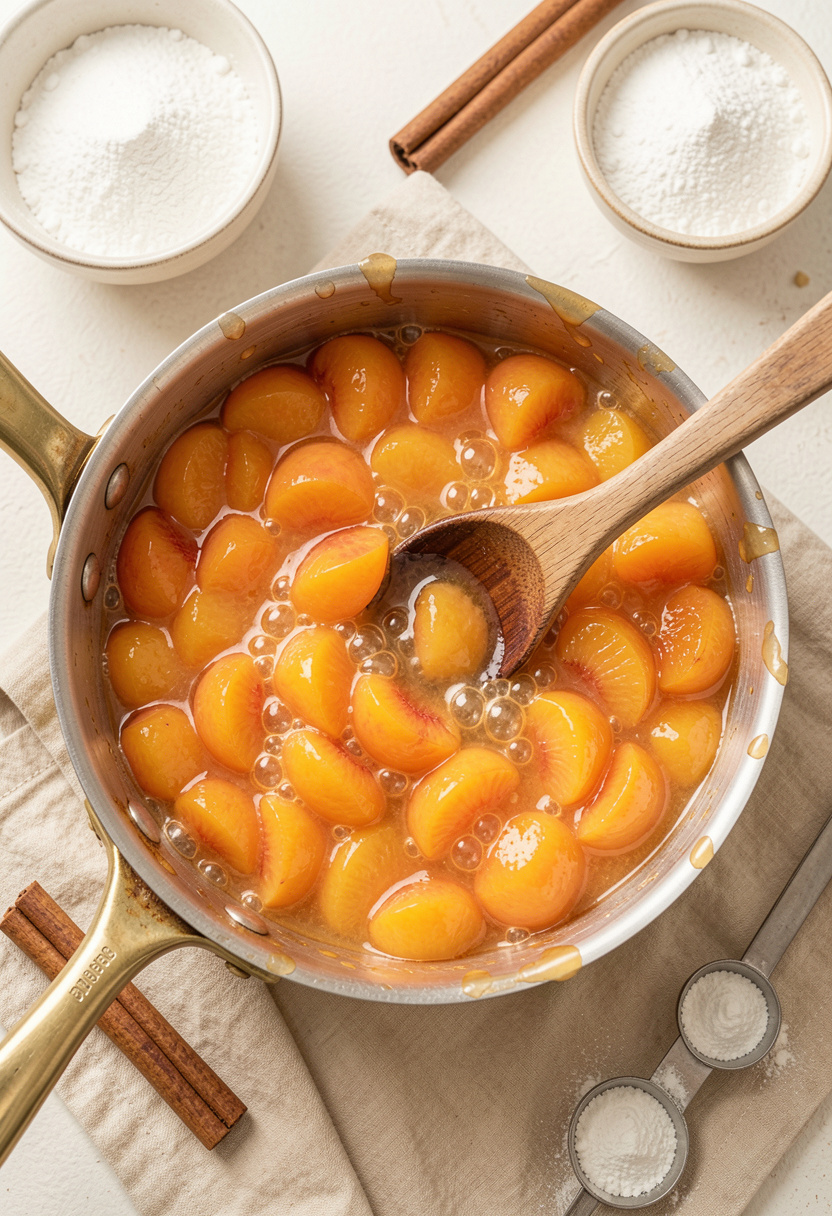

A glossy peach topping needs balance between syrup and body.
Slice 3 cups fresh peaches, toss with 2 tbsp sugar and 1 tsp lemon juice. Simmer with 1 tbsp water for 3 to 5 min, then stir a slurry of 1 tsp cornstarch with 1 tbsp water into the pan until it thickens. For extra hold, stir in 1/2 tsp Knox unflavored gelatin dissolved in 1 tbsp water.
The cooking principle is controlled starch gelatinization and a touch of gelatin to set without cloudiness. Cool slightly before spreading over warm-but-not-hot cheesecake so it sinks a bit into the top and adheres.
People overblend the peaches into puree which loses fruit texture. Do this instead: keep some peach chunks for bite and color. I use Argo corn starch and Knox gelatin when I need extra stability.
4. The Chill, Cut, and Slice Like a Bakery
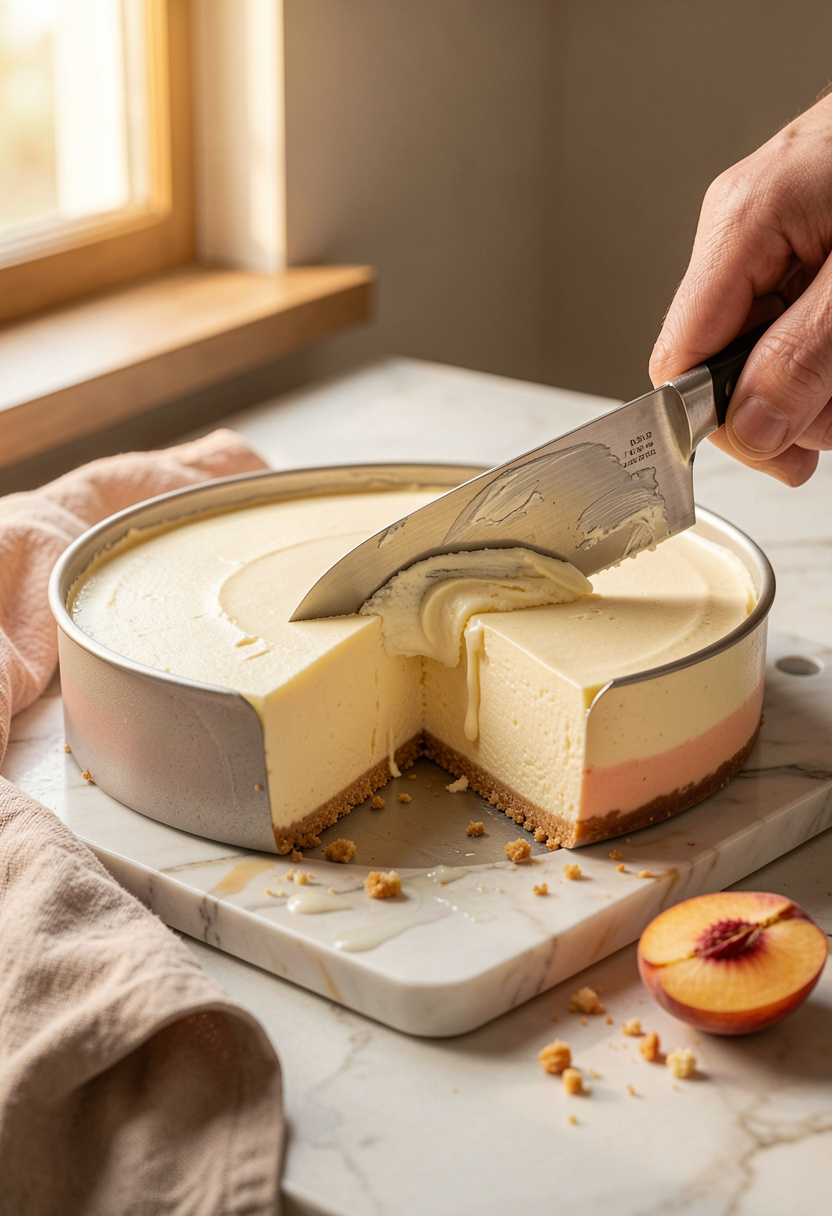

Chilling is the slow finish that gives bakery edges.
Cool bars to room temp, then chill uncovered 2 hr and tightly covered overnight. For the cleanest slices, freeze 30 min before cutting. Use a sharp 8 inch chef knife warmed under hot water, wiped dry between cuts.
Principle: chilling firms the butter and gelatin, preventing ooze. The hot knife melts cleanly through fat and filling for smooth edges. Slice with a steady single stroke.
Mistake: cutting hot or only after brief cooling. Result is squishy edges. Use a Wusthof chef knife 8 inch and a microfiber towel to wipe between cuts.
Common Cooking Mistakes to Avoid
Mistake: Using overripe peaches only
Why it doesn't work: They can be mealy and too juicy, diluting set.
Do this instead: Use firm-ripe peaches or a mix of firm and ripe. A [local farmers market] (https://www.amazon.com/s?k=farmers+market+guide&tag=bitearchive-100) visit in July to August helps.
Mistake: Skipping the chill step
Why it doesn't work: Filling will be too soft and slices will smear.
Do this instead: Refrigerate overnight and optionally freeze 30 min before slicing. Use a 9×13 pan with parchment sling.
Mistake: Overbeating the cream cheese
Why it doesn't work: Incorporates air and leads to cracks.
Do this instead: Mix low and scrape often. A KitchenAid bowl scraper helps.
What You'll Need to Make This
Pantry Staples
Diamond Crystal kosher salt 3 lb box around $5 to $8
Argo corn starch 16 oz around $3 to $6
Granulated sugar 4 lb bag around $2 to $6
Specialty Ingredients
Philadelphia cream cheese 8 oz block (pack of 3) approx $9 to $15
Knox unflavored gelatin 3 oz box around $4 to $7
Tools That Earn Their Counter Space
Cuisinart food processor approx $70 to $150
Nordic Ware 9×13 baking pan approx $20 to $35
Wusthof chef knife 8 inch approx $80 to $150
Cookbooks Worth the Shelf
Salt Fat Acid Heat by Samin Nosrat (price range $18 to $28)
Budget Swaps
Generic graham crackers 14 oz box cheaper than premium brands; Aldi often has a good substitute.
Shopping Guide for This Recipe
Pick firm-ripe peaches: Best July to August; fresh peaches vary by region.
Substitution hack: No fresh peaches? Use 2 cups quality canned peach slices, drained and patted dry, canned peaches around $3 to $6.
2025 trend tip: Stone fruit preserves are trending as finishing glazes; look for artisanal jars at $6 to $12, peach preserves.
Splurge vs save: Splurge on quality cream cheese; save on graham crackers. Philadelphia cream cheese is where I invest.
Conclusion
Start with a firm, well-baked crust and the rest becomes easier. The finishing trick is a short freeze and a hot, wiped knife for bakery-clean slices.
If you try one change, slow the mixer and chill longer. Which will you test first: the gelatin-stabilized glaze or the 30 min freeze before slicing?