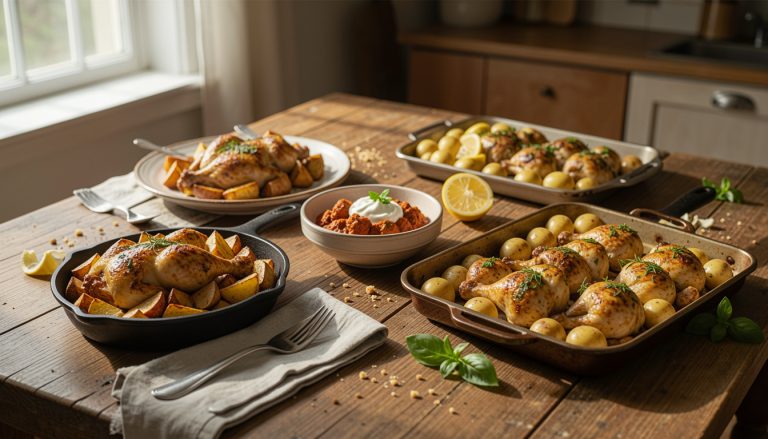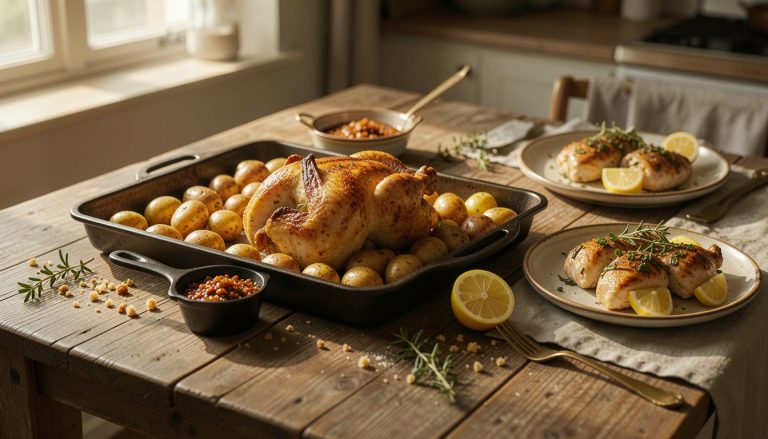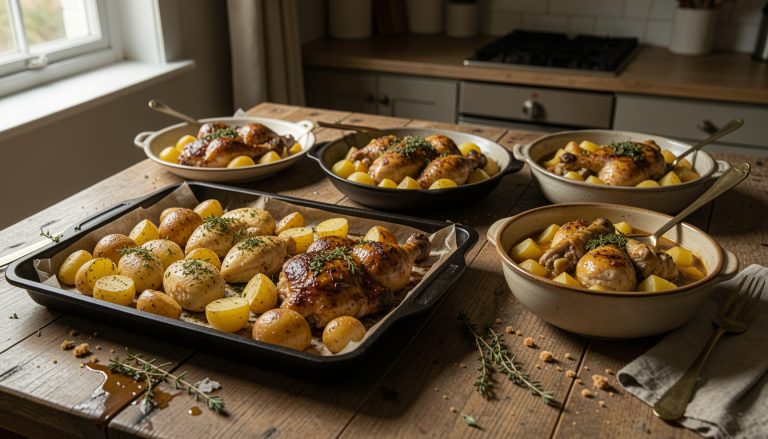


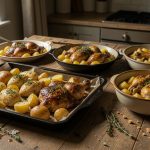


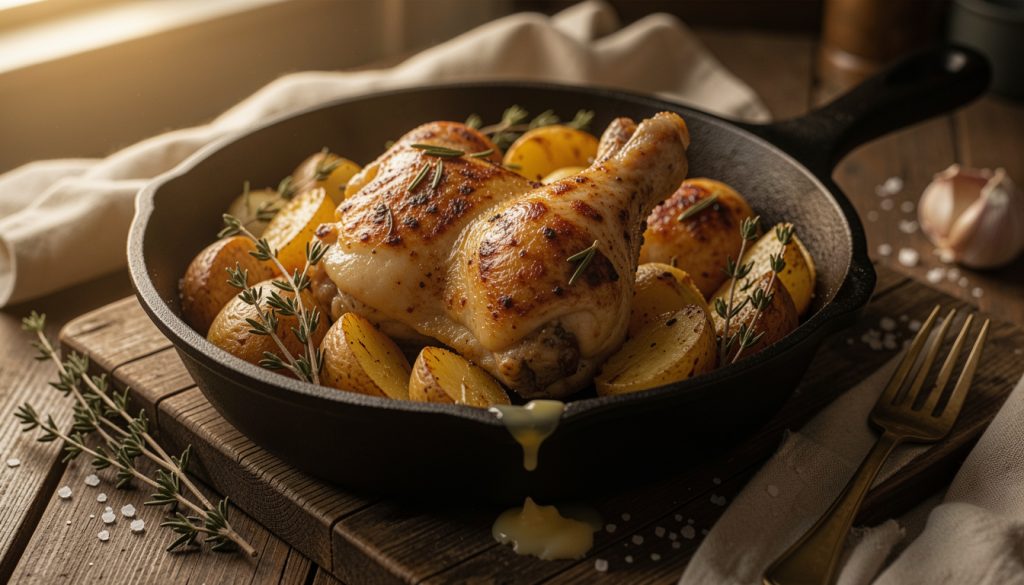

My kitchen smelled like Sunday dinner when I first got the edges right: crackly chicken skin, potatoes that browned until their edges went crisp and nutty. If you want to learn how to bake chicken and potatoes so the edges get golden, this method gives you skin that snaps and spuds with charred edges in about 45 to 60 min.
It is weeknight-friendly and beginner-safe. You will learn salt timing, a hot-sear trick, oven temperature choices, and the finishing move that keeps the juices inside.
This leans toward rustic Mediterranean flavors: lemon, thyme, smoked paprika, and browned butter notes. Plan for roughly 15 min prep, 30 to 40 min active cooking, and one tricky step: the initial sear.
I’ve noticed cooks leaning into dry brines and one-pan dinners as a 2025 habit. Try the dry-brine first if you want the biggest payoff from a small change.
1. The Pre-Sear Setup: Dry Brine and Temper
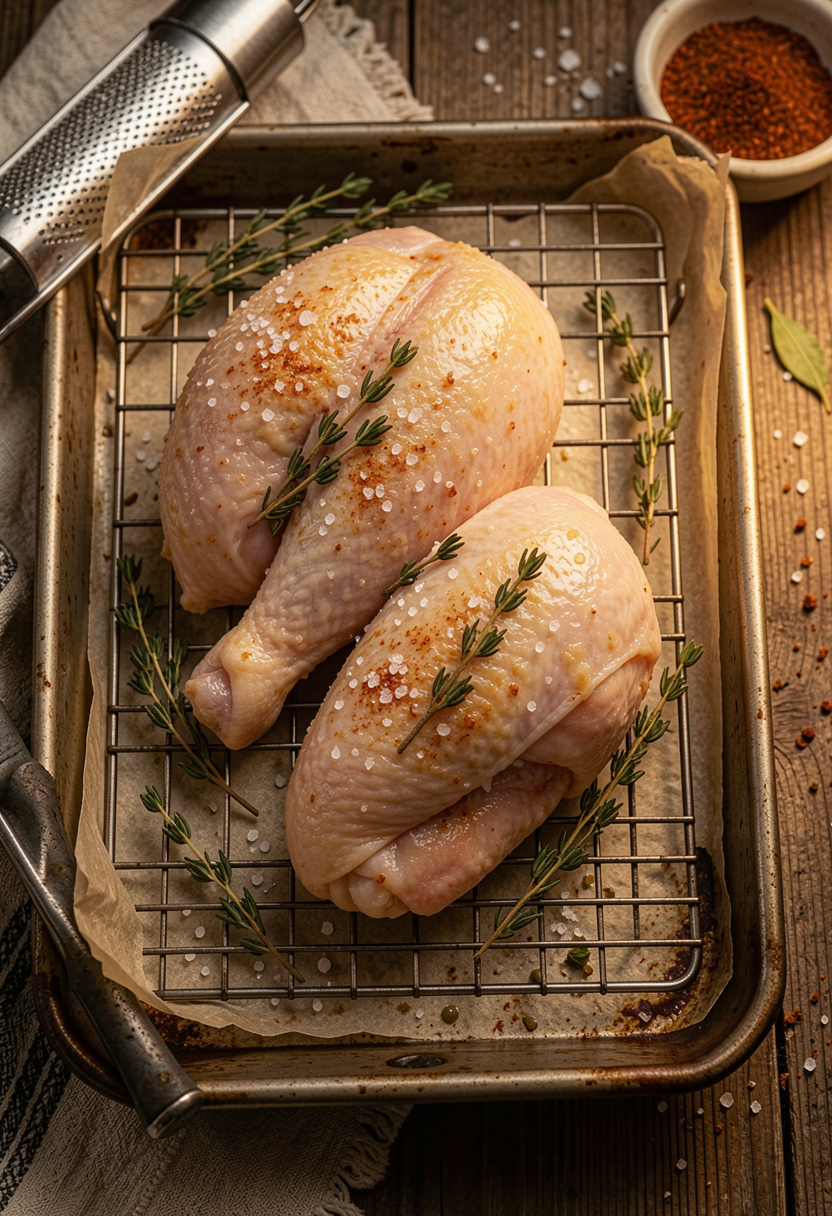

Salt early. Pat chicken dry, then sprinkle kosher salt and refrigerate uncovered on a wire cooling rack over a half sheet pan for 1 to 12 hr. I favor Diamond Crystal kosher salt for ease of dosing because the flakes are forgiving.
Why this order? Dry brining pulls moisture out, then it reabsorbs carrying salt deeper, which helps the skin brown and the meat stay juicy. The Maillard reaction kicks in when skin surface is dry and hot.
If you skip the fridge wait, the skin stays damp and steams instead of sears. Mistake people make: rubbing oil on wet skin. Do the opposite. Light oil right before searing.
Tools that earn their keep here: a trusty instant-read thermometer and a microplane fine grater for lemon zest. Expect better browning and a more focused salt flavor.
2. The Sear in Smoking-Hot Cast Iron
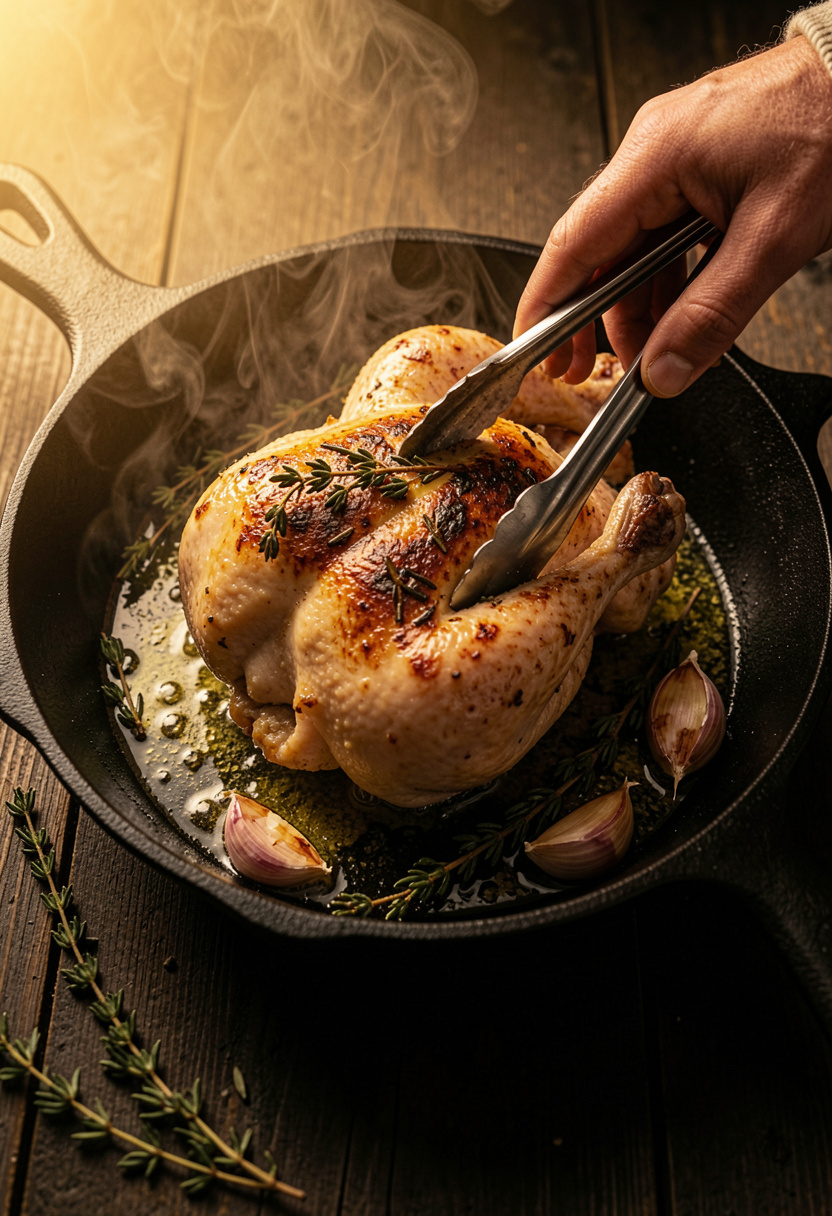

Get the skillet ripping hot. Heat a Lodge cast iron skillet 12 inch over medium-high until a drop of water dances. Add a thin film of Colavita extra virgin olive oil 16.9 oz and lay the thighs skin-side down. Press gently for full contact.
Sear 4 to 6 min until skin is deeply golden and you can smell a toasty aroma. The Maillard reaction is happening; that crust equals flavor.
Common flub: overcrowding the pan. That cools the surface and you steam. Cook in batches or use two pans. For flip cues, look for a dark, even crust and loosened edges.
Finish sear with smashed garlic cloves and a few thyme sprigs for aromatics. Then transfer to the oven for finishing.
3. The Oven Finish: Roast to Perfect Doneness
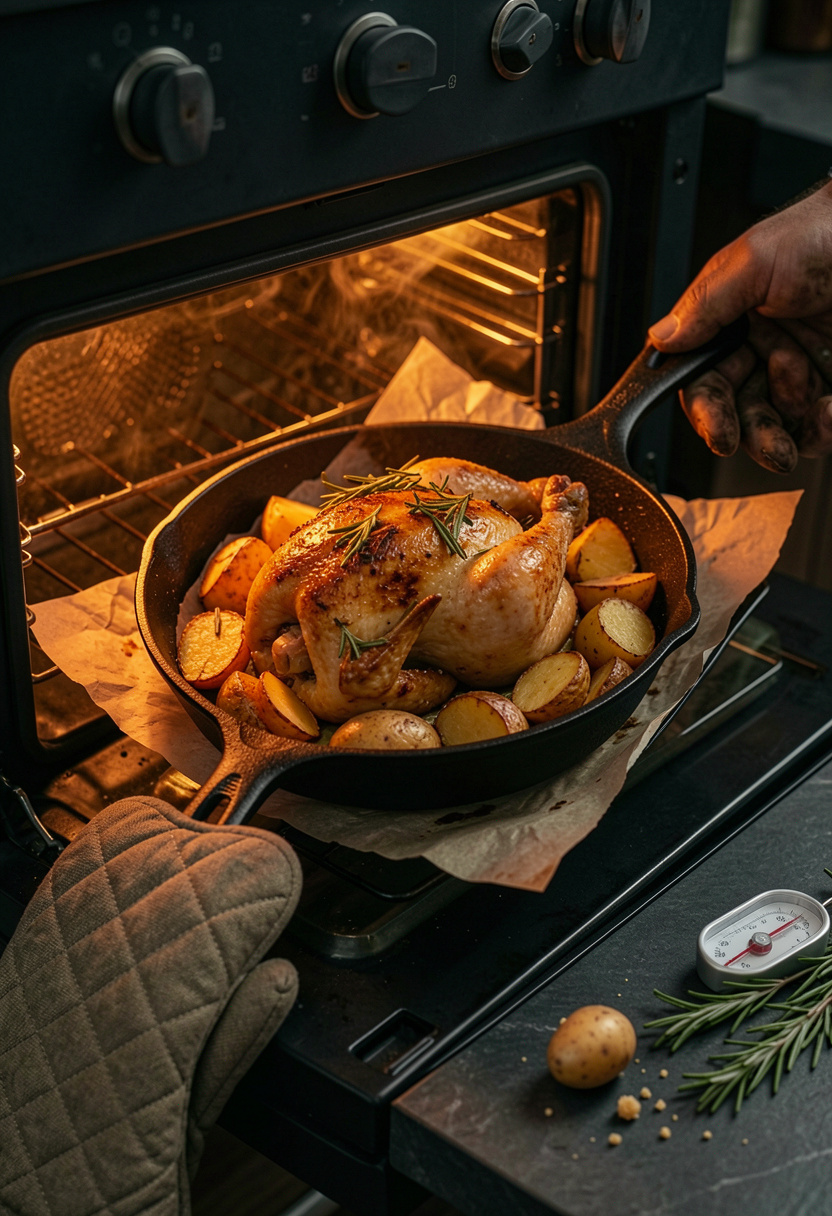

Preheat oven to 425°F. Toss halved Yukon Golds with olive oil, smoked paprika, and kosher salt, and nestle them around the thighs in the skillet. Roast 20 to 25 min until potatoes are fork-tender and edges are dark golden, and chicken reaches 165°F internal for breasts or 175°F for thighs.
Why 425°F? It’s high enough to drive surface caramelization on the potatoes and finish the chicken without drying it.
Mistake: using cold potatoes straight from the fridge. Bring them closer to room temp for even browning. A roasting rack under larger batches helps airflow and crisp edges.
4. The Butter Baste and Acid Finish That Clips the Fat
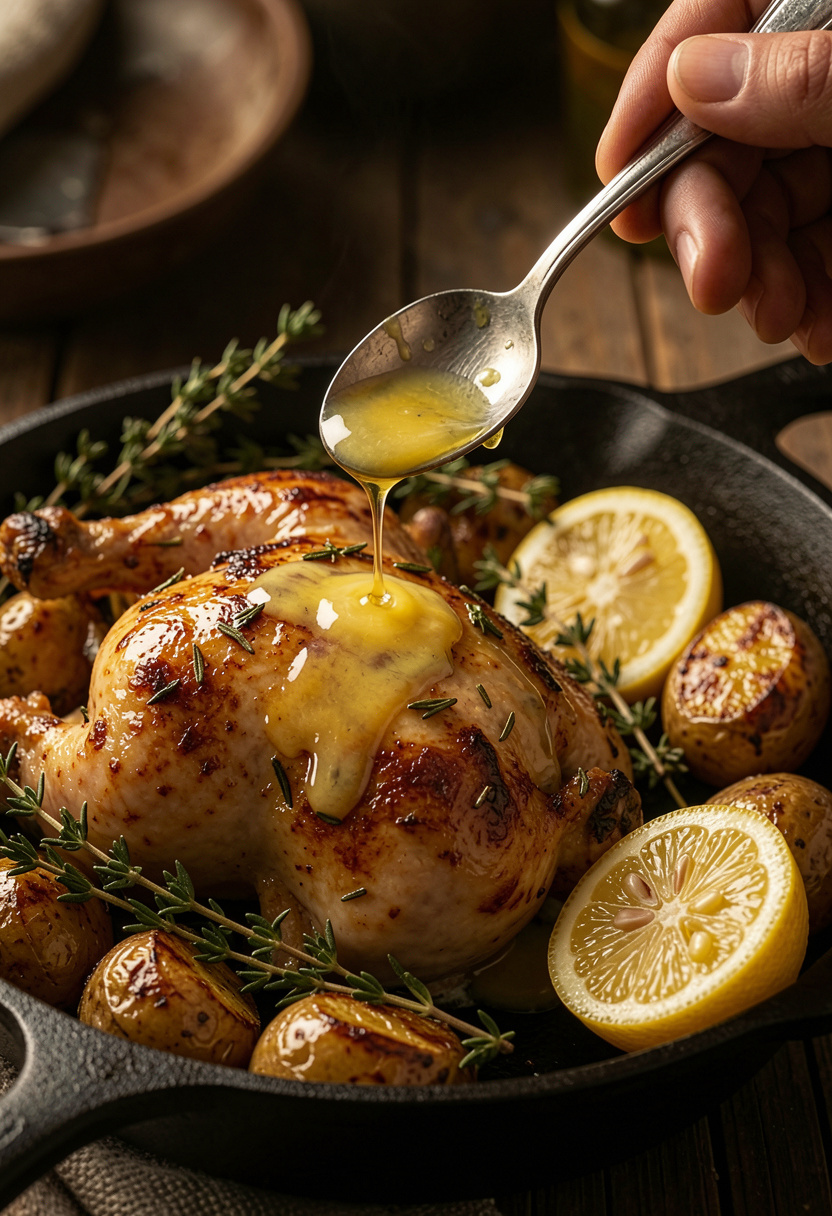

This is the small move that makes the edges taste bright. Melt 2 tbsp unsalted butter in pan or separately, add a squeeze of lemon and spoon over thighs and potatoes for 1 min.
The butter adds nutty toasty notes. The lemon cuts richness and wakes the crust. Use Kerrygold unsalted butter 8 oz if you like grassier flavor.
If you skip acid, the dish can taste flat. Too much acid flattens the crust. Aim for a single light squeeze plus a few flakes of Maldon sea salt flakes to finish.
Rest 5 to 10 min before serving so juices redistribute. That short wait keeps interior moist and lets the crispy edges stay crisp.
Common Cooking Mistakes to Avoid
Mistake: Crowding the pan when searing chicken thighs
Why it doesn't work: Pan temperature drops and meat steams instead of browns.
Do this instead: Cook in batches or use two Lodge cast iron skillets.
Mistake: Salting at the last minute
Why it doesn't work: Surface stays wet and resists browning.
Do this instead: Dry-brine on a wire cooling rack for 1 to 12 hr.
Mistake: Relying on color alone for doneness
Why it doesn't work: Skin can be brown while interior is undercooked.
Do this instead: Use an instant-read thermometer.
What You'll Need to Make This
Pantry Staples
Diamond Crystal kosher salt 3 lb box around $5 to $8
Colavita extra virgin olive oil 16.9 oz around $8 to $15
Smoked paprika jar around $6 to $12
Specialty Ingredients
Lao Gan Ma chili crisp 7.4 oz around $8 to $14
Maldon sea salt flakes around $8 to $14
Tools That Earn Their Counter Space
Lodge cast iron skillet 12 inch approx $25 to $40
Instant-read thermometer approx $50 to $120
Half sheet pan rimmed baking sheet around $10 to $25
Cookbooks Worth the Shelf
Salt Fat Acid Heat (price range $18 to $28)
The Food Lab (price range $20 to $30)
Budget Swaps
Stainless steel tongs for $8 to $18 is fine instead of premium grill tongs.
Shopping Guide for This Recipe
Pick the right potatoes: Yukon Golds roast predictably; look for firm, smooth skins. Yukon Gold potatoes price varies by season.
Salt choice matters: Diamond Crystal for technique, Morton if that is your store. Diamond Crystal kosher salt around $5 to $8. Aldi often has a near-identical for half the price.
Out of thyme: Use dried thyme but double the amount. Fresh thyme plant if you want constant supply.
2025 trend tip: Try brown-butter lemon finish and a spoon of Lao Gan Ma chili crisp for spicy-bright edges. Around $8 to $14.
Conclusion
Start with the dry brine. It is the smallest action that yields the crispiest skin and the most flavorful edges on potatoes.
Keep a thermometer and a hot skillet nearby; those two items change results more than a fanciful hack.
Will you try the dry-brine first or jump straight to the browned-butter finish?