



My first attempt at how to make biryani at home ended with gluey rice and a very disappointed dinner guest.
I learned the hard way that fluffy rice is not accidental. It is engineered.
You’ll learn how to wash, par-cook, layer, and finish biryani so the rice stays separate and pillowy. Expect about 45 min active time, one gentle dum phase, and a modest learning curve that pays off every time.
Biryani is layered, aromatic South Asian cooking built on long-grain basmati, browned onions, whole spices, saffron, and clarified butter.
This method is weeknight-friendly if you prep the masala ahead. I notice more home cooks now par-cook rice like pasta for foolproof texture.
1. The Rice Par-Cook: Wash, Soak, and Parboil for Fluff
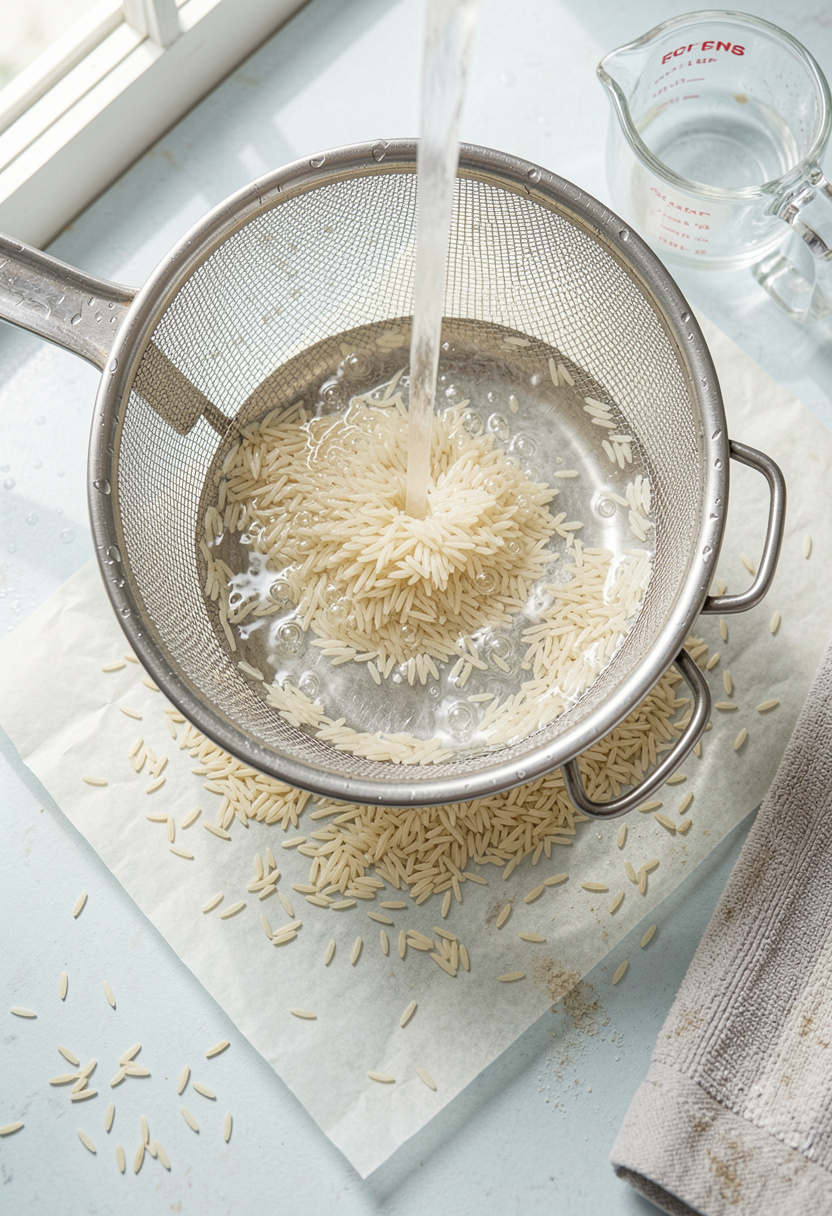

The trick to fluffy biryani rice is removing surface starch and stopping the cook while the grains still have bite. Start by rinsing basmati until the water runs near-clear. That removes starch that makes rice cling.
Soak the rinsed rice 30 min (1 cup rice to 1.25 cups cold water soak volume). Then bring a large pot of water to a rolling boil with 1 tsp kosher salt per cup rice and a splash of oil or ghee to help separate grains. Use plenty of water like pasta so grains move freely.
Boil the rice 5 to 7 min until about 70 percent done. You want the center slightly opaque when you bite it. Drain in a fine mesh strainer 8 inch and spread briefly on a tray.
Why this works: soaking lets grains hydrate evenly; the pasta-method poach prevents clumping. A common mistake is overcooking to finish; that produces mash. Do this instead: hold back par-cook time and finish with steam so each grain stays separate.
2. The Browned-Onion Masala: Build a Deep Flavor Base
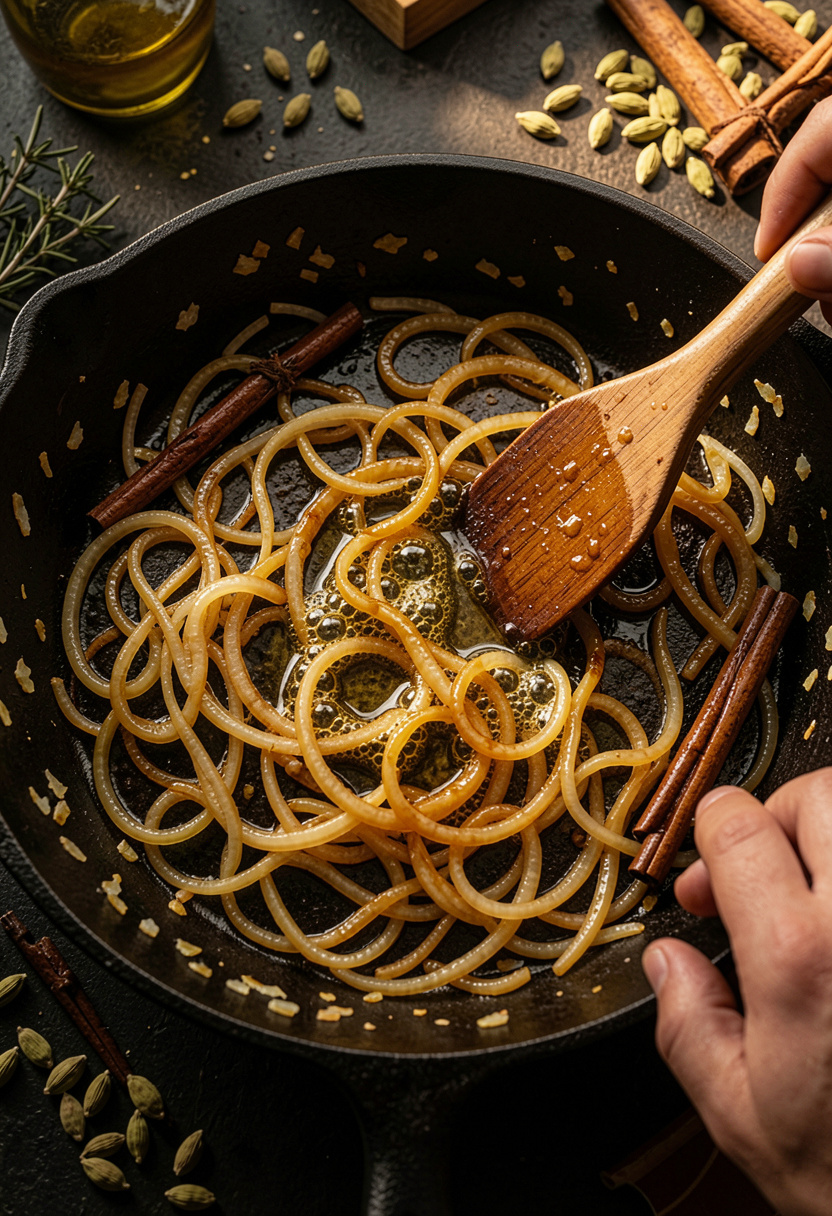

Caramelized onions are nonnegotiable. Cook 2 large thinly sliced onions in 3 tbsp ghee over medium-low for 25 to 30 min until deeply golden and crisp at the edges. Patience here gives the sweet, savory backbone for the biryani.
While the onions caramelize, bloom whole spices in hot ghee: 4 green cardamom pods, 1 cinnamon stick, 4 cloves, 1 bay leaf for 1 to 2 min until fragrant. Add 2 tbsp ginger-garlic paste, 2 chopped green chiles, 1 tsp Kashmiri chili for color, and 1 cup thick Greek yogurt 32 oz for tang and tenderizing acid. Cook the masala 6 to 8 min until oil separates.
The cooking principle is Maillard browning and fat-soluble flavor extraction. Harold McGee notes Maillard reactions start around 285°F which is why low slow caramelization tastes layered. A common error is rushing the onions at high heat; you get bitter edges. Fix: lower the heat and stir often.
3. The Layering And Dum: Seal In Steam For Tender Protein And Puffy Rice
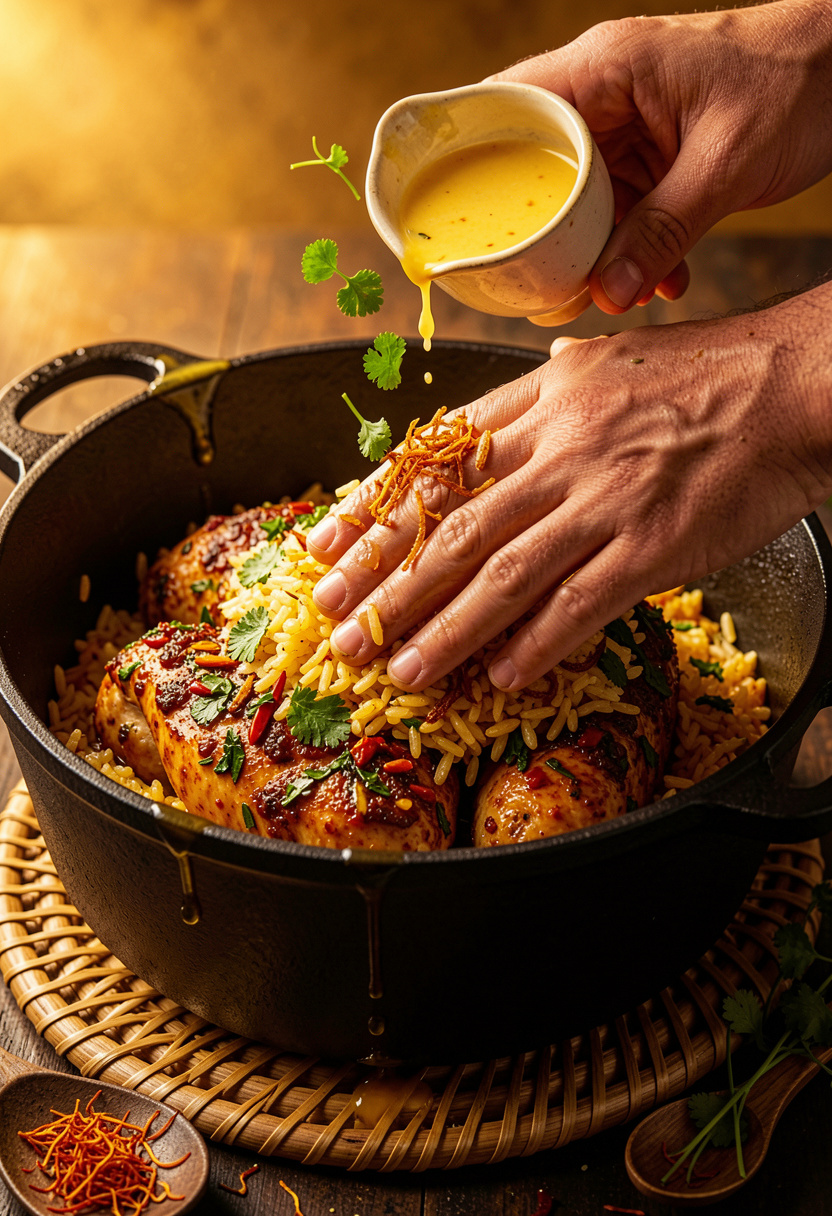

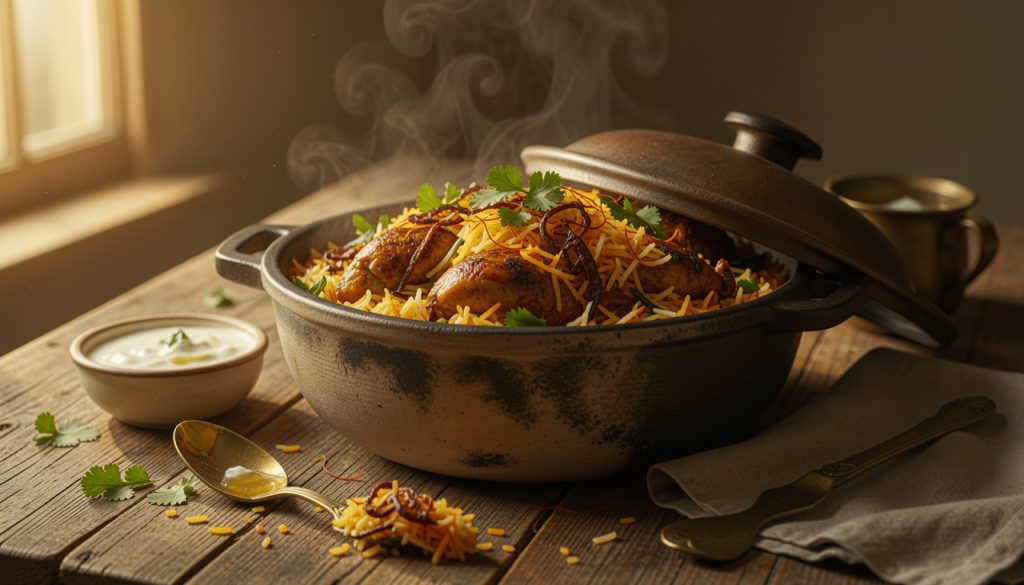
Layering is where texture and aroma meet. Put half the par-cooked rice over the cooked masala, then the remaining rice. Between layers add browned onions, a few tablespoons of hot ghee jar 8 oz, a splash of warm milk infused with a generous pinch of saffron threads 1 gram, and a tablespoon of rose or kewra water if you like.
Seal the pot with a tight lid or weigh the lid with foil and an oven-safe tray. Cook on the stovetop over the lowest flame for 20 to 25 min using a stovetop heat diffuser plate or finish in a 325°F oven for 20 min. The goal is gentle steam finishing or dum that sets the rice without overcooking.
Principle: trapped steam finishes the center of grains and melds flavors without breaking the rice. A common mistake is using too-high heat which scorches the bottom and dries layers. Use slow, even heat and the dum will reward you with separate, tender grains and glossy rice.
4. The Rest And Fluff: Resting, Seasoning, And The Final Toss
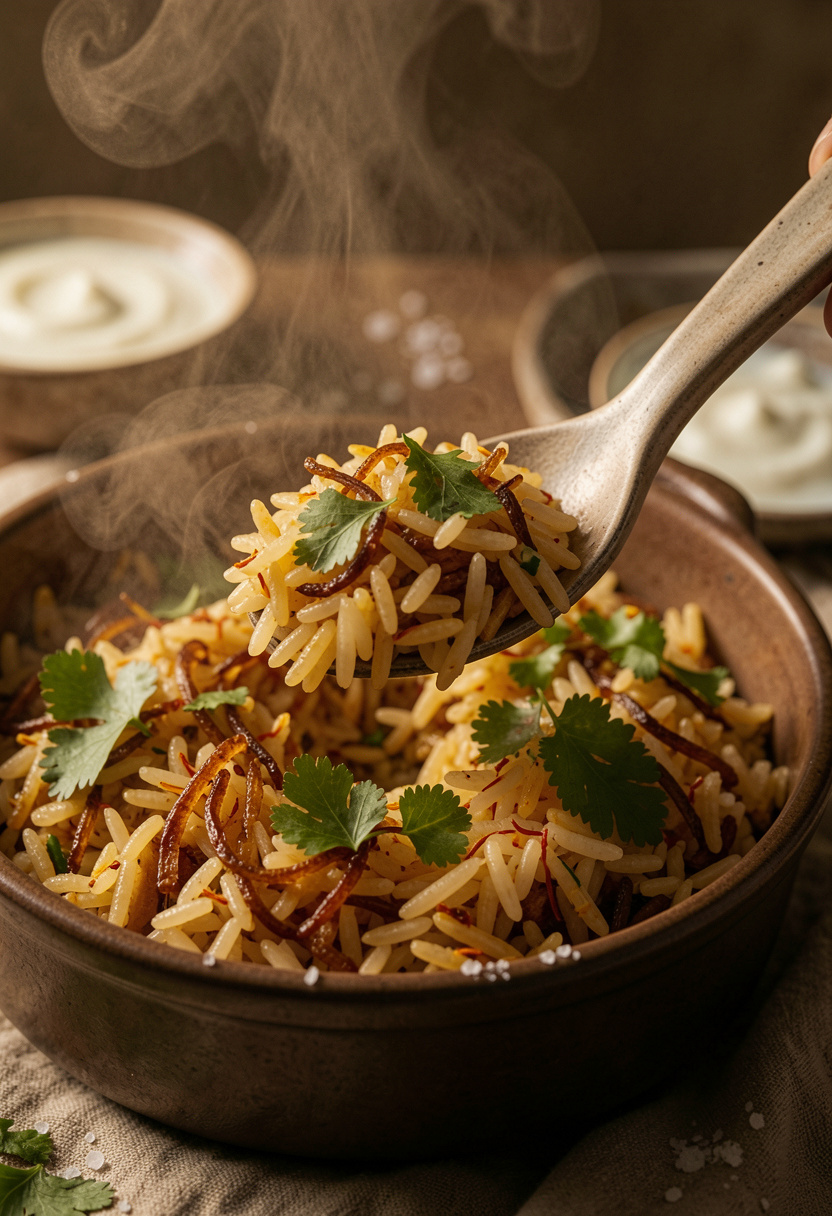

Do not lift the lid immediately. Let the pot rest 10 to 15 min off heat after dum so steam redistributes and the bottom layer relaxes. This keeps moisture even and prevents sticky clumps.
After resting, use a wide fork or flat spatula to gently lift and fold the rice from the edges to avoid crushing grains. Finish with crunchy Maldon sea salt flakes 4.5 oz and a squeeze of lemon to brighten the fat. Scatter reserved fried onions and chopped cilantro.
Cooking principle: resting allows gelatinized starch to set and redistribute moisture. The biggest mistake is vigorous stirring which breaks grains and makes a porridge. Do this instead: gentle lifting and small, slow folds for glossy, separate rice.
Common Cooking Mistakes to Avoid
Mistake: Rinsing rice too quickly or not at all
Why it doesn't work: Excess surface starch causes clumping and gummy texture.
Do this instead: Rinse until water runs near-clear with a fine mesh strainer 8 inch.
Mistake: Overcooking rice in the initial boil
Why it doesn't work: You finish with mush once dum completes.
Do this instead: Stop at 70 percent doneness, drain, then steam in the sealed pot. Use an instant-read thermometer to check meat temperatures if adding protein.
Mistake: Skimping on browned onions
Why it doesn't work: You lose the sweet, caramel backbone that balances spice.
Do this instead: Cook onions low and slow in ghee jar 8 oz for 25 to 30 min until deep caramel.
What You'll Need to Make This
Pantry Staples
Tilda Basmati White Rice 5 lb around $12 to $25
Diamond Crystal kosher salt 3 lb box around $5 to $8
Specialty Ingredients
Saffron Threads 1 gram approx $8 to $20
Kashmiri Chili Powder 200g around $6 to $12
Tools That Earn Their Counter Space
Lodge Dutch Oven 5 qt approx $60 to $110
Fine mesh strainer 8 inch around $8 to $20
Instant-Read Thermometer approx $10 to $30
Cookbooks Worth the Shelf
Salt Fat Acid Heat by Samin Nosrat (price range $18 to $28)
The Food Lab by J. Kenji Lopez-Alt (price range $18 to $30)
Budget Swaps
Daawat Rozana Basmati Rice 5 lb for a cheaper basmati option around $10 to $18
[Aldi or Trader Joe's ghee jar] often cheaper than name brands for $6 to $12
Shopping Guide for This Recipe
Pick the right rice: Buy aged, long-grain basmati for elongation and less breakage. Tilda Basmati White Rice 5 lb around $12 to $25.
Substitution hack: Out of yogurt? Use 2 tbsp lemon juice plus 3 tbsp milk per 1/2 cup yogurt. Fage Total Greek Yogurt 32 oz $5 to $8.
Spice sourcing: Whole green cardamom and cinnamon add aroma; buy a small whole spices set for freshness, around $8 to $18.
2025 trend tip: Home cooks are using small-batch ghee for flavor layering. Try an artisanal ghee jar 8 oz for $6 to $15.
Splurge vs save: Splurge on saffron 1 gram for authentic perfume; save on fried onion crunch by making your own with store-brand onions.
Conclusion
Start with the rice phase; get the rinse, soak, and par-cook right and the rest falls into place. The final finisher—lemon squeeze, flaky salt, and reserved fried onions—pulls the whole dish together.
If you try one tool first, buy a reliable Lodge Dutch Oven 5 qt for even heat and predictable dum results.
Will you try the dry-soak par-cook first or jump straight to making the masala?