


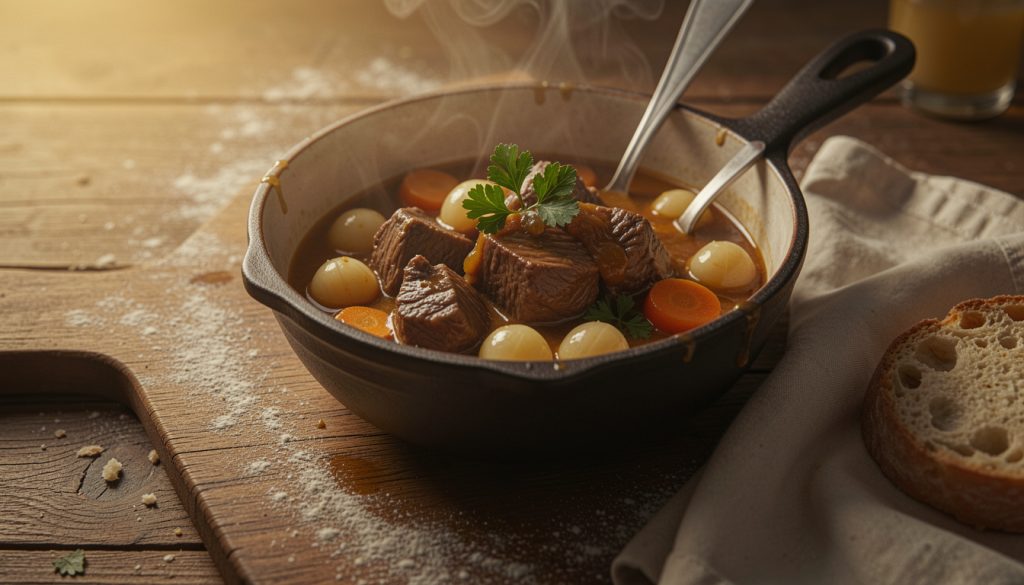

My brother-in-law insisted it tasted like takeout the first time I learned how to thicken beef stew without ruining the flavor.
You’ll get four reliable options—reduction, roux, slurry, and blitzed veg—each with times, tools, and exactly when to add salt and acid so the stew stays deep and bright.
Beef stew here means classic braise-style, hearty and savory with a glossy sauce. Expect about 30 min active prep, 1.5 to 2 hr cook time, beginner-friendly with one tricky bit: controlling the finish so it’s thick and silky, not pasty.
Lately I see cooks leaning on root-vegetable purees and umami concentrates instead of more flour. That trend works for weeknights and zero-waste cooking if you know why each method changes texture.
1. The Pre-Sear Setup: Salt, Cut, and Temper
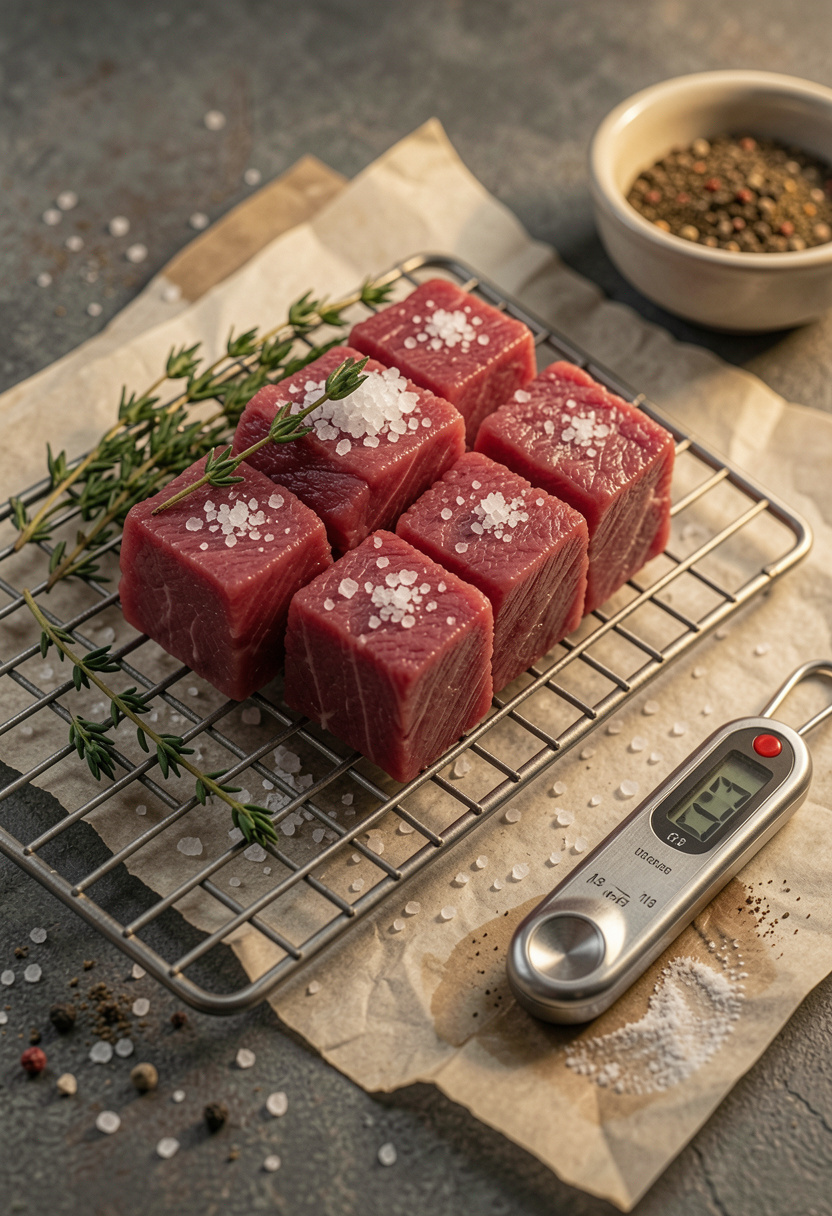

Salt early and you’ll get juicier cubes and better browning because salt draws surface moisture then reabsorbs it. I dry-salt the beef 30 to 60 min before searing. That’s enough for surface seasoning without drying the meat.
Use Diamond Crystal kosher salt and a quick thermometer check. A Diamond Crystal kosher salt 3 lb box around $5 to $8 will save you frustration with over-salting.
Cut to uniform 1 to 1.5-inch cubes so pieces brown evenly. Browning creates fond, the flavor base for your sauce, via the Maillard reaction. Hot pan, not crowded, 3 to 4 min per side until deep mahogany is the cue.
Mistake people make: salting at the last second and overcrowding the pan. That causes steaming. Do two batches in a Lodge cast iron Dutch oven 5 quart approx $35 to $60 and you’ll get the fond you need.
2. The Build: Fond, Aromatics, and Deglaze
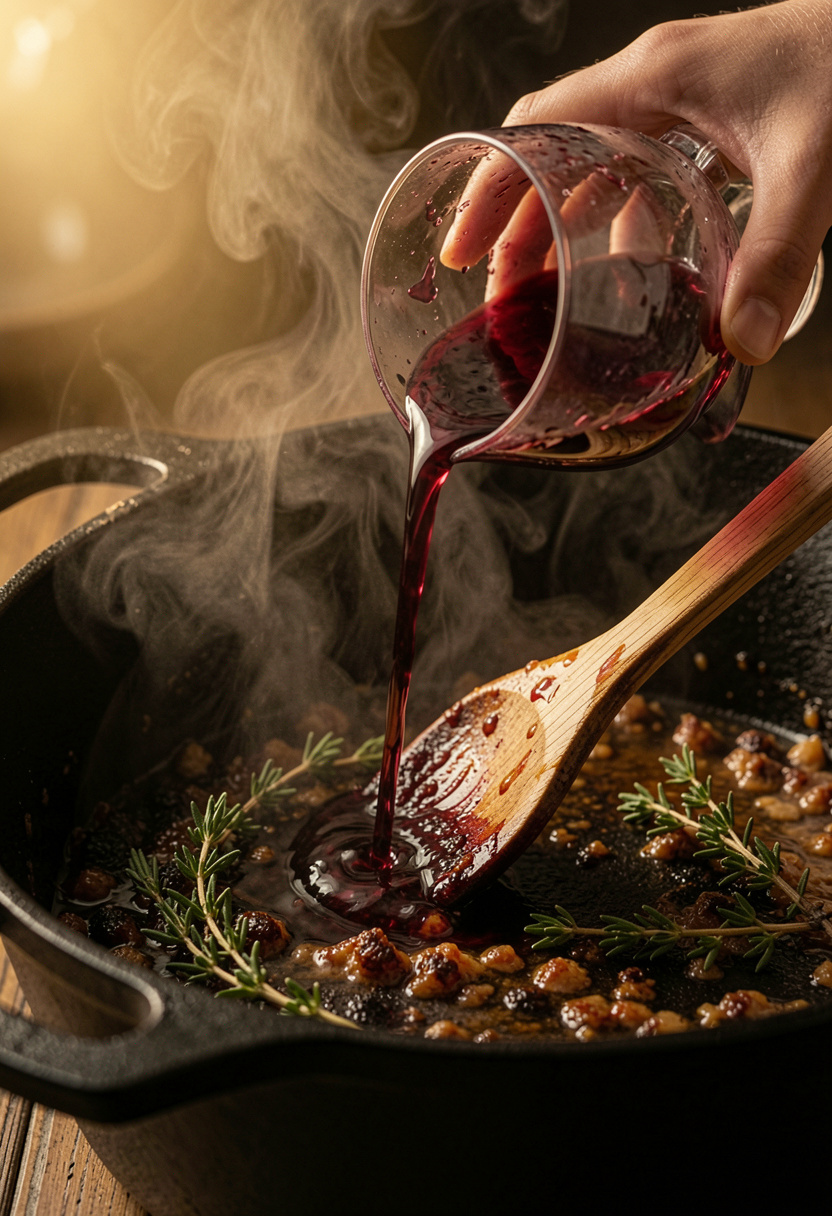

After the meat, sweat your aromatics. Onion, garlic, and a tablespoon of tomato paste caramelized for 3 to 5 min each deepen the sauce without extra flour.
Deglaze with 1 cup of red wine or 1 cup beef stock to lift the fond. I often use a concentrate like Better Than Bouillon beef base 8 oz around $6 to $10 for quick depth when I’m short on time.
The principle: deglazing dissolves those browned bits and distributes umami into the liquid. Simmer the deglaze until the alcohol smell is gone, about 4 to 6 min.
Common mistake: adding cold liquid and killing the simmer. Warm your liquid or add in two pours so the pot keeps a steady bubble and the sauce reduces properly.
3. The Controlled Simmer: Collagen to Gelatin
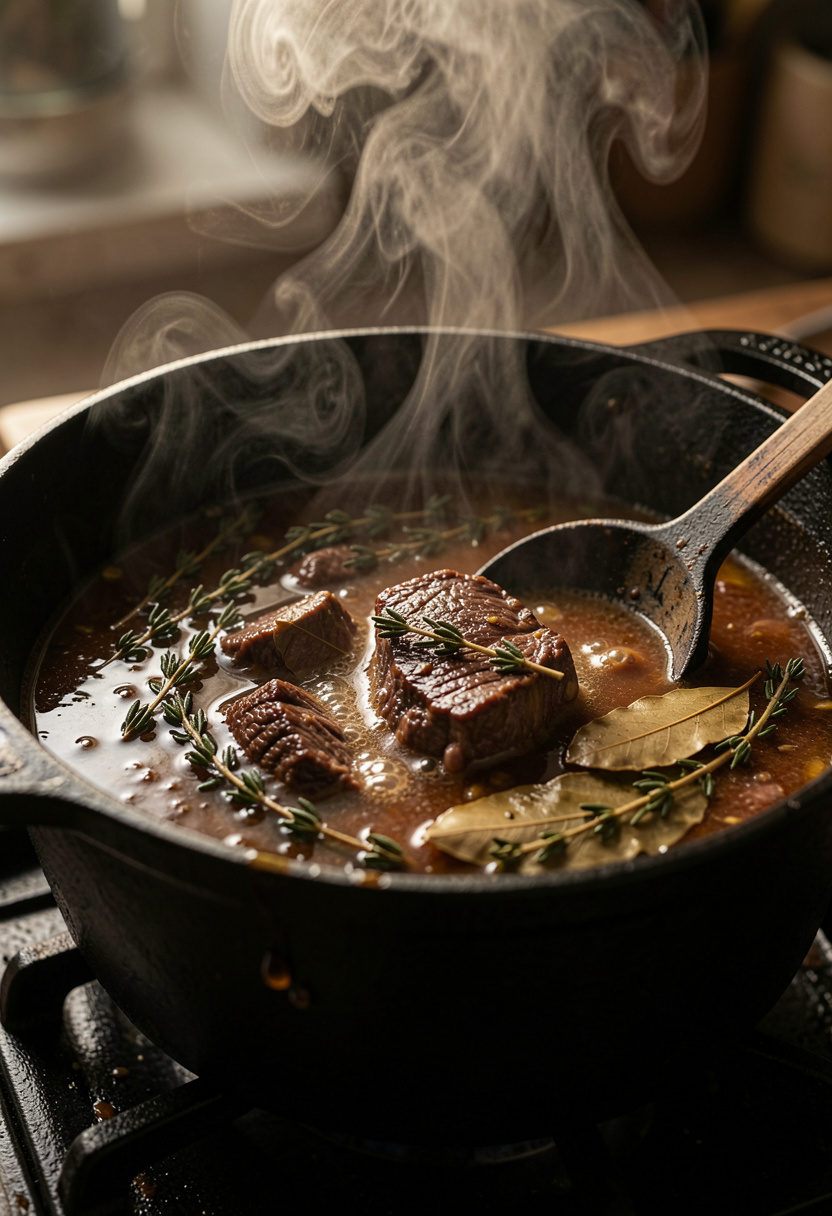

This is where collagen becomes gelatin and the sauce thickens naturally. Collagen starts converting into gelatin around 160°F and continues up to about 205°F, which is why long, low cooking yields silky mouthfeel (Harold McGee).
Keep a gentle simmer, 180°F to 200°F on the surface, for 60 to 90 min depending on cube size. Use an instant-read thermometer to check or watch for a low, steady bubble.
Tip: don’t rush it with high heat. High rolling boils shred proteins and can make the broth cloudy and grainy.
Mistake: stopping here expecting thickness. Often you’ll need one finishing method to reach your target glossy coat. Reduce uncovered for 10 to 20 min or use a finishing thickener.
4. The Finish That Keeps Flavor: Reduction, Roux, Slurry, or Blitz
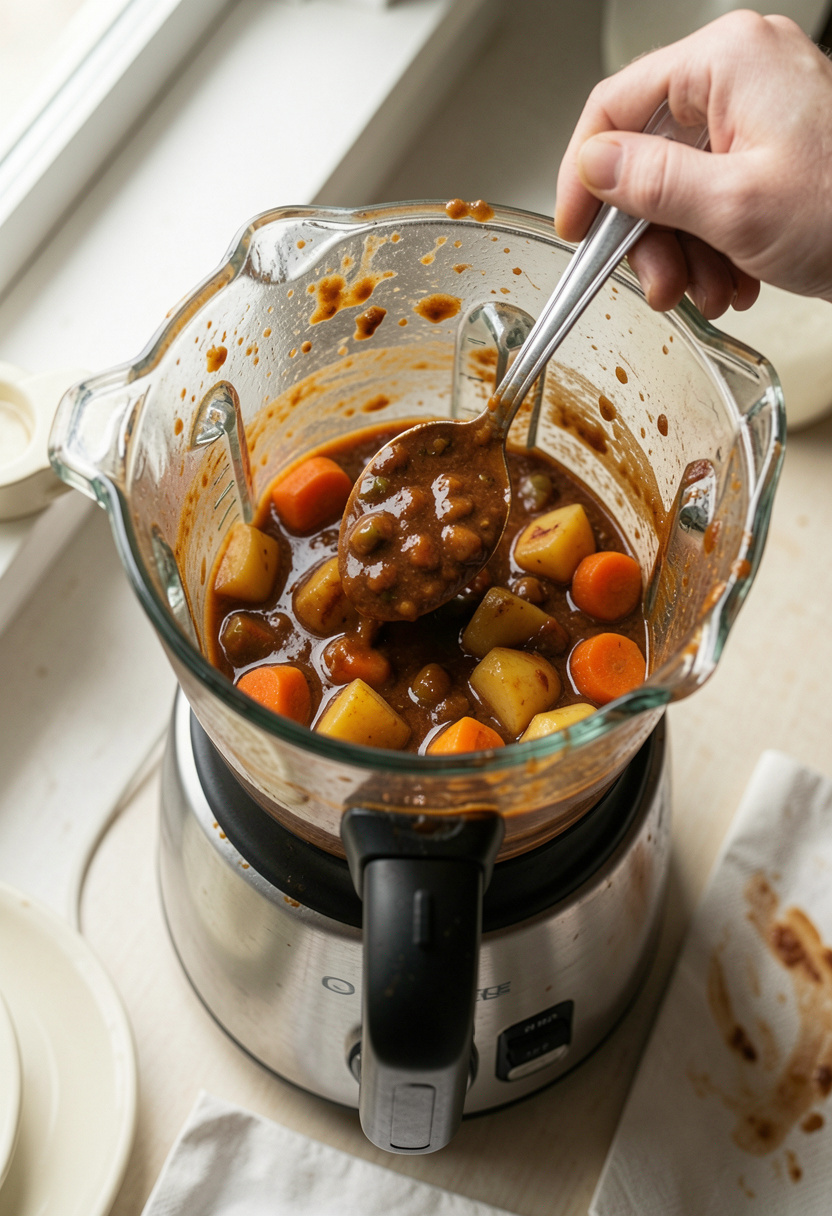

Pick the finish based on time and flavor. Reduction concentrates flavor; simmer 10 to 20 min uncovered until glossy.
For a neutral finish that won’t cloud, make a light slurry with 1 tbsp cornstarch mixed into 2 tbsp cold water, then whisk into a simmering pot. A reliable Argo cornstarch 16 oz around $2 to $4 works well.
If you want body plus nutty flavor, brown 2 tbsp butter, whisk in 2 tbsp flour to make a blond roux, and stir into the stew. Use king Arthur flour when you want consistency: King Arthur all-purpose flour 5 lb approx $8 to $14.
Vegetable blitz is my zero-waste trick: puree 1 cup of cooked potato or carrot in an immersion blender around $25 to $70 then stir it in for silky body without a floury taste.
Mistake: dumping too much starch at once and over-thickening. Add a little, wait 2 to 3 min, then add more.
Common Cooking Mistakes to Avoid
Mistake: Crowding the pan when searing beef
Why it doesn't work: Pan temperature drops and meat steams instead of browns.
Do this instead: Sear in batches using a Lodge cast iron skillet 12 inch approx $20 to $35.
Mistake: Adding cornstarch straight to hot stew
Why it doesn't work: Lumps and raw-starch taste can form.
Do this instead: Make a cold slurry with an Argo cornstarch 16 oz around $2 to $4, then whisk in slowly.
Mistake: Over-reducing until flavors go bitter
Why it doesn't work: Concentrating too far unbalances acidity and salt.
Do this instead: Finish with 1 tsp butter or 1 tsp Kerrygold butter 8 oz around $4 to $6 to round acids.
What You'll Need to Make This
Pantry Staples
Diamond Crystal kosher salt 3 lb box around $5 to $8
Argo cornstarch 16 oz around $2 to $4
CentO tomato paste 6 oz tube approx $1 to $3
Specialty Ingredients
Better Than Bouillon beef base 8 oz around $6 to $10
Lao Gan Ma chili crisp 7.4 oz approx $6 to $12
Tools That Earn Their Counter Space
Lodge cast iron Dutch oven 5 quart approx $35 to $60
Braun immersion blender around $25 to $70
Thermapen instant-read thermometer approx $75 to $120
Cookbooks Worth the Shelf
The Food Lab by J. Kenji López-Alt (price range $18 to $28)
Salt Fat Acid Heat by Samin Nosrat (price range $14 to $24)
Budget Swaps
Swanson beef broth 32 oz around $2 to $4 (swap for homemade stock)
Lodge cast iron skillet 12 inch approx $20 to $35 (save vs. enameled Dutch oven)
Shopping Guide for This Recipe
Buy Beef on Sale: Trim a chuck roast into cubes when it’s 30 to 40 percent off; freeze in meal-sized portions. See Lodge cast iron Dutch oven 5 quart approx $35 to $60.
Substitution Hack: Out of cornstarch? Use 1.5 tbsp potato starch per 1 tbsp cornstarch; potato starch 16 oz approx $6 to $10.
2025 Trend Tip: Try a cup of roasted root-veg puree in place of some flour for body and fiber; blend with an immersion blender around $25 to $70.
Splurge vs Save: Splurge on a good Dutch oven for heat retention; save on tomato paste tubes like CentO tomato paste 6 oz tube approx $1 to $3.
Conclusion
Start with the sear. If the stew tastes flat after simmering, reduce for 10 min, then pick the finishing method that fits your pantry and timing.
A last flourish of butter or a splash of vinegar brightens a reduced stew more than extra salt ever will. I reach for Kerrygold butter 8 oz around $4 to $6 at the end.
Will you try a blitzed-veg finish or stick with a classic roux first?