


I once burned a tray of churros because I trusted a vague TikTok tip about "the hottest oil." That day I learned the hard way how temp and timing make or break a crisp edge with a pillowy center.
This guide shows you exactly how to make Mexican churros with crisp edges and soft centers in about 45 min total, beginner-friendly with one tricky heat step. You will learn dough timing, oil temp, piping technique, and the sugar finish that keeps them from going soggy.
Churros are a Spanish import that found a second home in Mexican street food, where the dough is simple but technique matters (Britannica traces churros to Iberian shepherds). For frying, most testing kitchens recommend 350°F to 375°F for even cooking and the Maillard reaction (Serious Eats testing). Expect 30 to 45 min active time. I think home cooks who own a reliable thermometer will win every time.
1. The Dough That Holds The Crunch
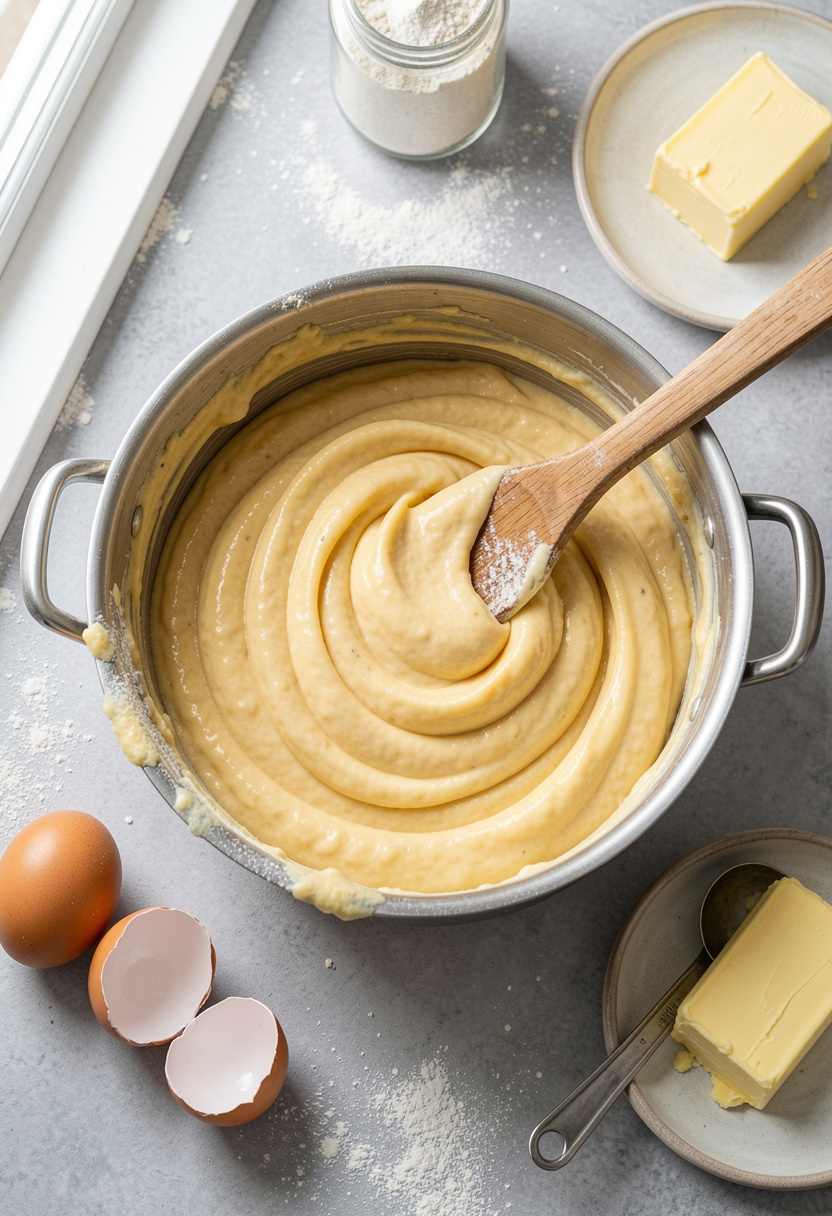

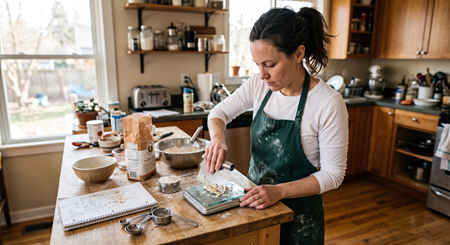
Start with a hot pan of water, butter, salt, and a splash of sugar so the dough sets quickly. Bring to a boil, dump in King Arthur Unbleached All-Purpose Flour 5 lb and stir until the mass forms and pulls clean from the pan.
The dough is essentially pâte à choux. The heat gelatinizes starch and creates structure so steam can puff the interior while the outside crisps. Beat in eggs one at a time until glossy and pipeable. I find a wooden spoon then a hand whisk is faster than hauling out a stand mixer.
Tools matter here. If your butter is soft, the dough will be slack. I like Kerrygold Unsalted Butter 8 oz for reliable salt and flavor (Kerrygold unsalted butter 8 oz around $4 to $6). Mistake to avoid: undercooking the flour in the pan. If the dough sticks to the pot, it has excess moisture; cook another 30 to 60 sec off the heat until it pulls clean for a firm pipeable texture.
2. The Hot-Right Oil: Temp, Thermometer, and Safety
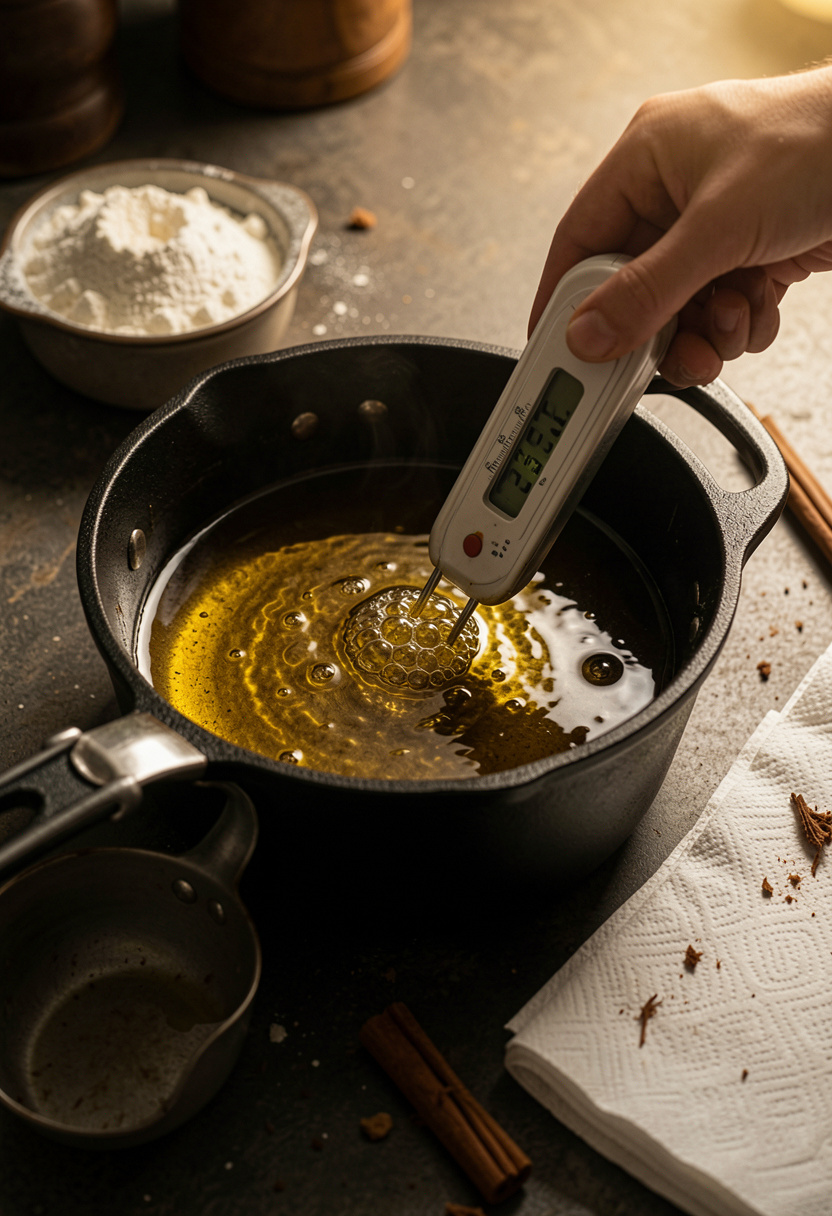

Frying temp is the single biggest determinant of crisp edges vs greasy middles. Aim for 350°F to 360°F for churros. Use a reliable instant read like the ThermoPro instant-read thermometer to avoid guesswork.
Choose neutral oil with a high smoke point. I use a light vegetable oil in a wide pot. A heavy 12-inch pan like a Lodge cast iron skillet 12 inch holds heat well if your burner runs cool, though use a deep pot for safety when frying.
The principle is heat transfer and Maillard reaction. Keep oil steady; a thermometer helps you adjust burner in 2 to 3 second bursts. Fry test pieces 2 min per side until deep golden, about 3 to 4 min total for a 4-inch churro. Common error: oil too hot and the outside burns before the interior cooks. If that happens, lower heat 25°F and test again.
3. Pipe, Fry, And Flip For Little Crusts
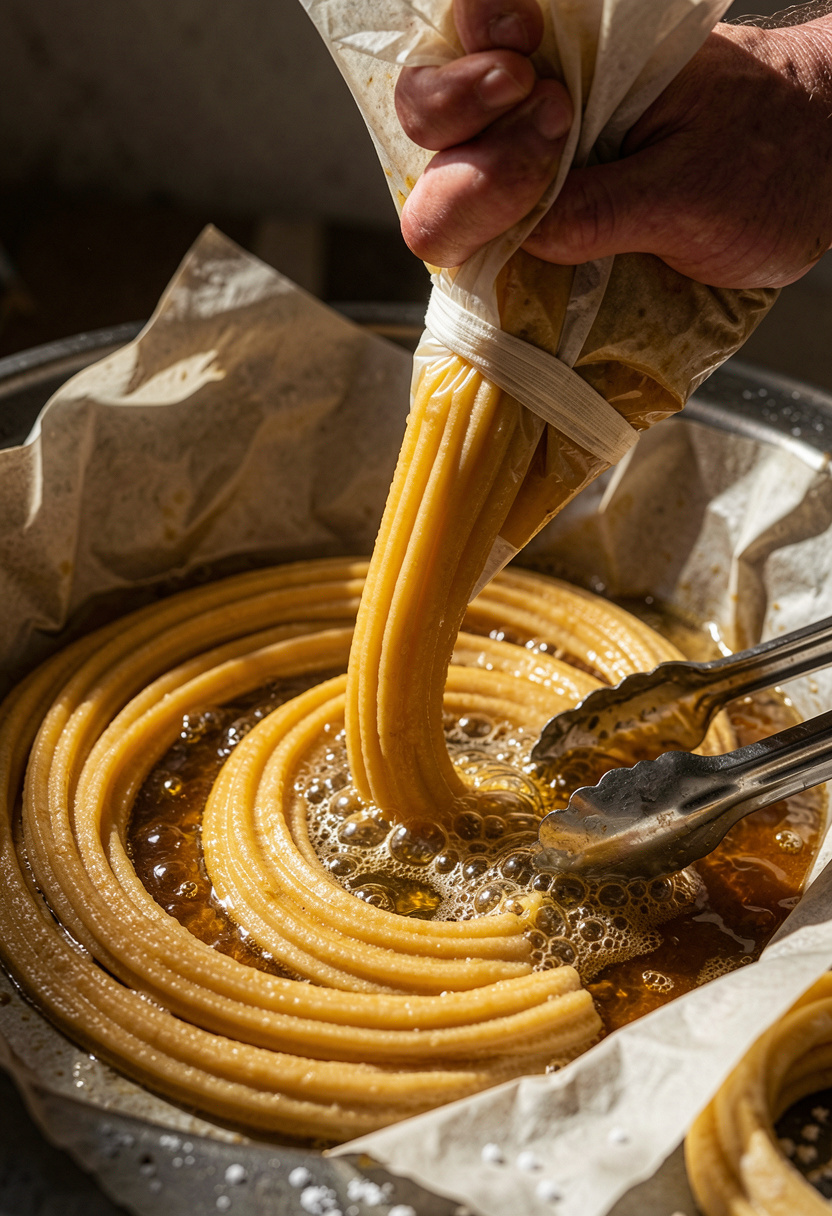

The way you pipe and introduce dough to the oil controls the ridged surface that crisps fastest. Use a large open star tip like the Wilton 1M open star piping tip inside a Wilton disposable piping bags 12 inch.
Pipe 4-inch lengths directly over the oil or onto a damp piece of parchment and slip them in. Fry with 1 inch between pieces so bubbles can escape; overcrowding drops the oil temp and yields limp churros. Flip gently after 90 to 120 sec; a golden brown and a hollow tap sound on a spoon means they are cooked through.
Technique principle: crispness comes from surface area and fast moisture escape. I tried a viral tip to twist the dough and it made dense centers. Do this instead: keep steady pressure on the bag and cut cleanly so ridges form uniformly.
4. The Sugar Finish And Flavor Boosts That Last
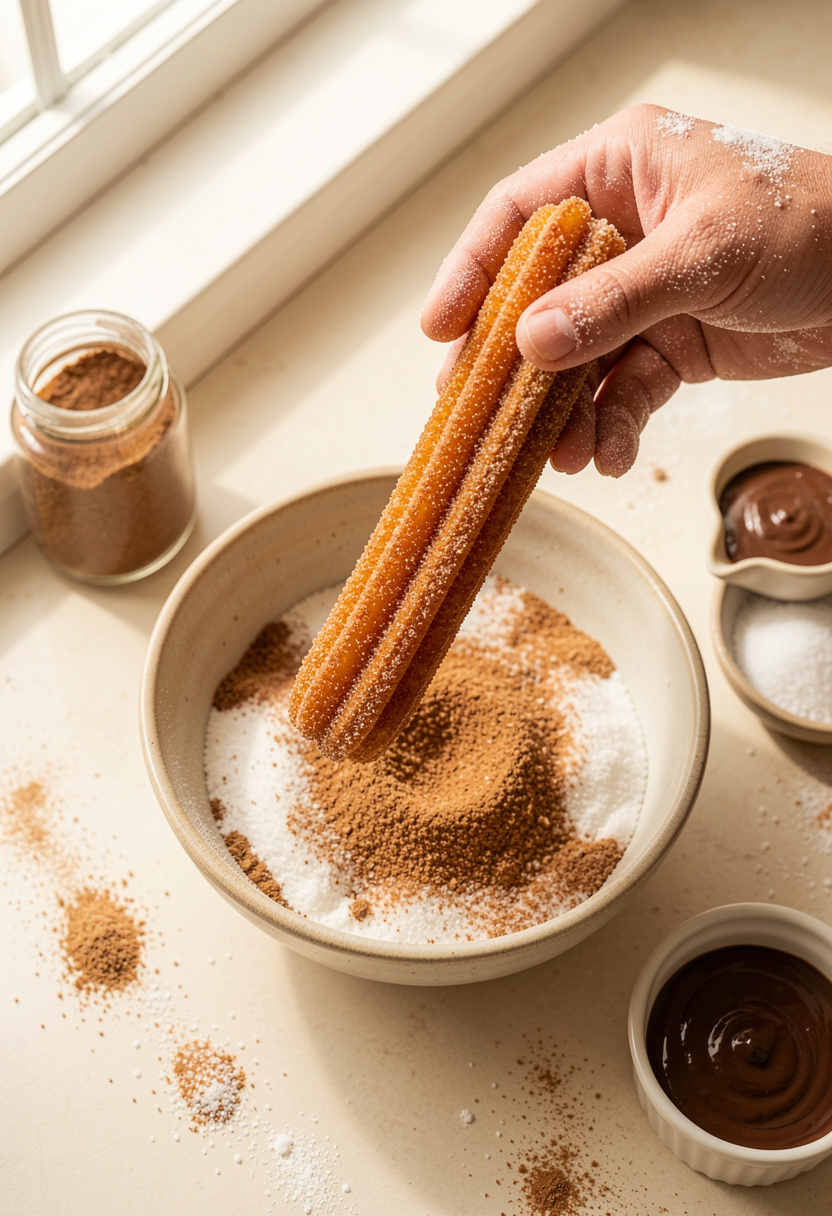

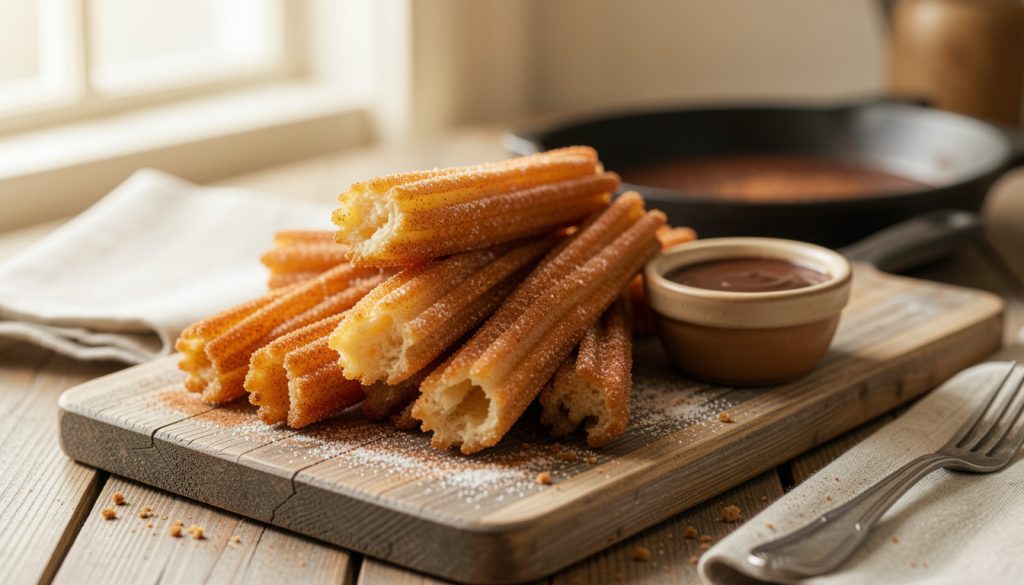
Timing here matters. Roll churros in the sugar-cinnamon mix while still hot so the sugar adheres but not so soon that steam makes them soggy. I use a 4:1 granulated sugar to ground cinnamon ratio for classic Mexican flavor.
Stock your pantry with reliable sugar and spice, like Domino granulated sugar 4 lb and McCormick ground cinnamon 2.37 oz. Toss in a metal bowl and shake once, don’t sit them in the sugar for long.
Acid brightens a rich dip; add a pinch of flaky salt to a dark chocolate sauce or a squeeze of orange in the chocolate for balance. Mistake to avoid: coating after cooling. If you wait too long the sugar will fall off and the exterior will lose its shine. Quick toss, then rest briefly on a wire rack so steam escapes.
Common Cooking Mistakes to Avoid
Mistake: Frying in too small a pot and crowding the oil
Why it doesn't work: Oil temperature collapses, pieces steam, not crisp.
Do this instead: Use a roomy 6 qt Le Creuset Dutch oven 6 quart or similar pot and fry in small batches.
Mistake: Trying to make churros in an air fryer
Why it doesn't work: Air circulation crispness differs; interiors stay dense.
Do this instead: Stick to hot oil or try a shallow pan with higher oil level; if you must, test with a single piece in a Philips air fryer 4 quart first.
Mistake: Overworking the dough with a stand mixer on high
Why it doesn't work: Toughness from overdeveloped gluten, dense interior.
Do this instead: Mix on low and finish by hand or with a paddle on the KitchenAid artisan stand mixer 5 qt on low.
What You'll Need to Make This
Pantry Staples
King Arthur Unbleached All-Purpose Flour 5 lb around $8 to $12
Domino granulated sugar 4 lb around $3 to $6
Diamond Crystal kosher salt 3 lb box around $5 to $8
Specialty Ingredients
Piloncillo cones 1 lb around $5 to $10
Mexican canela cinnamon sticks 2 oz around $6 to $12
Tools That Earn Their Counter Space
Lodge cast iron skillet 12 inch approx $25 to $40
ThermoPro instant-read thermometer around $12 to $25
Silicone spider skimmer around $8 to $15
Cookbooks Worth the Shelf
My Sweet Mexico by Fany Gerson (price range $12 to $25)
The Food Lab by J. Kenji Lopez-Alt (price range $18 to $30)
Budget Swaps
Gold Medal all-purpose flour 5 lb around $3 to $6 is fine if you do not want King Arthur.
Shopping Guide for This Recipe
Buy real canela when you can: Try authentic Mexican canela cinnamon sticks 2 oz for deep aromatic notes, often better in fall and winter.
Swap piloncillo for brown sugar mid-recipe: If you are out, piloncillo cones 1 lb can be grated, but dark brown sugar works in a pinch.
Thermometer matters more than brand of pan: A ThermoPro instant-read thermometer keeps your oil in the sweet spot, and it is a 2025 staple for home frying tests.
Splurge vs save: Spend on a heavy pot for even heat like a Lodge dutch oven 5 quart (worth it). Save on sugar and basic flour with store brands.
Conclusion
Start with the dough phase and nail the pipeable texture; that yields the interior softness that contrasts with crisp ridges. A quick thermometer check during frying is the finishing trick that keeps them from going greasy.
If you try one change first, steady oil temp will return the most reward. Will you try the classic cinnamon sugar or experiment with piloncillo and orange in the chocolate dip?