
I once boiled a bag of beets for lunch and ended up with a watery mess no one wanted to eat. The trick I learned after three flops is how to control moisture and brightness so the salad stays tender, not soggy.
This guide shows you how to make beet salad that is tender, bright, and never watery, in about 1 hr total with mostly hands-off time. Expect easy techniques (roast at high heat, quick acid bath, tight dressing) and one surprising swap that keeps texture.
Beets here lean Mediterranean with tangy sherry vinegar, tangy goat cheese, and toasted nuts — weeknight friendly but good enough for guests.
Raw beets are roughly 87% water, so the battle is mostly about handling that water without losing sweet beet flavor (USDA FoodData Central). I also noticed more home cooks use sherry vinegar for a rounder acid finish this season.
1. The Pre-Roast Setup: Salt, Oil, and Space
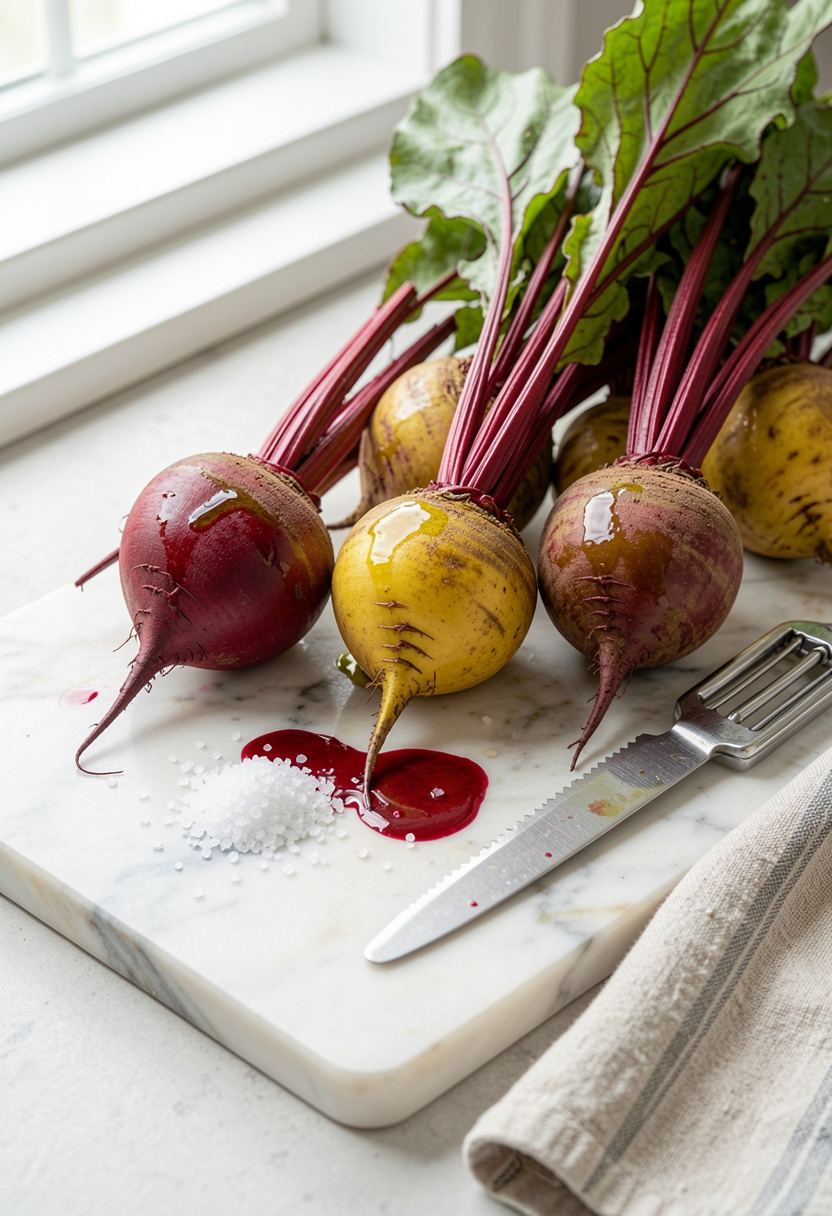
Salt early. Coat scrubbed beets with a light hand of Diamond Crystal kosher salt 3 lb box and 1 tbsp of California Olive Ranch extra virgin olive oil 16.9 oz per pound. That pulls surface moisture and seasons the beet flesh during roasting.
Use a rimmed sheet so juices don’t pool. I like a heavy Lodge rimmed baking sheet 18×13 because it spreads heat evenly and tolerates scraping. Space beets 1 inch apart so air can circulate.
Principle: seasoning and airflow concentrate sugars and jump-start Maillard browning on the beet skin. Mistake people make is crowding the pan; that steams beets and makes a watery salad. Instead, roast single-layer.
Roast temp and cue: 425°F for 35 to 50 min depending on beet size. When a knife slides through with gentle resistance and edges caramelize, they are done. Cool on a rack to stop steam.
2. Roast for Caramel, Not for Soup
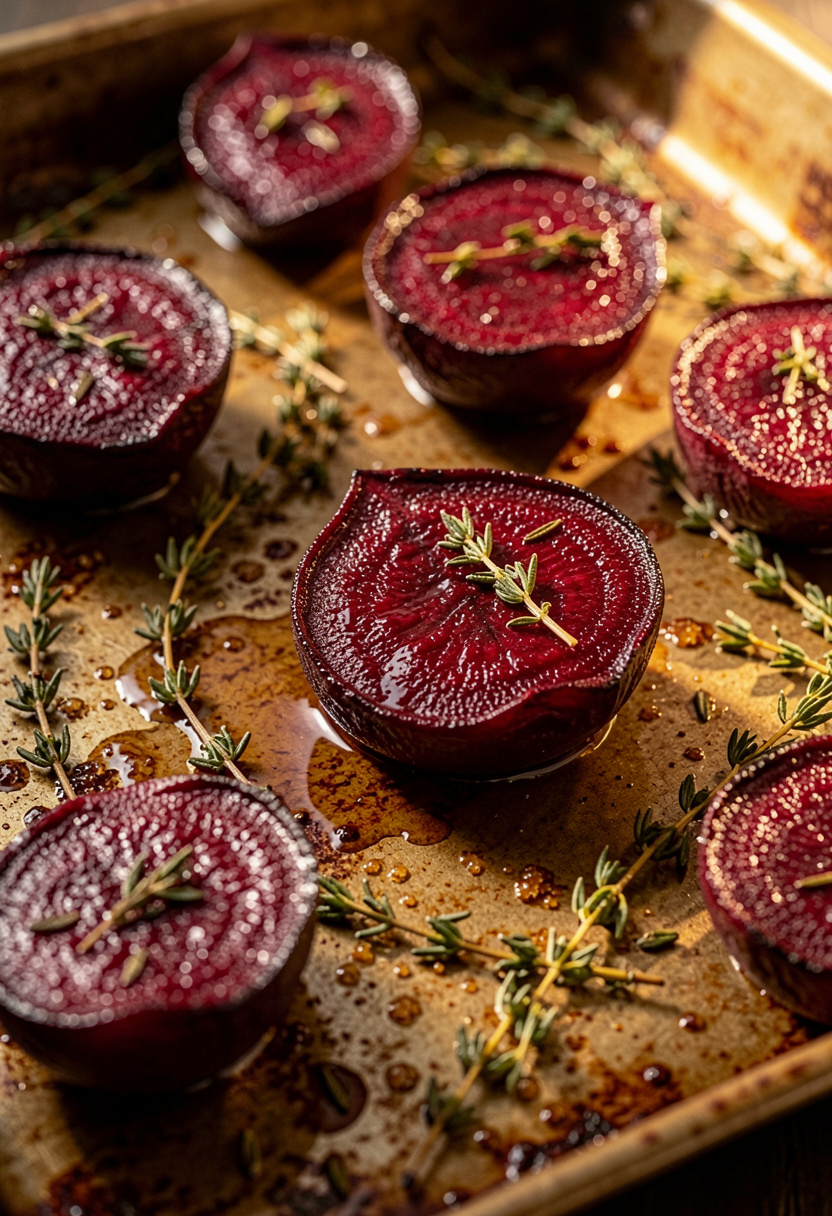
Roasting is about contrast. High heat concentrates flavor and creates a thin caramelized crust that holds texture.
Roast red and golden beets together but separate sizes so the smaller ones don’t overcook. Flip once at 20 min for even browning. If you want smoky notes, finish 1 min under the broiler.
After roasting, resist the urge to peel under running water. That washes away color and flavor. Instead, let beets cool until you can handle them, then rub skins off with a paper towel. A Microplane zester is great for finishing citrus over the top later.
Principle: Maillard reaction and gentle cooling lock sugars while preventing steam from making the beet flesh soggy. People who peel hot beets end up with faded flesh and excess juice in the bowl.
3. Shock, Chill, and Slice for Perfect Bite
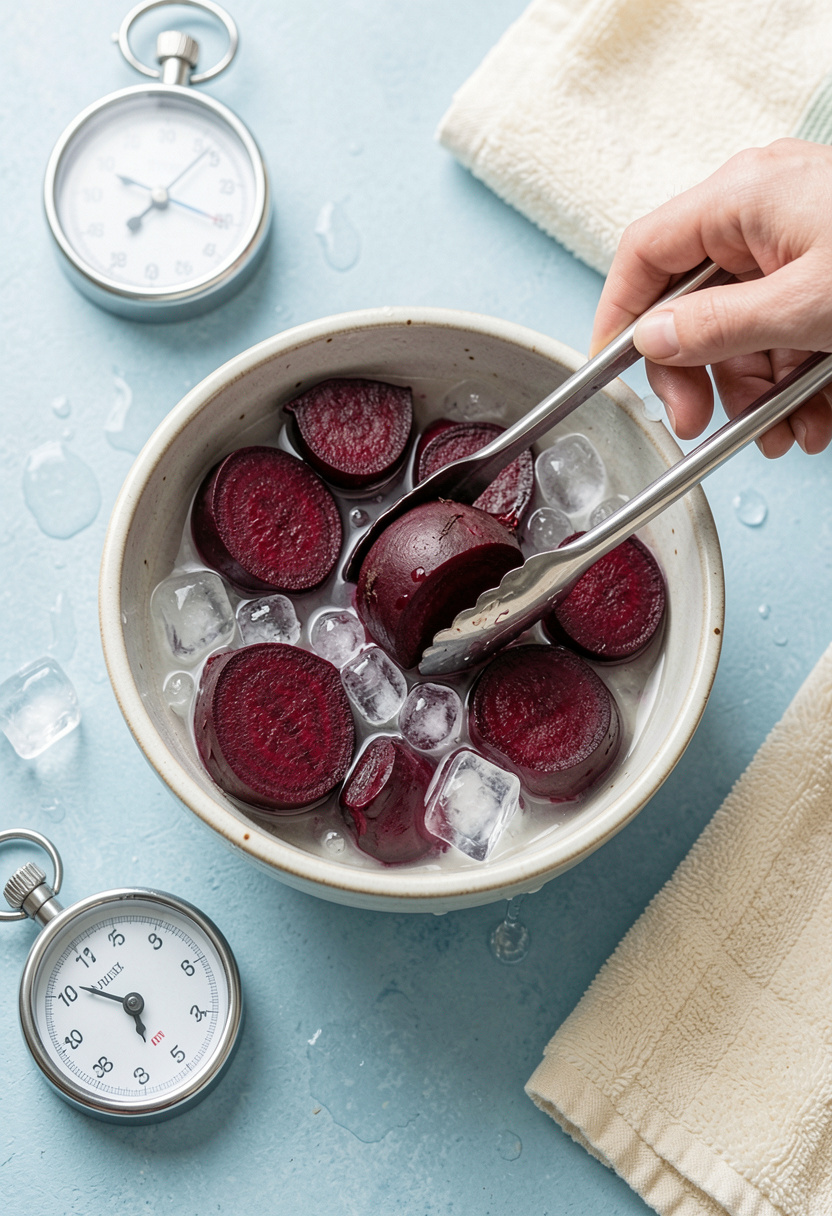
Cool beets fast. An ice bath stops carryover cooking and firms the flesh so slices hold shape. I dunk for 2 to 3 min, then dry completely in a OXO salad spinner or on paper towels.
Slice thin with a sharp knife or use an OXO mandoline slicer for even coins. Thin slices let dressing cling without turning the salad watery.
Principle: rapid cooling tightens cell walls and reduces weeping. A common error is dressing steaming-warm beets; that releases water into vinaigrette. Chill, then dress.
Texture cue: slices should hold their edge and bend slightly without crumbling.
4. Dress, Toss, Rest, and Finish Bright
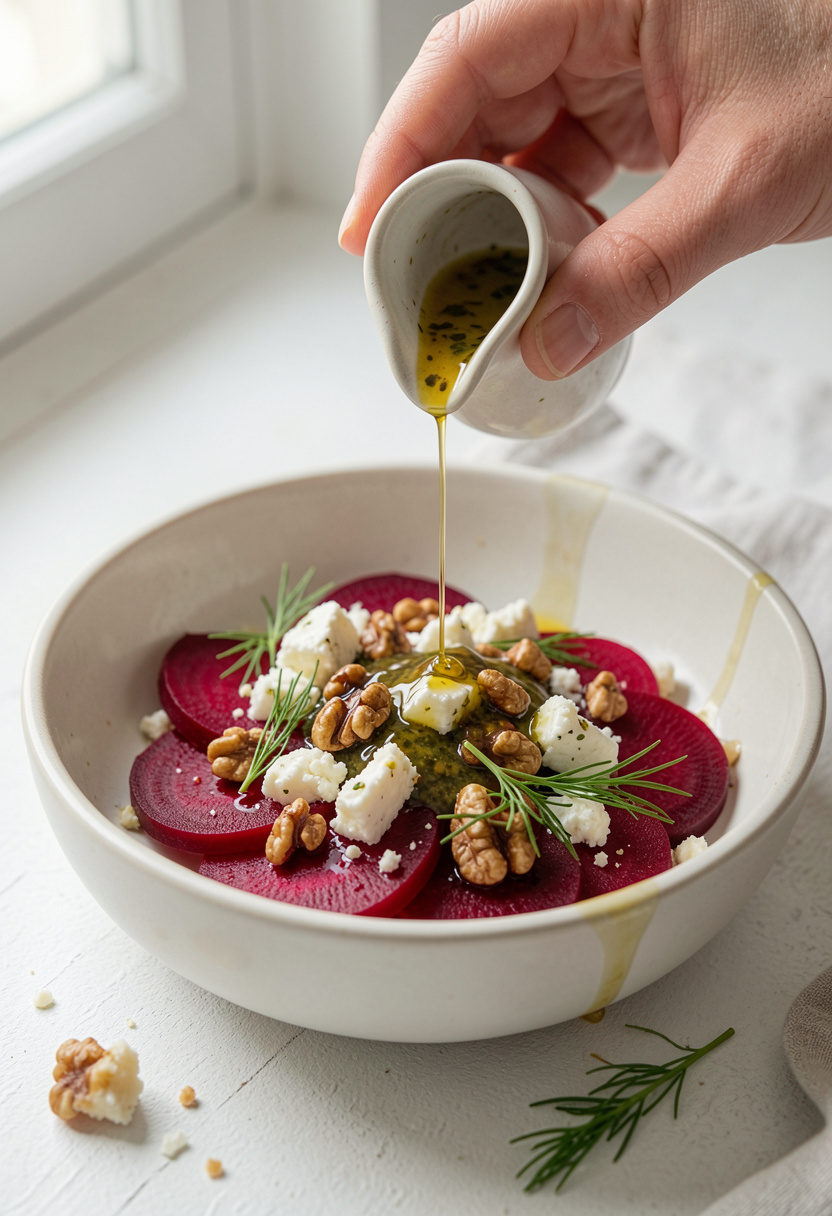
Make a tight vinaigrette: 3 parts oil to 1 part acid, whisked with 1 tsp Dijon and a pinch of Diamond Crystal kosher salt 3 lb box. I use Colavita sherry vinegar 250 ml for round acidity and a teaspoon of Madhava organic honey 12 oz to balance.
Toss beets gently with 2 to 3 tbsp dressing per pound and let the salad rest 10 to 15 min. That softens edges without making it watery and lets flavors marry.
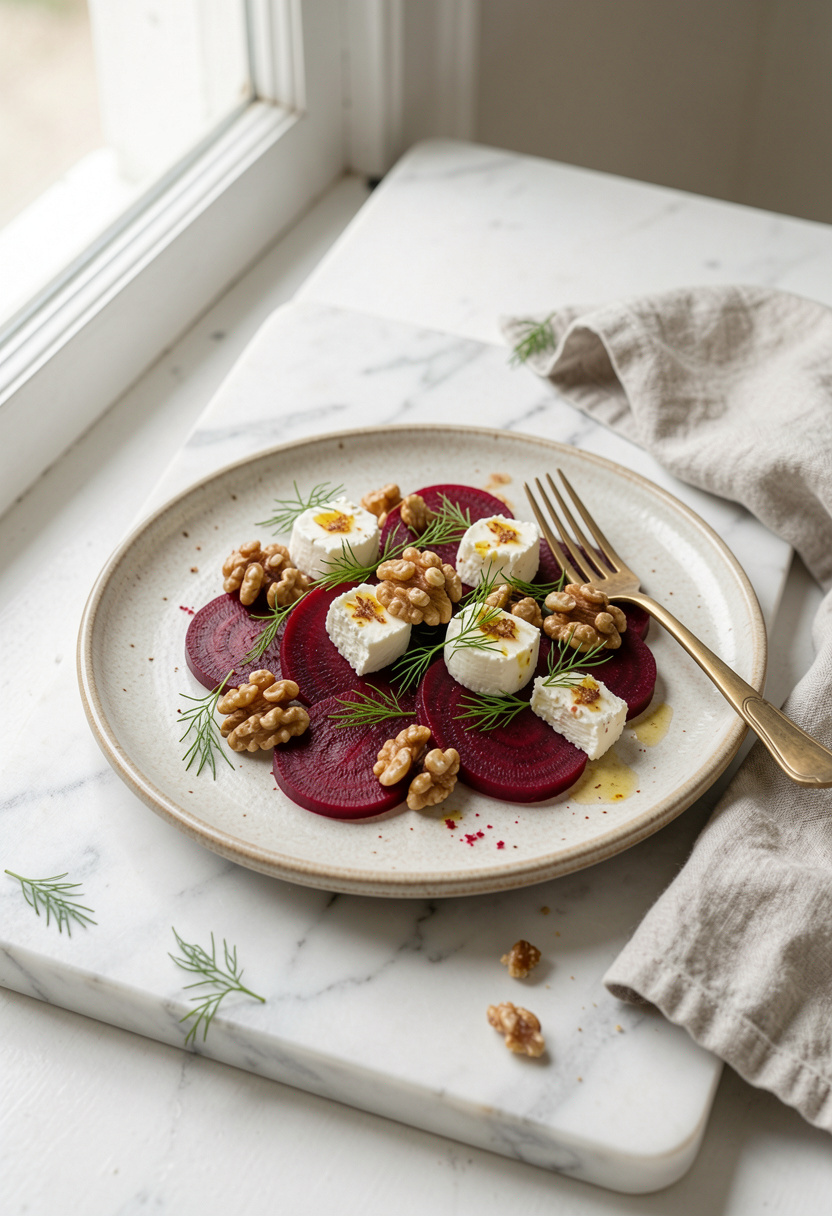
Finish with crumbled Montchevre chevre goat cheese 4 oz, toasted walnuts, and flaky Maldon flaky sea salt 4.4 oz to add crunch and lift.
Principle: emulsification and resting let oil bind to beet surface rather than pool. The worst trick I tried was pouring vinegar straight on hot beets; it made the salad flat. Do the opposite: dress cooled beets and rest.
Common Cooking Mistakes to Avoid
Mistake: Boiling beets until they fall apart
Why it doesn't work: Excess water dilutes flavor and yields a mushy texture.
Do this instead: Roast at 425°F on a Lodge rimmed baking sheet 18×13 for concentrated sweetness.
Mistake: Peeling beets under running water while hot
Why it doesn't work: Color and flavor wash away, and juices pool.
Do this instead: Cool on a rack, rub skins off with paper towel, then slice on a John Boos cutting board.
Mistake: Dressing immediately while beets are steaming
Why it doesn't work: Heat forces water into the dressing and makes it thin.
Do this instead: Chill 10 min, then toss with a whisked vinaigrette using Colavita sherry vinegar 250 ml.
What You'll Need to Make This
Pantry Staples
Diamond Crystal kosher salt 3 lb box around $5 to $8
California Olive Ranch extra virgin olive oil 16.9 oz approx $10 to $18
Specialty Ingredients
Montchevre chevre goat cheese 4 oz around $3 to $6
Colavita sherry vinegar 250 ml approx $6 to $12
Maldon flaky sea salt 4.4 oz around $8 to $14
Tools That Earn Their Counter Space
Lodge rimmed baking sheet 18×13 approx $20 to $35
OXO mandoline slicer around $30 to $60
Thermapen instant read thermometer approx $70 to $120
Cookbooks Worth the Shelf
Salt Fat Acid Heat by Samin Nosrat (price range $18 to $28)
The Food Lab by J. Kenji López-Alt (price range $20 to $30)
Budget Swaps
Amazon Basics stainless steel rimmed baking sheet around $12 to $20 (Aldi often has similar pans for less)
Shopping Guide for This Recipe
Pick firm beets: Choose beets that feel heavy for size and have smooth skin; organic beets 3 lb bag if you want convenience, about $6 to $12.
Swap for quick weeknights: If short on time, buy pre-roasted beets but drain excess liquid before dressing; try jarred roasted beets approx $8 to $15.
2025 trend pick: Look for preserved citrus vinegars for bright punch; search yuzu vinegar around $12 to $20.
Splurge vs save: Splurge on good olive oil like California Olive Ranch extra virgin olive oil 16.9 oz; save on walnuts with store-brand toasted nuts.
Conclusion
Start with the roast. It gives the biggest flavor lift for the least fuss and keeps beets from turning into a watery side.
One last tip: a light sprinkle of flaky Maldon flaky sea salt 4.4 oz right before serving makes the sweetness sing.
Will you try the roast-and-rest method first or the quick pickled shortcut?