
My worst Alfredo flop happened when I dumped a head of boiling pasta into a pan of scalding cream and watched the sauce seize into a grainy mass.
If you want to learn how to make Alfredo pasta creamy without turning it gluey, I’ll show the low-heat emulsion trick I use, what tools actually help, and the 10-min finishes that make it taste homemade but restaurant-quality.
This method is weeknight-friendly and beginner-safe — plan 30 to 40 min total with one slightly delicate step.
Fresh-leaning Italian-American flavor: buttery, cheesy, and brightened with lemon. I’ve noticed people in 2025 leaning to umami boosters like miso and chili crisp for finishing; I use those sparingly. Now let’s get into the phases.
1. The Prep: Cold Cheese, Hot Water, Salted Pasta
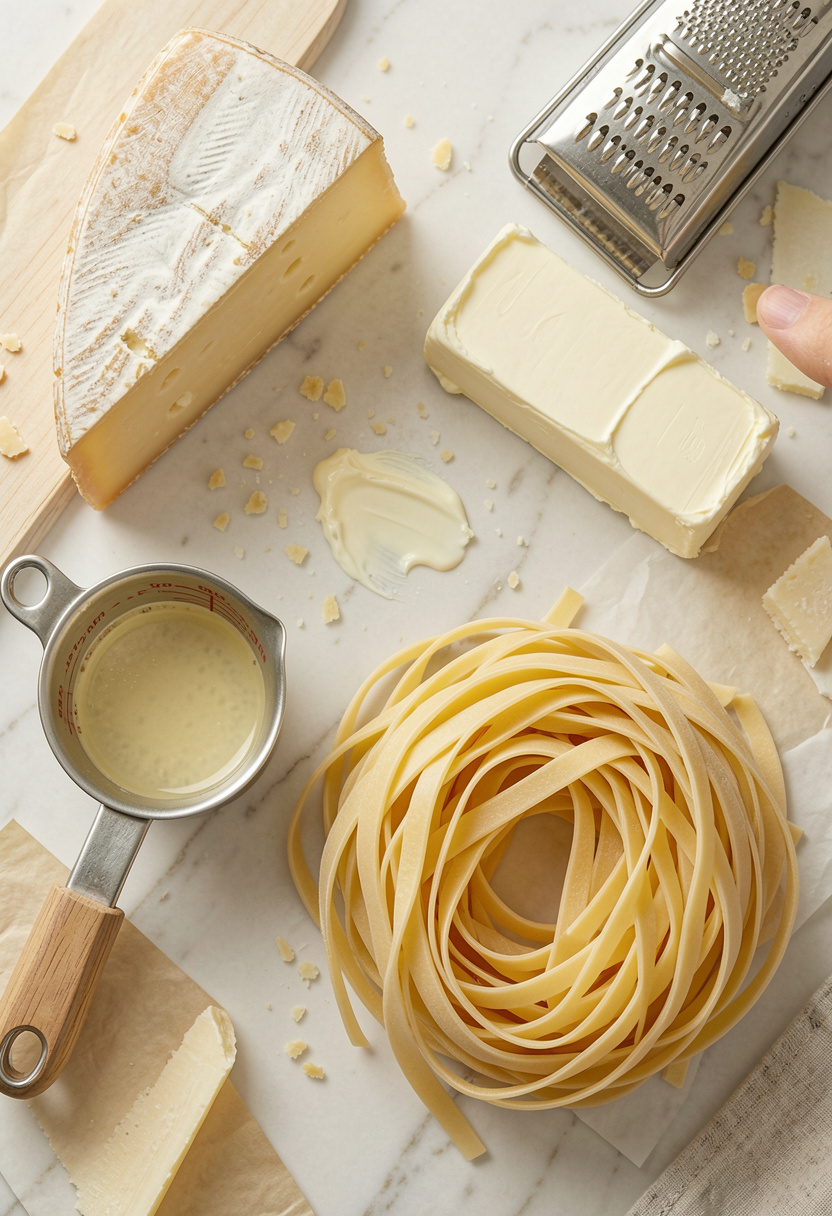
Start by grating your cheese cold and fine; cold cheese melts more gently and won’t clump. Use a Microplane fine grater for snow-like shards.
Bring a large pot of water to a rolling boil and salt it generously — I use about 1.5 tbsp per 4 qt. The pasta cooks in salted water so the starch you reserve actually tastes of the pasta, which is crucial for the emulsification step.
Reserve 1 to 1 1/2 cups of the hot pasta water right before draining. That ratio gives you control: start with 1/2 cup and add more if needed. Mistake most cooks make here is skimping the salt or tossing the water; don’t. A large pasta pot with strainer makes this clean and fast.
2. Build the Base: Low Heat Emulsion, Not a Boil
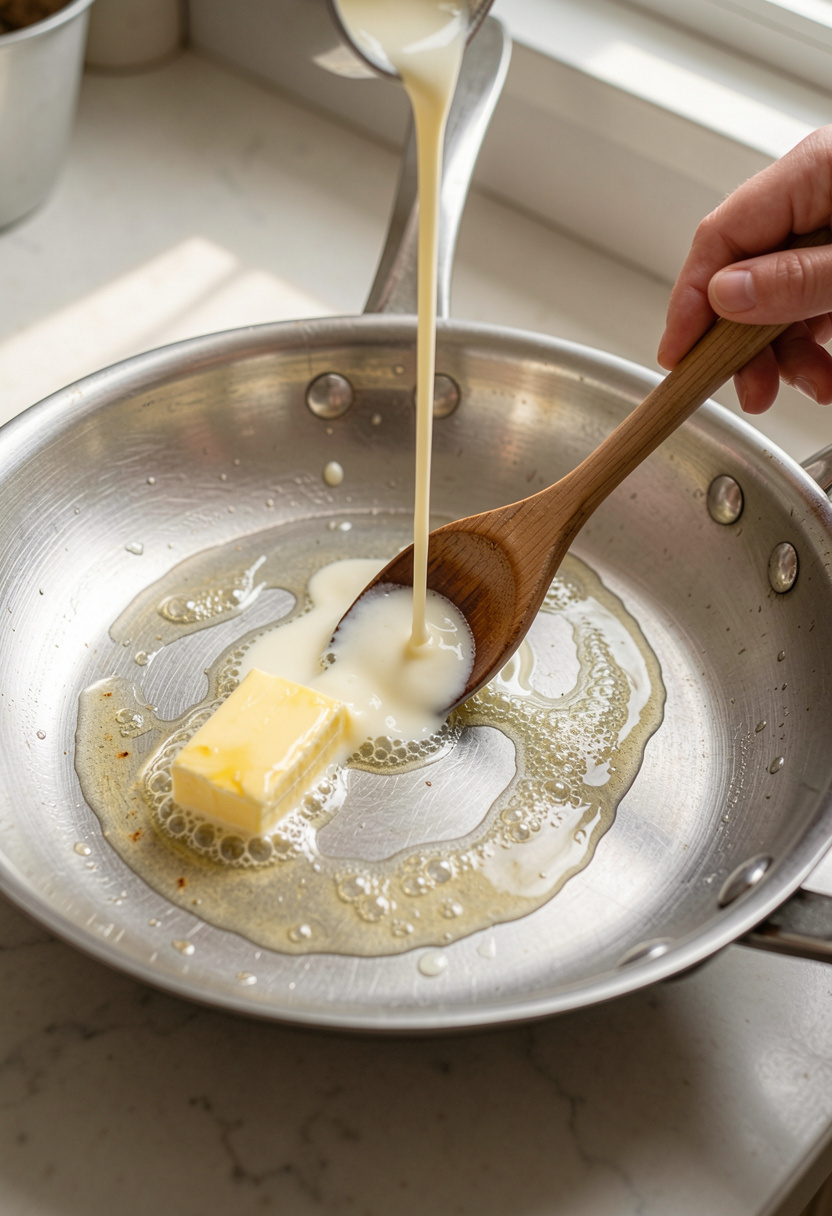
Use a wide 12-inch stainless steel sauté pan so sauce has room to move. Melt 2 tbsp unsalted butter over low heat until glossy, about 1 min. Add 1/4 cup heavy cream if you like silkier texture; I often skip it and rely on pasta water and butter alone.
The principle is emulsification: starch + fat + gentle heat = silky sauce. Add a ladle (about 1/2 cup) of reserved pasta water, then the hot drained pasta. Toss vigorously for 30 to 60 seconds off the heat to let starch bind fat into a glossy coat.
Never crank the heat to finish. High heat makes cheese proteins seize and turn gluey. If you want a richer note, stir in 1 tbsp mascarpone off-heat; a little keeps things stable. I keep an instant-read thermometer nearby for other recipes, but here your eyes and wrist feel tell the story.
3. Add Cheese Tempered, Not Dumped
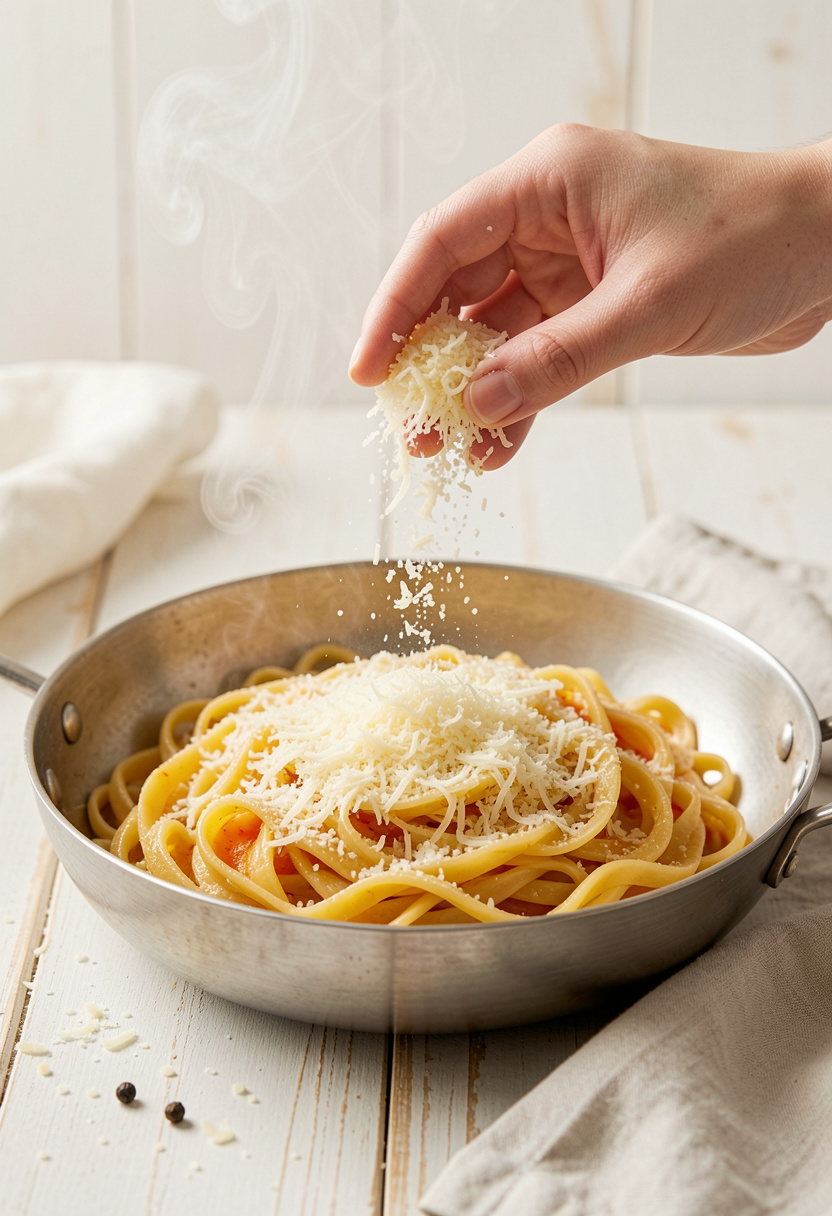
Grate 3/4 to 1 cup of Parmigiano Reggiano wedge 8 oz finely. The trick is to add cheese slowly while tossing off the heat. Add a spoonful, toss, add more. If any clumping starts, add 1 to 2 tbsp hot pasta water and keep tossing.
This is tempering: you’re raising cheese temperature gradually so the fats melt smoothly without overheating proteins. If you prefer a sharper edge, fold in 1/4 cup grated Pecorino Romano 8 oz the same way.
A common mistake is shredding pre-grated Parm with anti-caking agents; it won’t melt as cleanly. Use a Microplane or fine grater for the best surface area. Finish with a crack of black pepper and a few drops of fresh lemon juice to brighten.
4. Finish and Rest: Butter, Oil, and the Five-Minute Hold
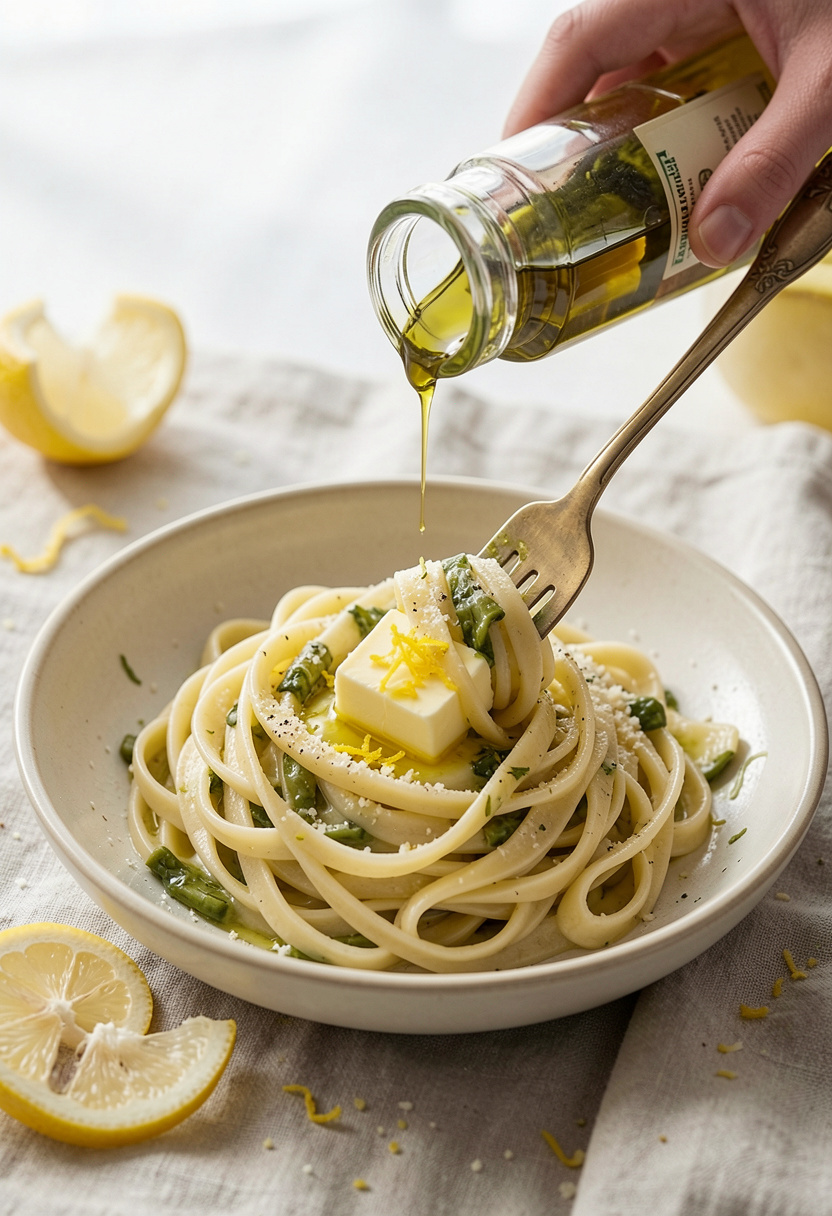
Finish with 1 tbsp cold unsalted butter or 1 tsp extra virgin olive oil to round the mouthfeel. Toss off heat and let the pasta rest in the pan for 2 to 3 minutes — that short hold lets starches relax and the sauce thicken to cling without congealing.
If the sauce looks loose after resting, add 1 tbsp hot pasta water and toss. If it’s too thick, don’t add cream; add water in small splashes until glossy. Tip: for a nutty depth, brown 2 tbsp butter first, cool slightly, then swirl it in at the end.
Mistake: rewarming Alfredo in a microwave. It breaks the emulsion. Reheat gently in a pan with a splash of pasta water. A silicone pasta tongs helps toss without losing noodles.
Common Cooking Mistakes to Avoid
Mistake: Using pre-grated cheese
Why it doesn't work: Anti-caking agents prevent smooth melting.
Do this instead: Grate a Parmigiano Reggiano wedge 8 oz fresh with a Microplane fine grater.
Mistake: Finishing sauce over high heat
Why it doesn't work: Cheese proteins seize and sauce becomes grainy.
Do this instead: Toss off the heat and add pasta water gradually; use a 12-inch stainless steel sauté pan.
Mistake: Pouring in too much cream to “fix” texture
Why it doesn't work: Overloads fat and dilutes flavor, still risks separation.
Do this instead: Use 1 to 2 tbsp mascarpone or a splash of hot pasta water; try mascarpone 8 oz.
What You'll Need to Make This
Pantry Staples
Diamond Crystal kosher salt 3 lb box around $5 to $8
Extra virgin olive oil 500 ml around $8 to $20
Specialty Ingredients
Parmigiano Reggiano wedge 8 oz approx $12 to $20
Mascarpone 8 oz approx $4 to $8
Tools That Earn Their Counter Space
Microplane fine grater approx $10 to $20
12-inch stainless steel sauté pan approx $30 to $70
Large pasta pot with strainer approx $25 to $60
Cookbooks Worth the Shelf
Salt Fat Acid Heat by Samin Nosrat (price range $18 to $28)
The Food Lab by J. Kenji López-Alt (price range $20 to $30)
Budget Swaps
Fettuccine pasta 16 oz store brands often under $2 to $4 vs artisanal $6 to $12
Shopping Guide for This Recipe
Salt Matters: Use Diamond Crystal kosher salt for measured seasoning; it seasons cleaner than fine table salt.
Cheese Freshness: Buy a wedge of Parmigiano Reggiano and grate at home for best melt and flavor, roughly $12 to $20.
Substitution Hack: Out of Parm? Use a mix of Pecorino Romano and a touch of mascarpone instead of cream.
2025 Trend Tip: If you love umami finishes, a spoon of Lao Gan Ma chili crisp 7.4 oz offers depth — use sparingly.
Conclusion
Start by mastering the low-heat emulsion: cold-grated cheese, hot starchy water, and patient tossing. That single phase is the highest-impact step for creamy, non-gluey Alfredo.
Finish with a pat of cold butter and a sprinkle of flaky Maldon sea salt flakes for immediate glossy shine.
Will you try the tempering method first or add a spoon of mascarpone on round one?