
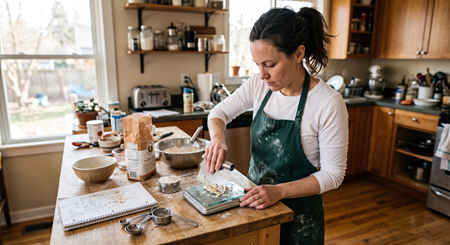
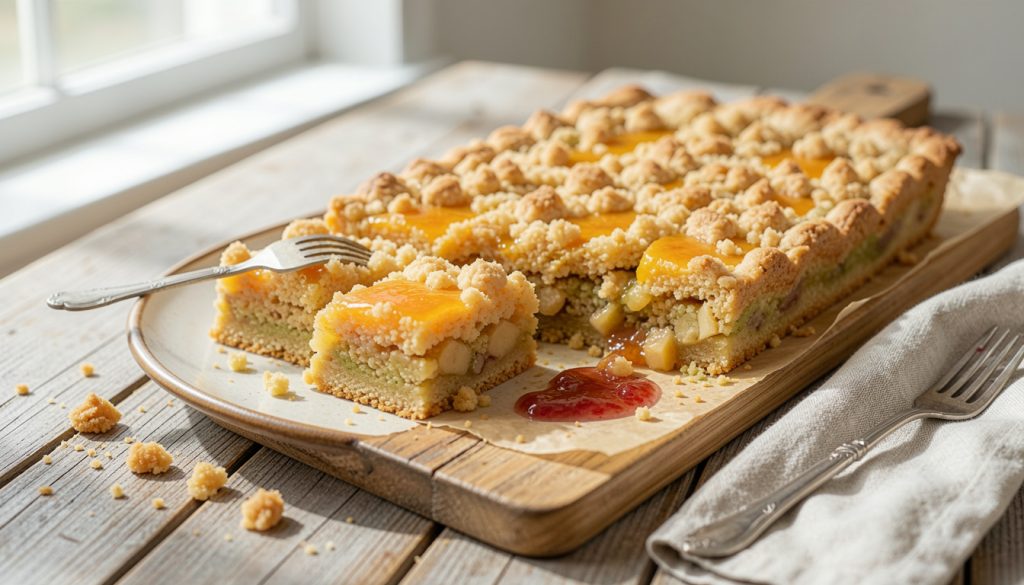

My first dozen apple pie bars were a soggy-bottom disaster. I wanted to show how to bake easy apple pie bars that hold a firm base and still taste like fall.
You will learn a quick blind-bake trick, a cooked filling that releases less juice, how a drainage layer works, and simple cooling timing. Expect about 30 min hands-on, 1 hr total, beginner-friendly with one slightly technical step.
These are classic American fall bars, somewhere between a tart and a slab pie. Think cinnamon, bright lemon, and a shortbread-like bottom that stays crisp.
Perfect for weeknight baking or a Sunday tray to share. I’ve noticed a shift in 2025 toward low-waste baking and hyper-seasonal fruit, so this recipe leans on that idea.
1. Set the Crust: Chill, Dock, and Blind-Bake for a Firm Base
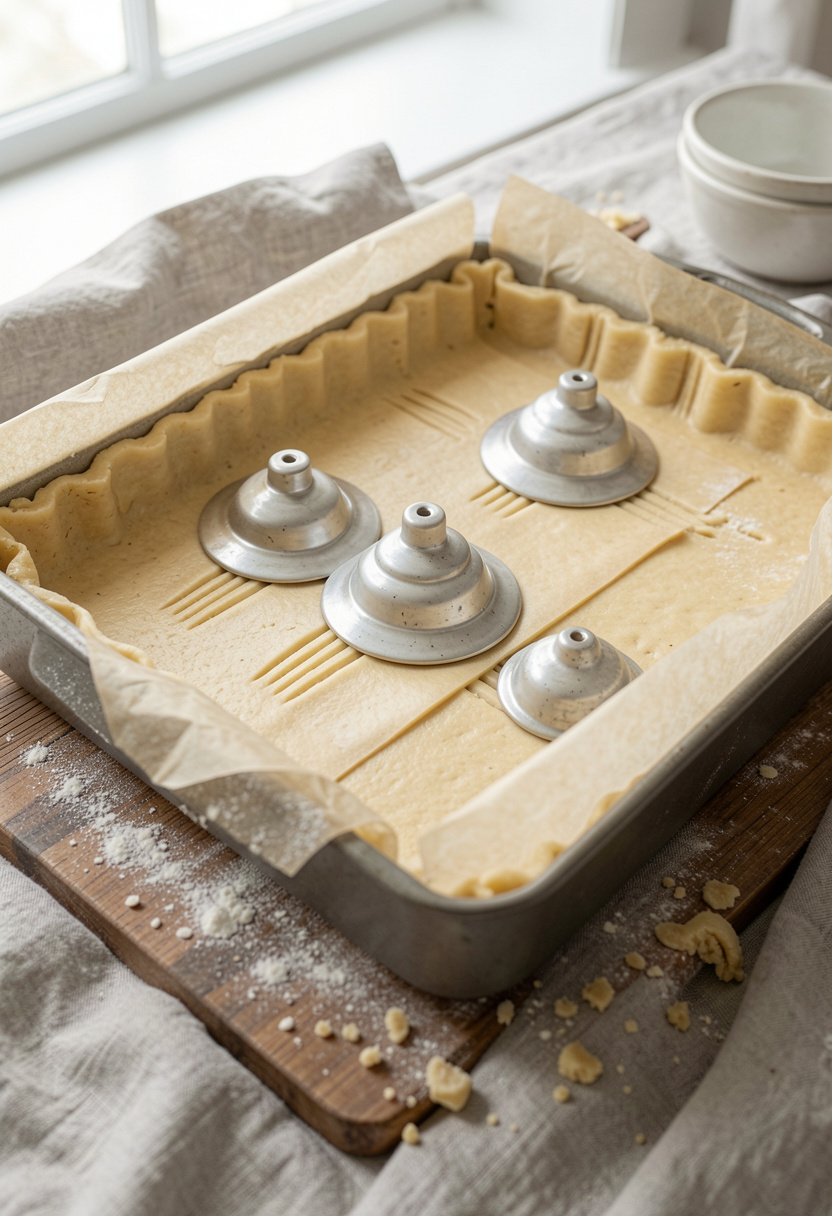

Start here because a set crust is everything. Mix 2 cups all-purpose flour, 1/4 cup sugar, 1 tsp Diamond Crystal kosher salt, and 12 tbsp cold unsalted butter cut into cubes. Pulse in a food processor or rub with a pastry cutter until the mix looks like coarse sand with some pea-sized butter bits.
Press into a 9×13 metal baking pan lined with parchment paper rolls. Chill 20 to 30 min. Dock with a fork to let steam escape.
Blind-bake at 375°F for 12 min with pie weights, then remove weights and bake 6 to 8 min more until pale golden. The principle here is gluten setting and steam release so the bottom does not rehydrate. A common mistake is skipping the dock and blind-bake; that traps steam and yields a soggy base.
2. Make a Cooked, Thickened Apple Filling That Won’t Weep
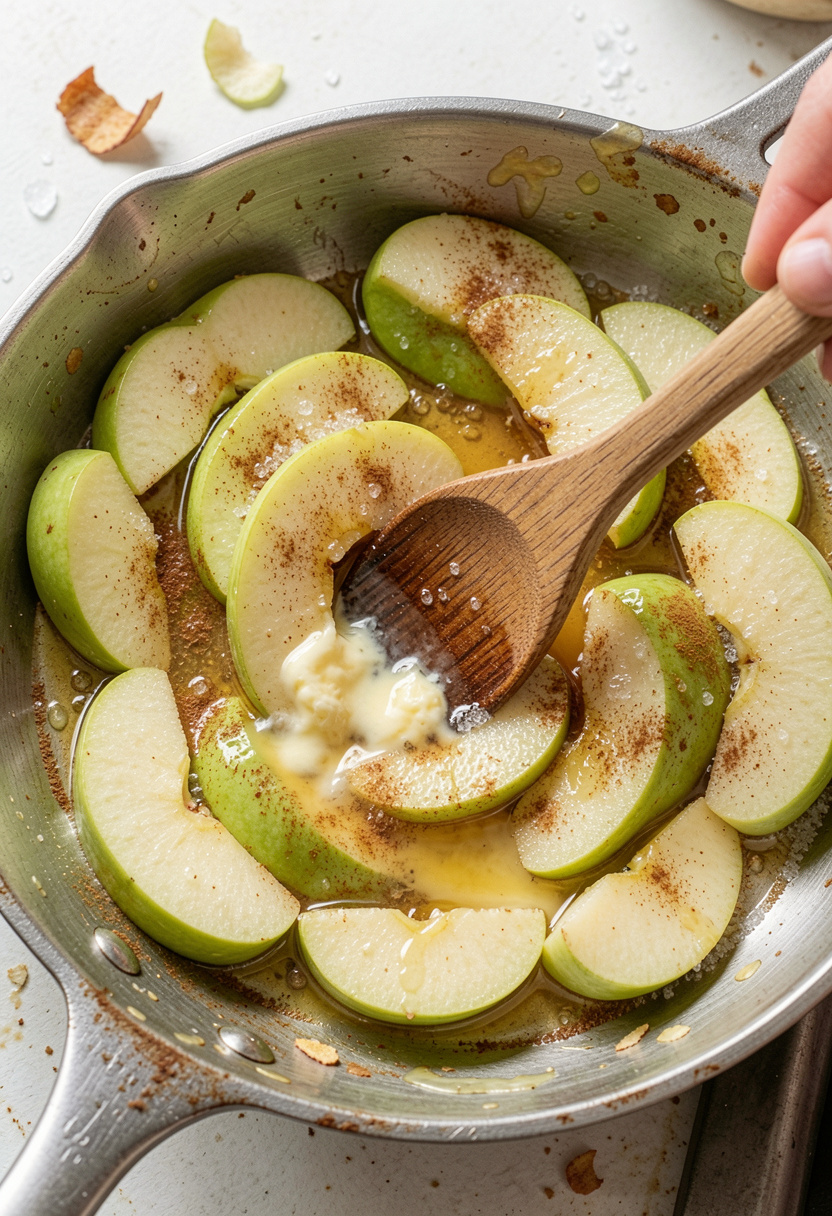

Raw apples dump more juice than you want inside a bar. Cook the filling to concentrate flavor and thicken liquids. Peel and slice 2 pounds apples (I use 60 percent Granny Smith, 40 percent Honeycrisp). In a skillet, cook apples with 1/3 cup brown sugar, 1 tbsp lemon juice, 1 tsp cinnamon, and 2 tbsp unsalted butter for 5 to 8 min until they soften and glossy juices appear.
Stir in 2 tbsp cornstarch or 2 tbsp tapioca starch dissolved in 2 tbsp cold water. Cook 1 to 2 min until the mix thickens and stops looking watery. This is starch gelatinization absorbing free juice. If you skip precooking and toss raw apples into the crust, the juices will pool and soak the bottom.
Useful tools here include an instant-read thermometer for accuracy and a wooden spoon you don’t mind staining.
3. Build a Drainage Layer and Bake for Even Texture
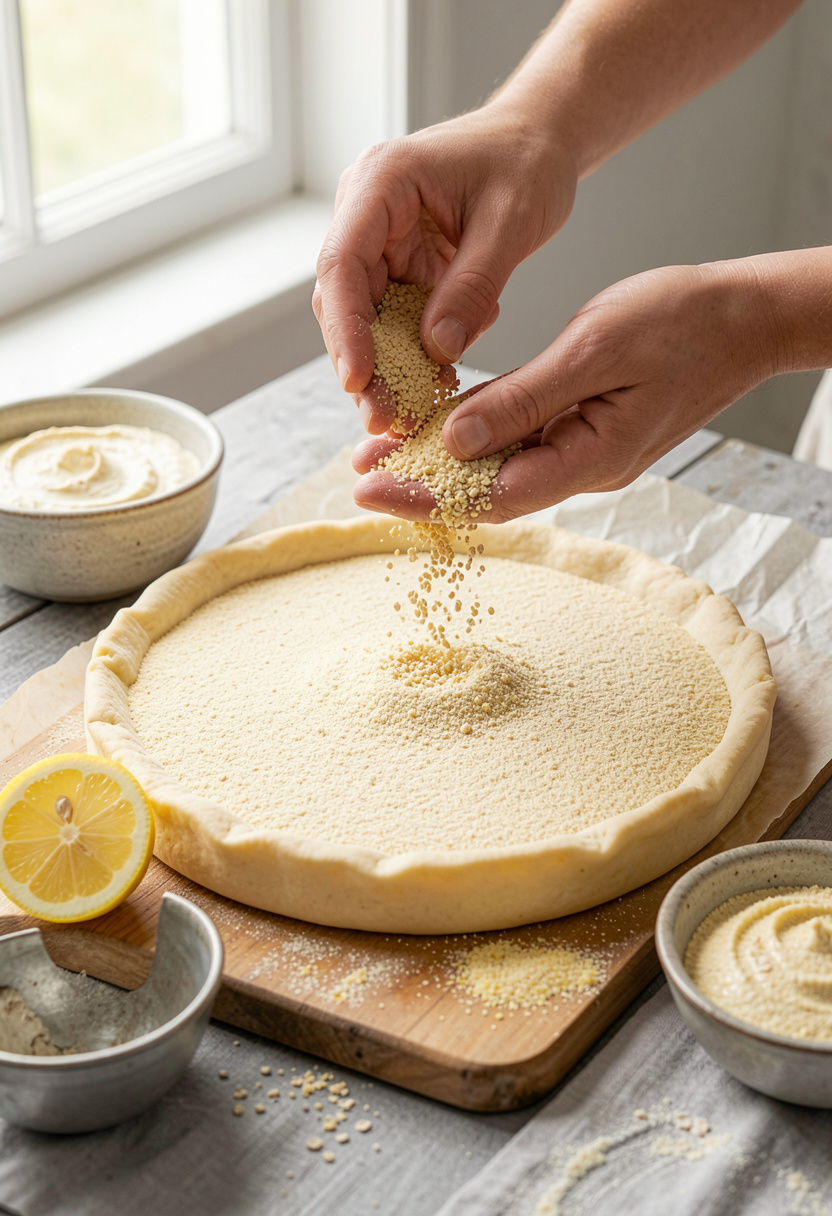

The trick I learned from trial and error is a thin absorbent layer between crust and fruit. Scatter 2 to 3 tbsp fine semolina or 1/3 cup ground almonds evenly over the par-baked crust. Semolina soaks stray juices without turning gummy.
Spoon the cooked filling into the pan, level it, then top with crumb or lattice if you like. Bake at 375°F for 35 to 40 min until the filling bubbles and the top is golden. Rotate the pan at 20 min for even browning.
The principle is controlled drainage and even bake. Avoid overfilling; too much fruit raises steam and over-saturates the crust. A mistake I made early on was relying on raw oats as an absorbent. They turned gummy. Use semolina or almond meal instead.
Helpful tools: fine semolina, silicone spatula, and a half sheet baking pan under the 9×13 to catch spills.
4. Cool, Glaze, and Slice So the Bottom Stays Crisp
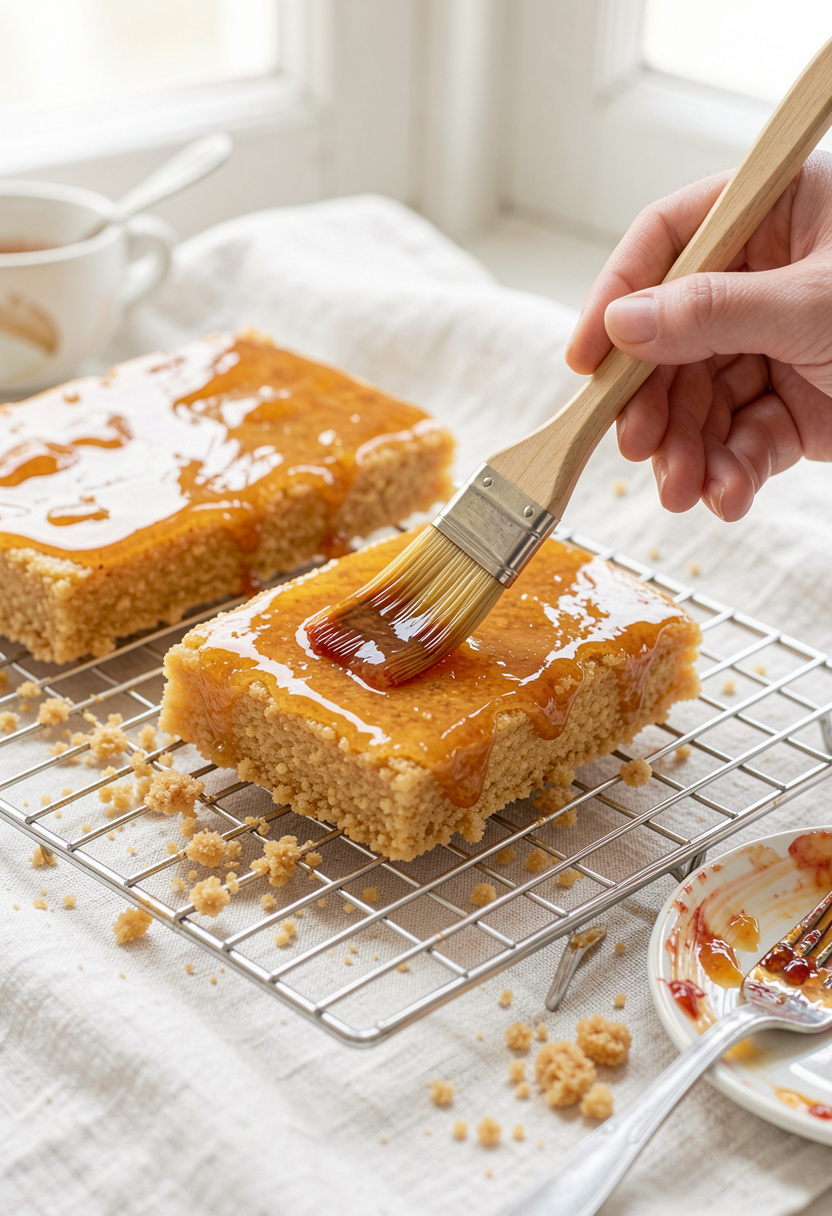

This phase decides whether your bars stay crisp. Cool the pan on a wire cooling rack for 1 hr at room temp, then chill uncovered 1 to 2 hr. The starches in the filling firm as they cool, which locks juices in place.
Warm 2 tbsp apricot jam with 1 tsp water and brush over the top for shine and a subtle sugar seal. Chill again 30 min before slicing with a bench knife or bench scraper to keep edges clean.
Cutting while warm pushes juices into the base. That was one of my ugly truths. Wait, then slice. Use an offset spatula to lift squares cleanly.
Common Cooking Mistakes to Avoid
Mistake: Skipping the blind-bake
Why it doesn't work: Steam from the filling softens raw dough and creates a soggy base.
Do this instead: Par-bake in a 9×13 metal baking pan with pie weights.
Mistake: Using only high-moisture apples
Why it doesn't work: High-water fruit releases more juice and overpowers starch thickeners.
Do this instead: Use a mix like Granny Smith and Honeycrisp and cook the apples first with 2 tbsp cornstarch.
Mistake: Cutting bars hot or warm
Why it doesn't work: Hot filling slips and soaks the bottom before starches set.
Do this instead: Cool on a wire cooling rack then chill 1 to 2 hr before slicing.
What You'll Need to Make This
Pantry Staples
King Arthur all-purpose flour 5 lb around $8 to $12
Diamond Crystal kosher salt 3 lb box around $5 to $8
cornstarch 16 oz around $2 to $5
Specialty Ingredients
fine semolina 1 lb around $4 to $8
tapioca starch 16 oz around $4 to $8
apricot jam 12 oz around $3 to $7
Tools That Earn Their Counter Space
9×13 metal baking pan approx $10 to $25
parchment paper rolls around $6 to $12
wire cooling rack around $8 to $18
Cookbooks Worth the Shelf
The Food Lab by J. Kenji Lopez-Alt (price range $18 to $28)
Salt Fat Acid Heat by Samin Nosrat (price range $15 to $25)
Budget Swaps
Fine semolina can be swapped for polenta 1 lb in a pinch, polenta around $3 to $6
Shopping Guide for This Recipe
Pick apples by texture: Choose firm apples like Granny Smith and Honeycrisp for structure; check local farmer markets for peak freshness. See apricot jam options around $3 to $7.
Substitution hack: Out of cornstarch? Use tapioca starch 1:1, about $4 to $8.
2025 trend note: Low-waste baking favors root-to-stem apple use; save peels for chips or infusions, see The Food Lab $18 to $28.
Splurge vs save: Splurge on high-quality butter like Kerrygold unsalted butter 8 oz approx $4 to $7; save on a basic parchment paper roll around $6 to $12.
Conclusion
Start with the blind-bake; that single phase delivers the biggest payoff when learning how to bake easy apple pie bars. The other high-impact move is cooking the filling so starch can do its job and the base stays crisp.
One finishing tip I always use: warm apricot jam thinned with a splash of water, brushed on warm bars, makes a glossy seal and adds a subtle acid-sweet note.
Will you try the blind-bake first or cook the filling before anything else?