
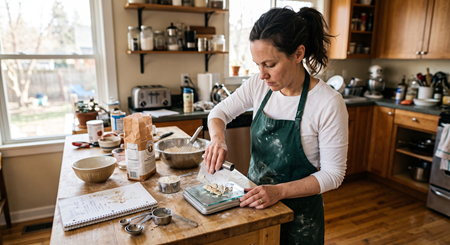
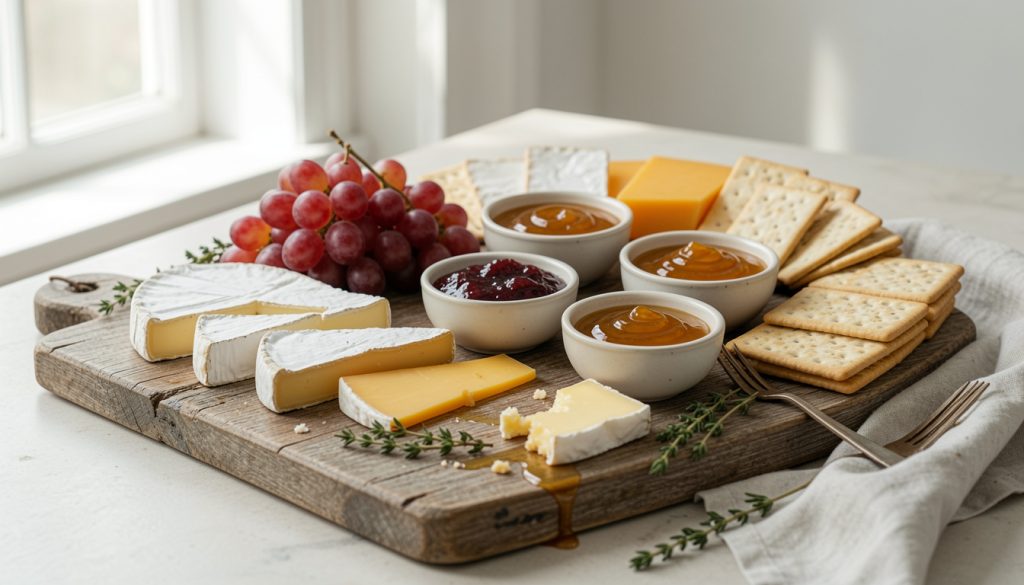

My first attempt at a party platter looked like a sad office snack tray. I learned how to make a cheese platter by accident when I had 20 minutes and $30 for eight guests.
This guide shows you how to build a full-looking, balanced board in 30 to 45 min, beginner-friendly, and friendly to a tight budget. You’ll learn the tricks to stretch three cheeses into a feast, hide gaps, and add color and crunch that taste intentional.
A quick note on taste trends: grazing boards and shareable plates keep climbing on menus, and plant-based cheeses are growing in interest (National Restaurant Association, 2025). Americans also eat a lot of cheese—about 40 lb per person per year (USDA, 2022). That means people recognize familiar textures and small indulgences. Use that to your advantage.
1. Layer The Foundation: Board, Bowls, and Big Shapes
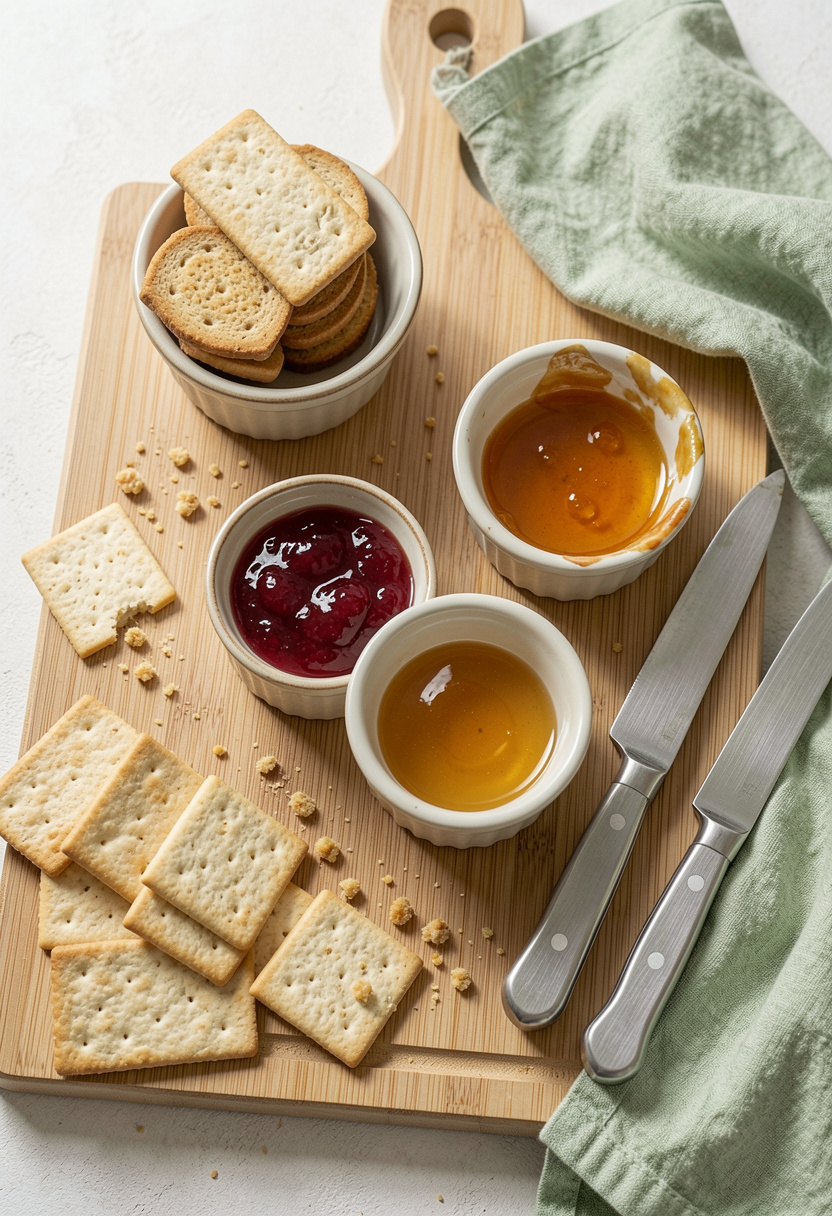

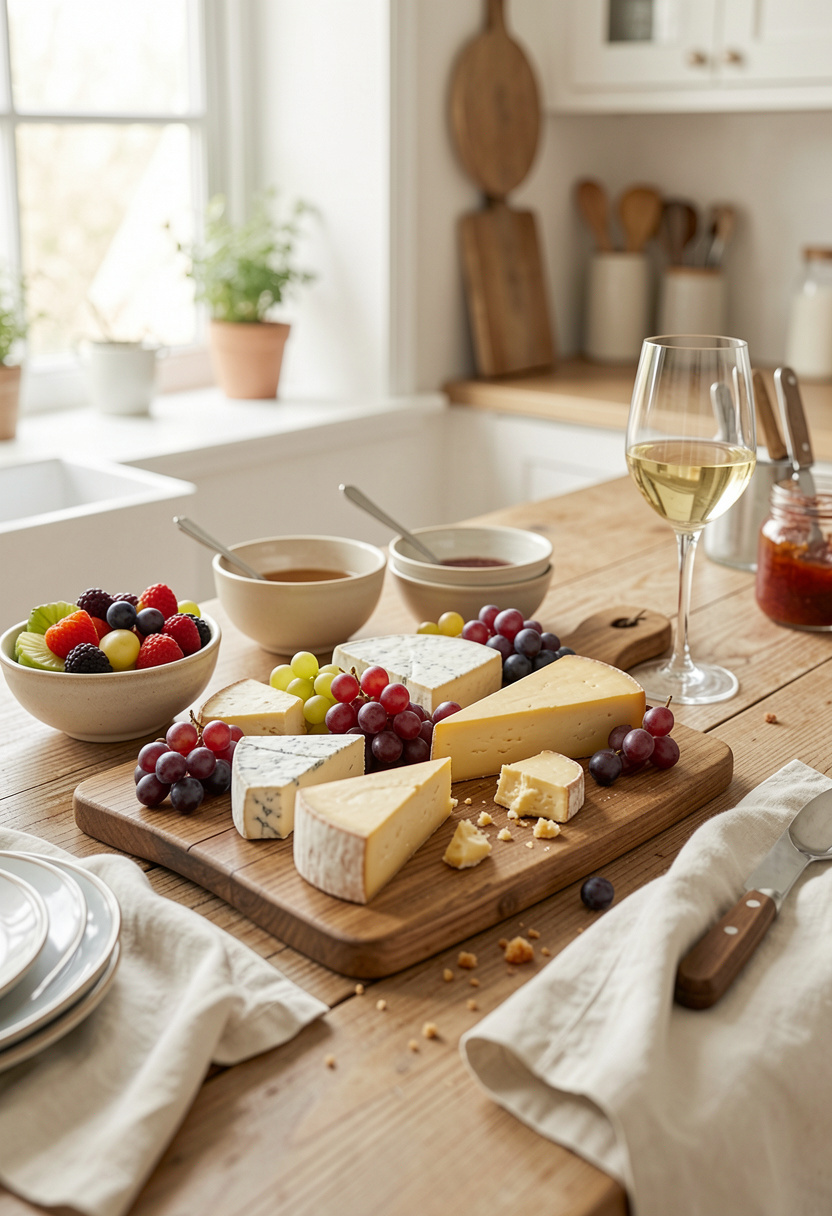
Start by anchoring the board with three visual blocks: two small bowls, one pile of crackers, and a large cheese wedge. The trick is scale. Big shapes fill space better than tiny slices.
I pack a set of mini bowls to hold olives and jam. A ceramic ramekin set around $12 to $20 and a bamboo cheese board with knives around $20 to $40 make assembly faster.
Why this order: bowls create vertical layers, crackers create horizontal textures, and the largest cheese gives the eye a place to rest. If you start with tiny items, the board looks empty.
Common mistake: scattering everything and filling gaps with single grapes. Instead, cluster items; three clusters read as abundance. Result: a board that looks deliberate and generous.
2. Choose Three Cheeses Thoughtfully: Texture, Age, and Price
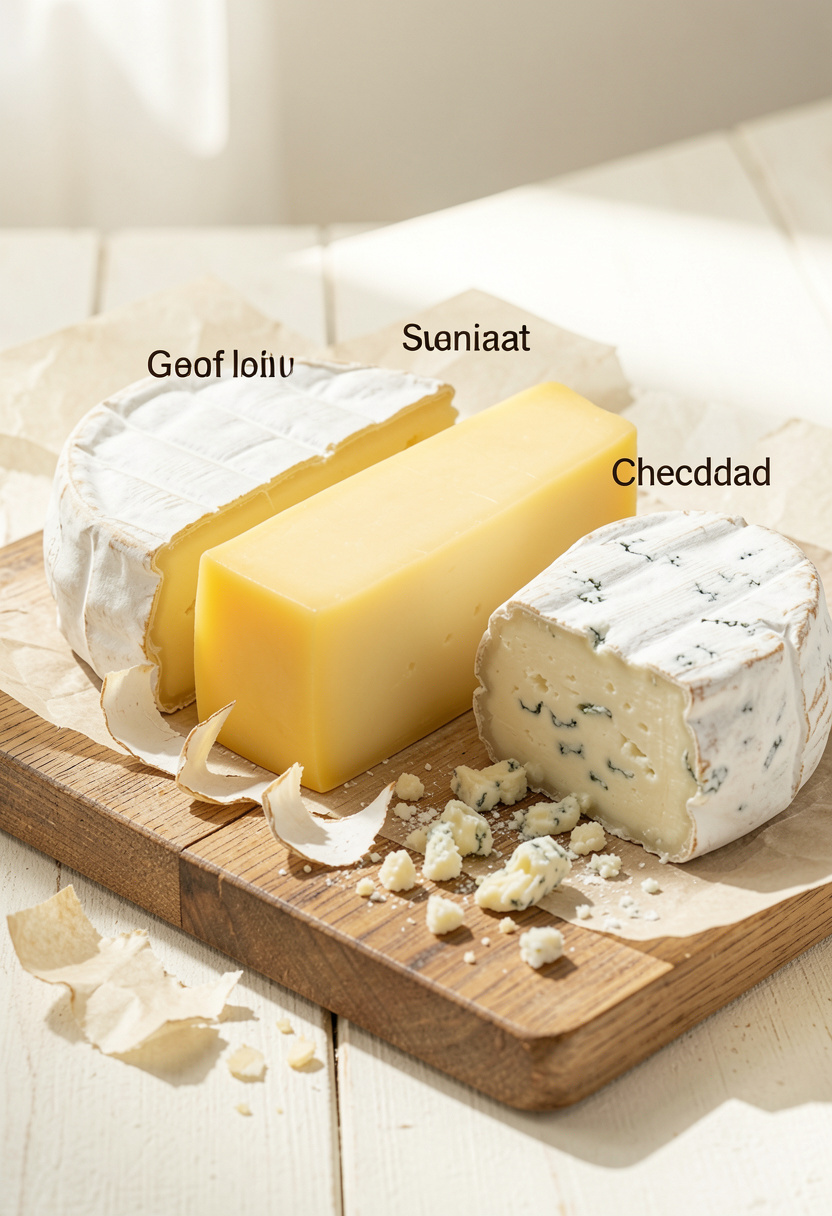

The easiest profitable rule: pick three cheeses—one soft, one semi-hard, one bold. I use brie for creaminess, a supermarket aged cheddar for bite, and a small goat log for tang.
Buy smart. A Président Brie 8 oz around $6 to $12 stretches a long way when cut into wedges. Pair with a budget Cabot aged cheddar 8 oz around $6 to $10, and a small goat cheese log 5 oz around $4 to $8.
Why it works: contrast in texture and salt level keeps the palate moving. Let cheeses sit at room temperature for 30 to 60 min before serving; flavors bloom and texture softens.
Mistake I made: slicing everything thin. That looks neat but shrinks fast. Instead, leave wedges, tear pieces, and pre-slice only one cheese for easy grabbing.
3. Fill Without Spending: Snacks That Fake Volume
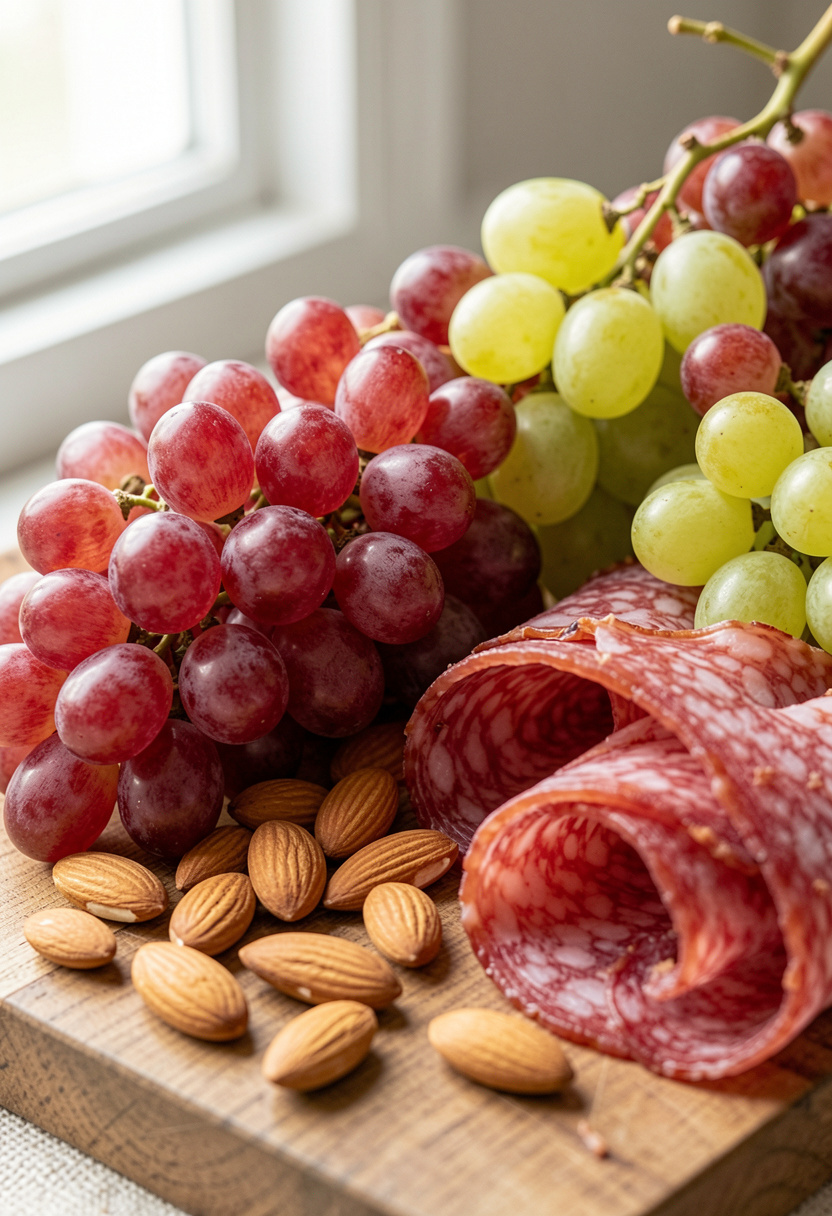

Ugly truth: pre-sliced salami and tiny fancy crackers are expensive and look sparse. The fix is bulk fillers that taste great and add texture.
Cluster a 1 lb bunch of red grapes around $3 to $6 and a small bag of marcona almonds 8 oz around $8 to $14. Use store-sliced salami and roll slices; a 6 oz pack of sliced salami around $4 to $8 reads like luxury when arranged.
Principle: volume is about repetition and grouping. A single chocolate or fig jam jar looks expensive, but three clusters of fruit and nuts disguise a slim cheese budget.
Mistake: filling gaps with air by leaving empty board edges. Instead, build outward from the center so the whole board reads full.
4. Sauces, Cutters, and Final Styling: Shine, Salt, and Height
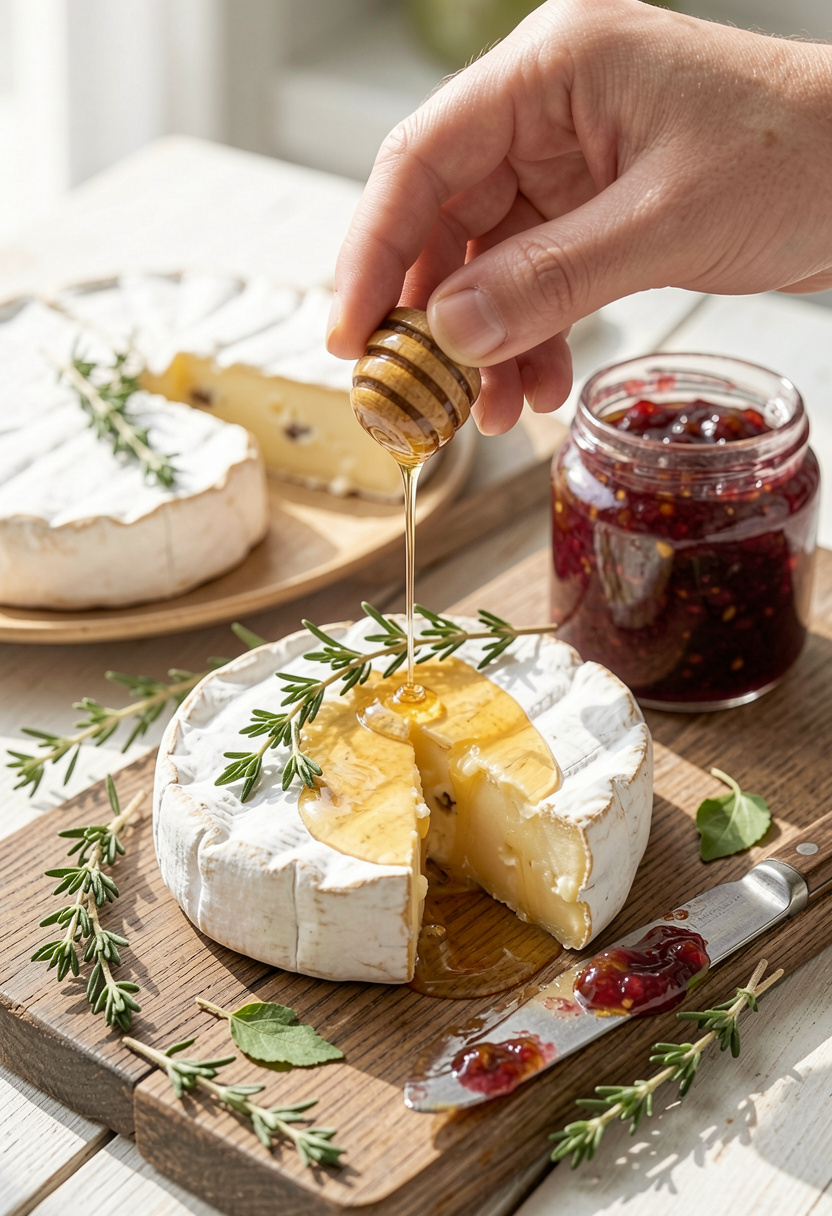

Finish with three small touches: shiny honey, crunchy salt, and vertical height. I always add a spoon of fig jam 9 oz around $5 to $12 and a drizzle of raw honey 12 oz around $6 to $14.
Sprinkle a pinch of flaky salt like Maldon sea salt 8.5 oz around $7 to $14 over the brie. Add height with a small bunch of grapes on the stem or a stack of crackers leaning upright.
Why it matters: acid and sweetness cut the fat; flaky salt brightens flavor. Final tip: label cheeses with a slate tag set like a cheese marker slate set around $8 to $15 so guests know what they are eating.
Common mistake: over-garnishing. One strong garnish per cheese is sufficient.
Common Cooking Mistakes to Avoid
Mistake: Putting cheeses straight from fridge to board
Why it doesn't work: Cold mutes flavor and texture; cheeses taste chalky.
Do this instead: Let cheeses rest 30 to 60 min. A simple kitchen thermometer around $10 to $25 helps time this for larger wheels.
Mistake: Using one type of cracker for the whole board
Why it doesn't work: Texture contrast is lost and the board reads boring.
Do this instead: Mix thin crackers with seeded crisps. A cracker assortment box around $6 to $12 gives variety.
Mistake: Overfilling with tiny items that look cheap (like single grapes or potato chips)
Why it doesn't work: Small items call attention to scarcity.
Do this instead: Cluster larger items and use a bag of mixed nuts around $6 to $15 to fake abundance.
What You'll Need to Make This
Pantry Staples
Raw honey 12 oz around $6 to $14
Fig jam 9 oz around $5 to $12
Maldon sea salt 8.5 oz around $7 to $14
Specialty Ingredients
Président Brie 8 oz around $6 to $12
Cabot aged cheddar 8 oz around $6 to $10
Marcona almonds 8 oz around $8 to $14
Tools That Earn Their Counter Space
bamboo cheese board with knives around $20 to $40
ceramic ramekins set around $12 to $20
cheese spreaders set around $8 to $15
Cookbooks Worth the Shelf
Salt Fat Acid Heat by Samin Nosrat (price range $18 to $28)
The Food Lab by J. Kenji Lopez-Alt (price range $18 to $30)
Budget Swaps
Trader Joe’s-style pear jam alternative search around $4 to $8 (Aldi often has near-identical jars for less)
store-sliced salami 6 oz around $4 to $8 (buy whole and slice at deli for a cheaper per-pound option)
Shopping Guide for This Recipe
Buy small wheels, not many blocks: Smaller wedges cost less and look abundant; try a brie 8 oz around $6 to $12.
Substitution hack: Out of goat cheese? Use whipped ricotta with lemon zest as swap; search whipped ricotta around $6 to $10.
Seasonal pick: Grapes and figs are best late summer to early fall; buy in-season at the farmers market or buy frozen figs around $8 to $15 off-season.
Splurge vs save: Splurge on one show-stopper cheese like truffle pecorino; save on pantry accoutrements like jam from the supermarket or a generic honey jar raw honey 12 oz around $6 to $14.

Conclusion
Start with the foundation: bowls, a cracker pile, and one big wedge. Those three moves alone make even a small selection read abundant.
Finish with a drizzle of honey and a flaky salt pinch to tie richness and brightness together. A cheese marker slate set around $8 to $15 helps guests navigate the board.
Will you try the three-cheese rule first or build a themed board around one show-stopper?