




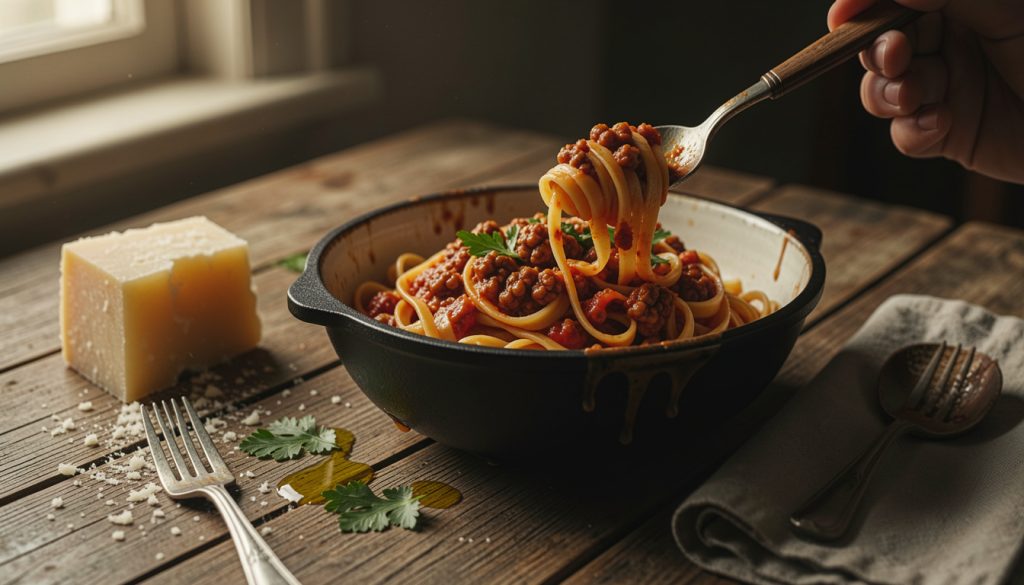

I learned how to thicken bolognese sauce the hard way after serving a soupy mess to a friend who expected clingy noodles. How to thicken bolognese sauce without turning it heavy is the exact problem I solved by testing reductions, purees, and light emulsions until the sauce felt rich, not weighed down.
You’ll learn quick tricks that take 10 minutes at the finish, longer techniques for a slow Sunday pot, and which pantry swaps keep the mouthfeel glossy not gloopy.
The sauce sits squarely in Italian-American weeknight territory, but with old-school technique. Expect about 30 min active prep and 1 hr to 2 hr total simmer time depending on how concentrated you want it. This guide is for cooks who want restaurant-quality body without creaminess that flattens the flavor.
I’ve noticed in 2025 more cooks leaning on pantry boosts and plant-forward body (pureed beans or lentils) to round sauces without extra dairy.
1. Concentrate, Don’t Sludge: Low Simmer Reduction
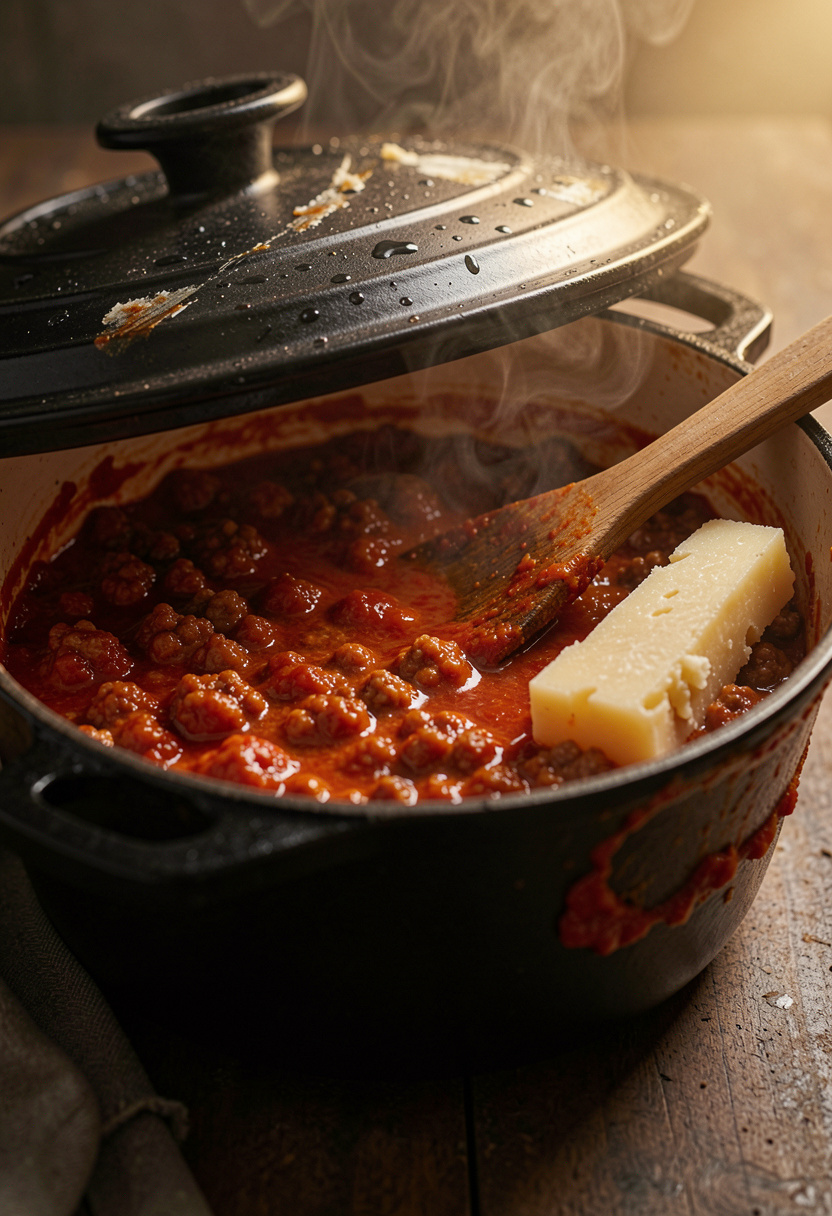

Slow reduction is the single cleanest way to thicken without heaviness. Simmer the sauce gently so water evaporates and flavors concentrate, about 1 to 1.5 hr on low (a gentle simmer is 180°F to 200°F). That raises soluble solids, making sauce cling without extra fat.
Use a heavy pot that holds steady heat, like a Le Creuset 5.5 quart Dutch oven or budget Lodge enameled dutch oven 5 quart, so you get a long slow simmer without hot spots.
The cooking principle is concentration by evaporation and Maillard carryover from browned meat, which starts giving deep flavor around 285°F (Maillard chemistry explained by Serious Eats). Stir rarely, skim excess fat, and tuck a Parmigiano-Reggiano wedge 8 oz rind into the pot for umami and silky mouthfeel.
Mistake: blasting the pot on high to reduce will scorch and taste bitter. Do reductions low and patient for glossy, focused sauce.
2. Build Body from the Base: Soffritto, Browning, and Tomato Paste
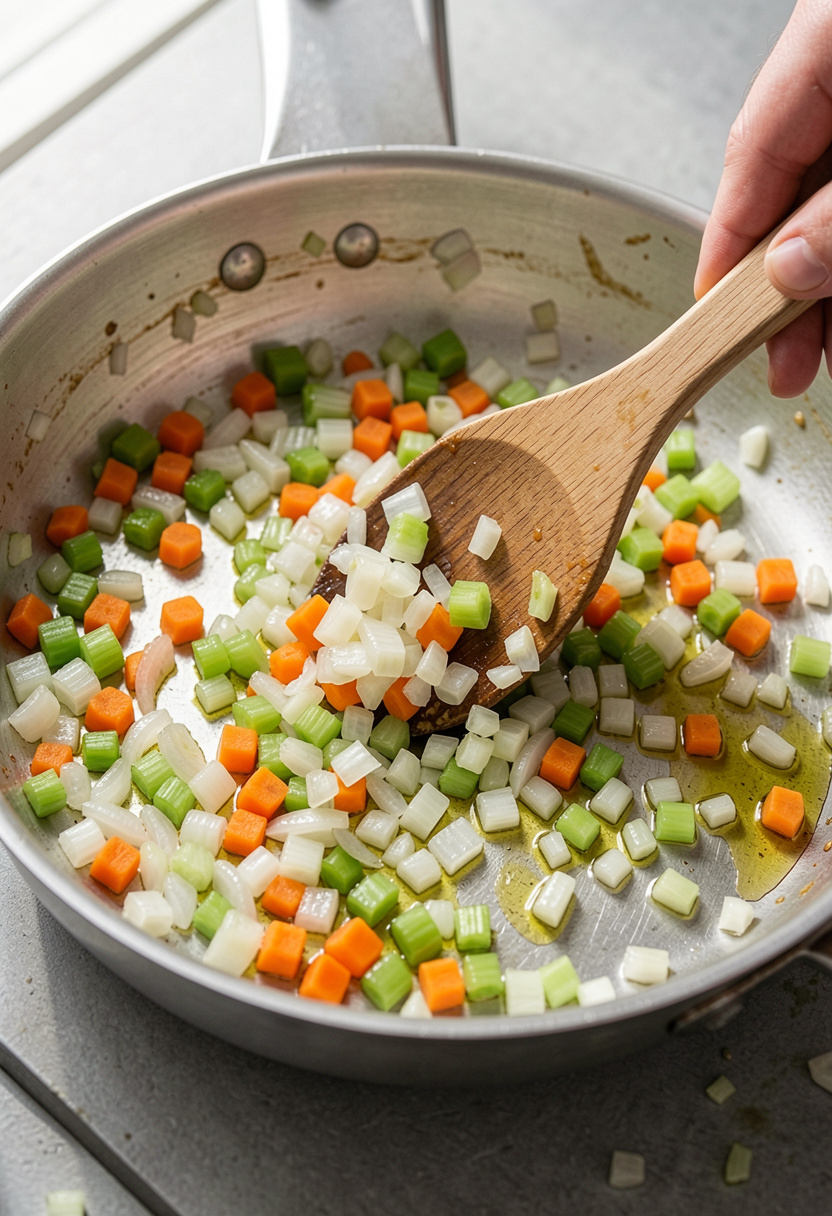

The soffritto and a proper brown on the meat create natural thickness. Start with 1 medium onion, 1 carrot, 2 celery stalks finely diced and sweat in Colavita extra virgin olive oil 17 oz until soft, about 8 to 10 min. Then brown the meat in batches so you get fond.
Stir in 2 tablespoons tomato paste and toast it 2 to 3 min until it darkens. Toasting the paste deepens flavor and gives body without adding weight.
The principle is Maillard flavor and fond-to-sauce emulsification, which makes sauce feel thicker even at the same viscosity. I use a Lodge cast iron skillet 12 inch to get an aggressive sear on half the meat before finishing in the pot.
Mistake: crowding the pan so meat steams. Brown in batches with room between pieces for that roast-y edge that helps sauce cling.
3. Add Body, Not Dairy: Purees, Beans, and Starches Done Right
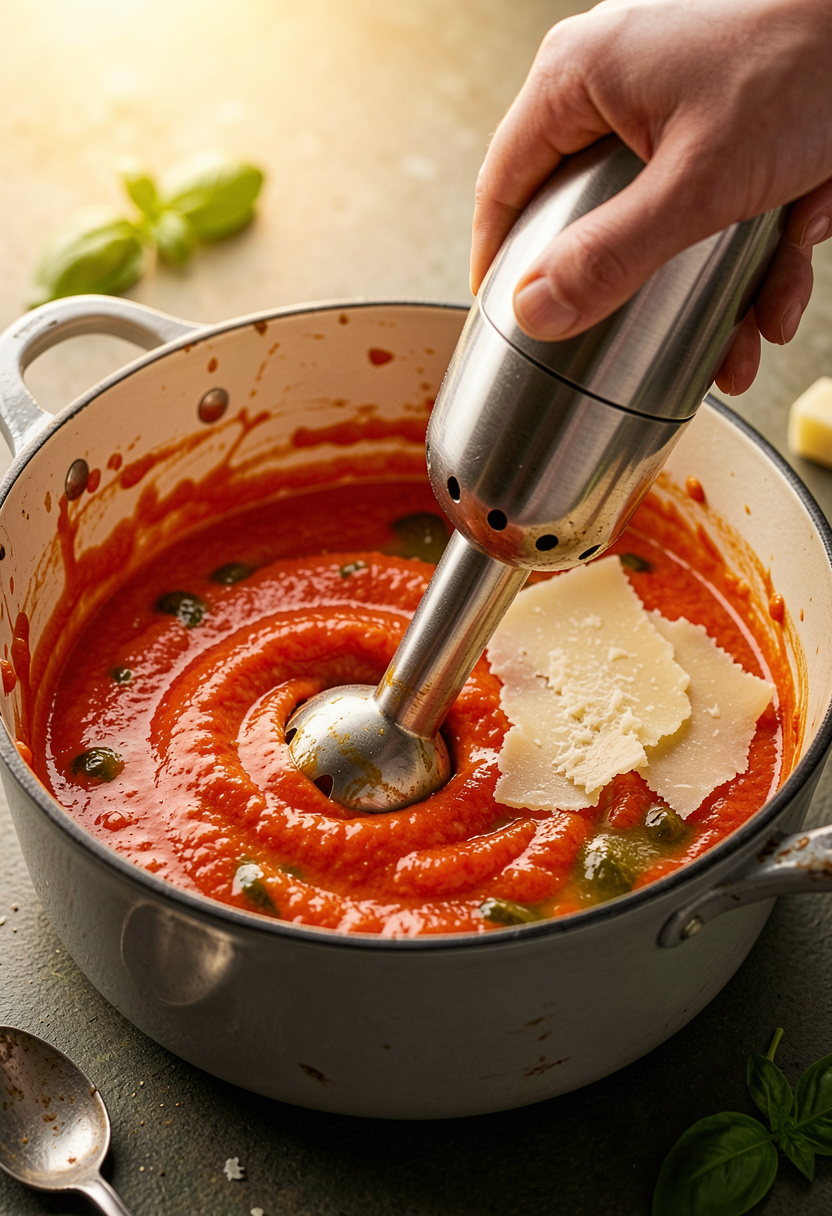

If you want body without cream, puree a portion of the sauce or add a small spoon of pureed white beans. I blitz about one cup of finished sauce in an Breville immersion blender or pulse a cup of canned Cannellini beans 15 oz until velvety, then stir back in.
For a neutral, lighter mouthfeel use a starch slurry of 1 tsp cornstarch to 2 Tbsp cold water, whisked in at the end and simmered 2 to 3 min at 200°F until glossy. Cornstarch gelatinizes between about 140°F and 160°F, which is why finishing hot is needed (science in Harold McGee’s work).
This achieves thickness with little additional fat, keeping the sauce bright. A final stir of 1 Tbsp extra virgin olive oil adds gloss without heaviness.
Mistake: adding starch too early makes it break down. Finish with the slurry and taste before salting more.
4. Finish Light: Acid, Cheese Rind, and an Olive Oil Emulsion
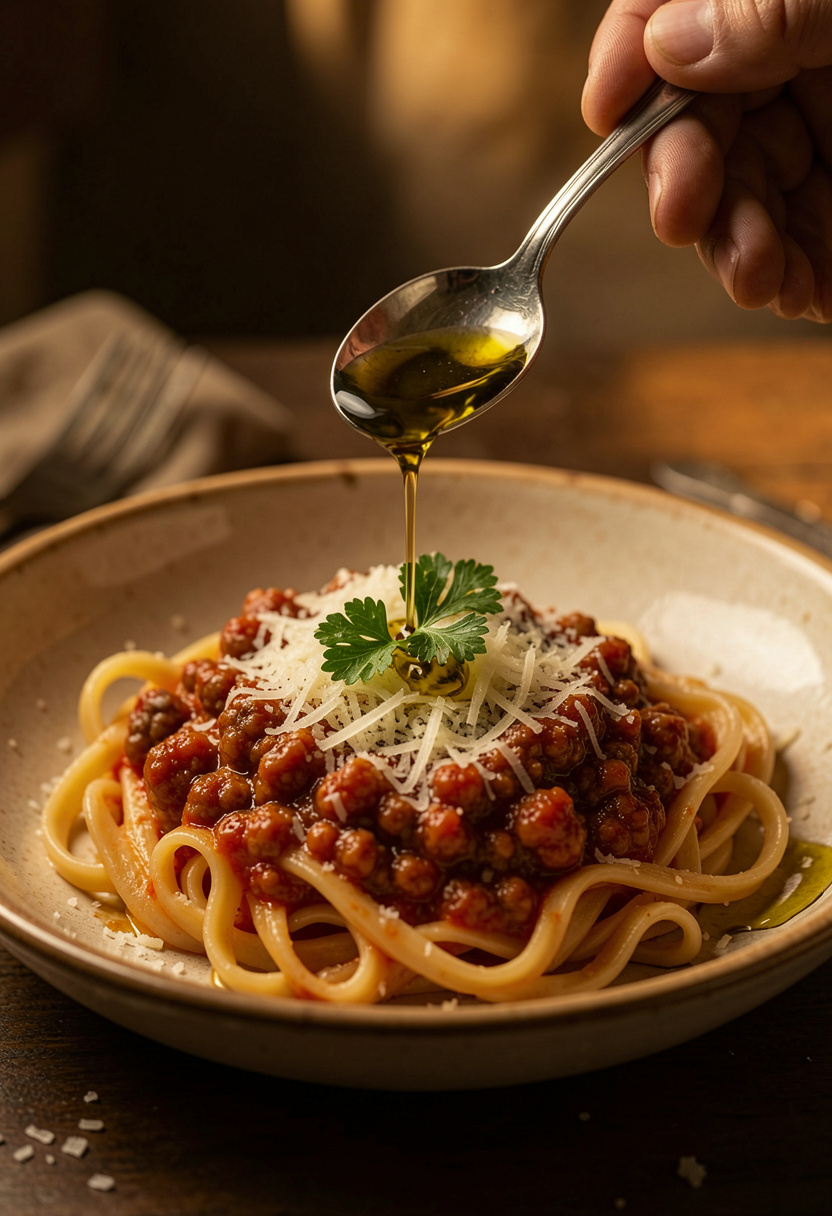

Finishing is where lightness meets flavor. Remove the Parmigiano rind, then add a squeeze of lemon or 1 tsp white wine vinegar to brighten the concentrated sauce. Acidity balances richness so less fat reads as satisfying.
Stir in 1 to 2 Tbsp grated Parmigiano-Reggiano wedge 8 oz off-heat and whisk in a tablespoon of Colavita extra virgin olive oil 17 oz for an emulsion that gives silk without cream.
The principle is acid rebalancing and emulsification, which coats the tongue and tricks you into perception of body. Taste then finish with flaky Maldon sea salt flakes 4.5 oz for texture.
Mistake: dumping cream at the end to thicken. It flattens acidity and makes the sauce sit heavy on the palate. Use acid and oil instead.
Common Cooking Mistakes to Avoid
Mistake: Crowding the pan when browning meat
Why it doesn't work: Temperature drops, meat steams, you lose fond that builds flavor.
Do this instead: Brown in batches in a Lodge cast iron skillet 12 inch.
Mistake: Adding starch early in the simmer
Why it doesn't work: Starch breaks with long heat, thinning the sauce later.
Do this instead: Finish with a small cornstarch slurry using Bob's Red Mill cornstarch 16 oz.
Mistake: Using too much tomato paste at once for color
Why it doesn't work: Overcooked paste tastes bitter and masks meat.
Do this instead: Toast 2 Tbsp slowly in the pan, then add canned San Marzano whole peeled tomatoes 28 oz.
What You'll Need to Make This
Pantry Staples
Diamond Crystal kosher salt 3 lb box around $5 to $8
San Marzano whole peeled tomatoes 28 oz around $3 to $6
CentO tomato paste 6 oz cans around $2 to $5
Specialty Ingredients
Parmigiano-Reggiano wedge 8 oz around $12 to $18
Laoganma chili crisp 7.4 oz around $6 to $10
Tools That Earn Their Counter Space
Le Creuset 5.5 quart Dutch oven approx $200 to $350
Lodge cast iron skillet 12 inch approx $25 to $40
Thermapen instant read thermometer approx $75 to $115
Cookbooks Worth the Shelf
Salt Fat Acid Heat by Samin Nosrat (price range $18 to $28)
The Food Lab by J. Kenji Lopez-Alt (price range $18 to $30)
Budget Swaps
Lodge enameled dutch oven 5 quart approx $60 to $90 is a durable save vs pricier brands
Shopping Guide for This Recipe
Focus on canned quality: Use San Marzano whole peeled tomatoes 28 oz for bright tomato flavor, usually best in late summer preserves.
Substitution hack: Out of Parmigiano, grate a knob of hard Pecorino or use a Parmigiano-Reggiano wedge 8 oz chunk, it melts into sauce beautifully.
2025 trend tip: Pureed beans for body are rising; try Cannellini beans 15 oz for neutral lift.
Splurge vs save: Splurge on a reliable Le Creuset 5.5 quart Dutch oven if you braise often; save with a Lodge enameled dutch oven 5 quart otherwise.
Conclusion
Start with the easy, high-impact moves: brown the meat properly, toast a little tomato paste, and reduce gently. Those three steps give you most of the thickness without adding cream.
Finish with a bright acid and a drizzle of good olive oil to keep the sauce glossy and balanced. If you want one tool to change your game, get an instant read thermometer so you can monitor gentle simmers precisely.
Will you try the partial puree trick first or go straight for a long low simmer?