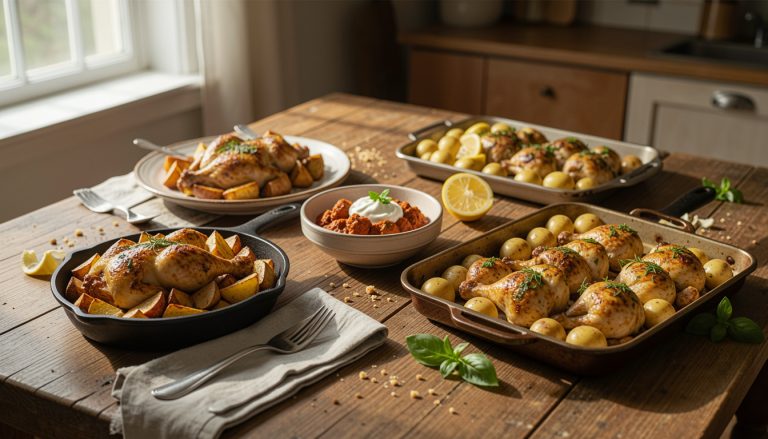








The first time I fumbled a mango I lost half the fruit to the seed and messy peels. Learning how to cut mango for desserts changed that.
In under 10 minutes I can get neatly fanned slices, clean cubes for salsas, and a silky puree with almost zero waste. This guide shows the exact grips, tools, and timings I use when I want maximum fruit and clean-looking dessert components.
Ripe, sweet, tropical: mango fits summer desserts, Latin and South Asian flavors, and quick weeknight fruit tarts. Expect about 10 min hands-on per mango, beginner-friendly, with one small trick: cutting close to the flat pit without hacking into it.
I find most home cooks are weekend bakers or weeknight dessert makers who want tidy slices and minimal waste. Lately I see mango used in 2025 fruit-forward trends—more citrus-bright pairings and thin-layered tarts—so these cuts matter.
1. Pick, Chill, and Stabilize for Cleaner Cuts
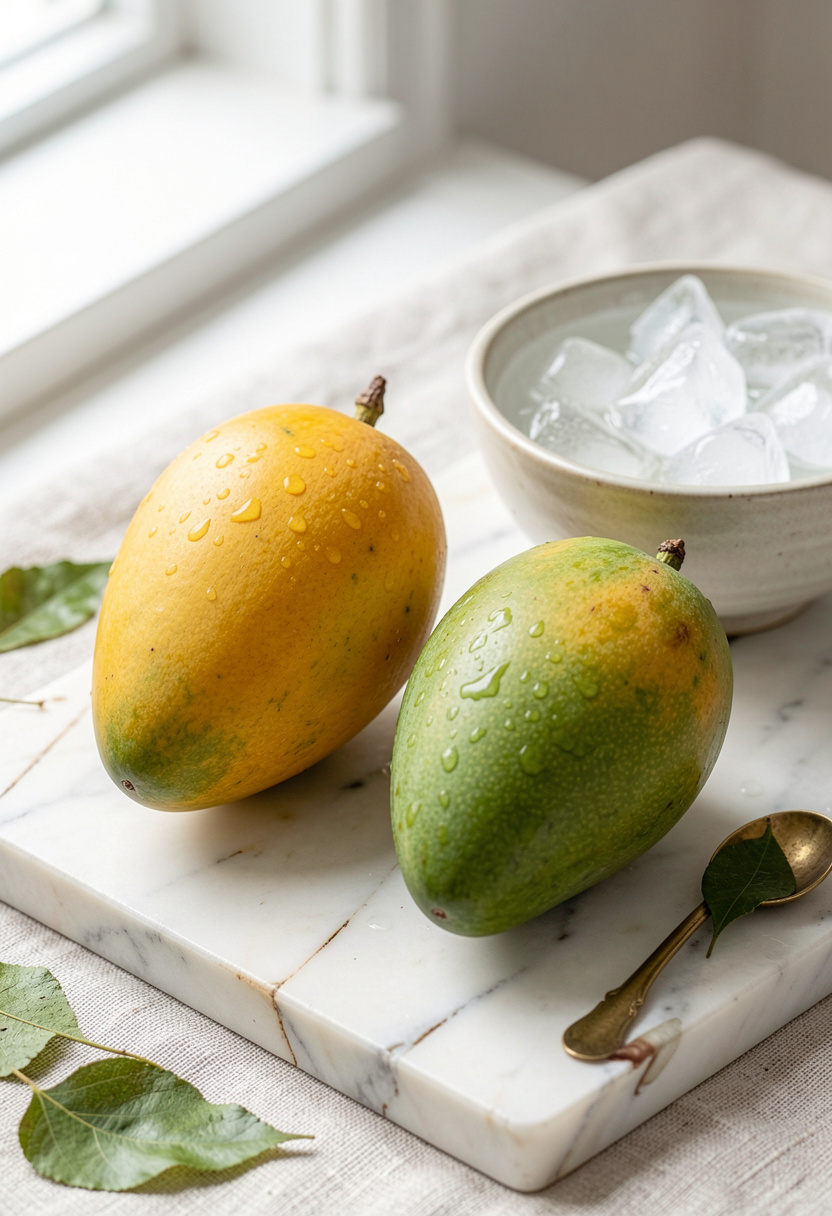

Start with the right fruit. Ripe mango gives slightly to thumb pressure near the stem and smells sweet. If it’s too soft you’ll mash it; too firm and the slices tear.
Chill for 20 to 30 min in the fridge to firm the flesh for cleaner slicing. I keep a bowl of ice water on the counter for quick chilling when needed.
A mango splitter or a sharp OXO Good Grips paring knife 3 inch saves time and prevents accidental gouges. The principle: firmer flesh resists tearing so you get intact slices, not shredded pulp.
Mistake here is peeling before trimming. If you peel first you often lose the curved flesh near the seed. Instead, cut the cheeks first, then peel or scoop. That order keeps yield high.
2. The Close-Cut Fillet: Maximize Flesh, Minimal Trim
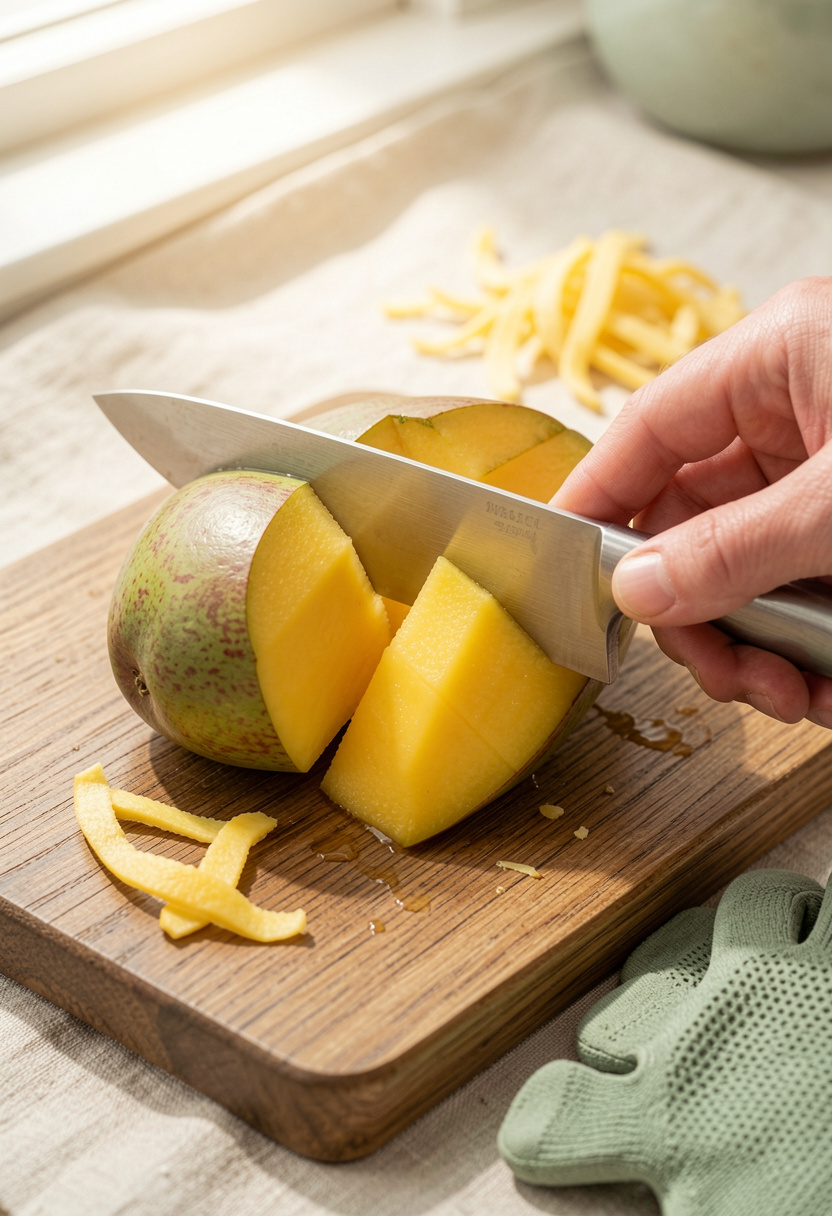

Place the mango stem-side up. Use the paring knife to cut two large cheeks by slicing about 1/4 inch off center each side of the widest part, following the flat pit contour.
That 1/4-inch offset is the technique most cooks skip. It keeps your blade hugging the seed curve so you don’t hack into the pit and waste flesh. I learned this by trimming thin layers as I went, then adjusting depth to the pit feel.
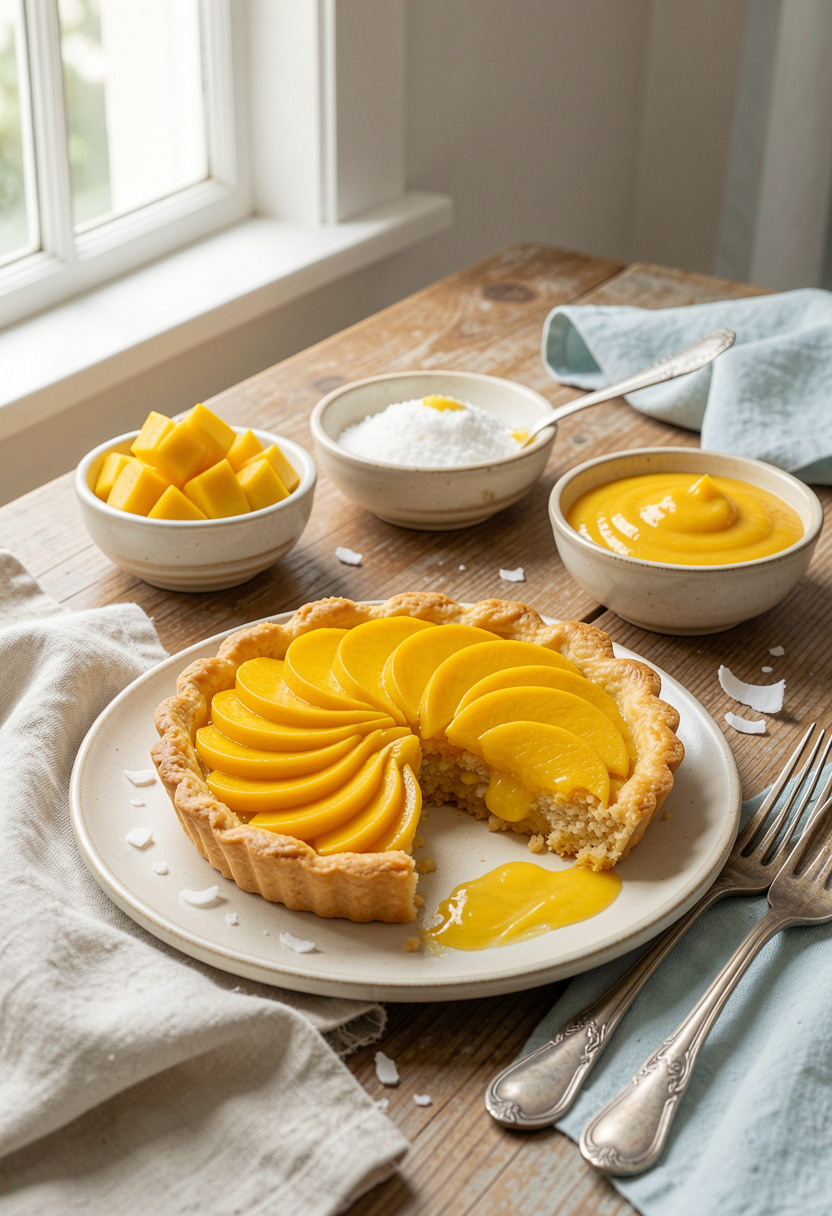
For thin slices for a tart fan, run the knife across the cheek flesh parallel to the skin in 1/8-inch strokes, then peel each strip with a spoon or peeler. A Y-shaped peeler helps here.
The principle is precision trimming: shallow, repeated cuts remove almost no usable flesh. Common error: a single deep cut that hits the pit. Move slowly and feel for resistance.
3. Grid-and-Scoop Versus Strip Slicing: Pick the Right Finish
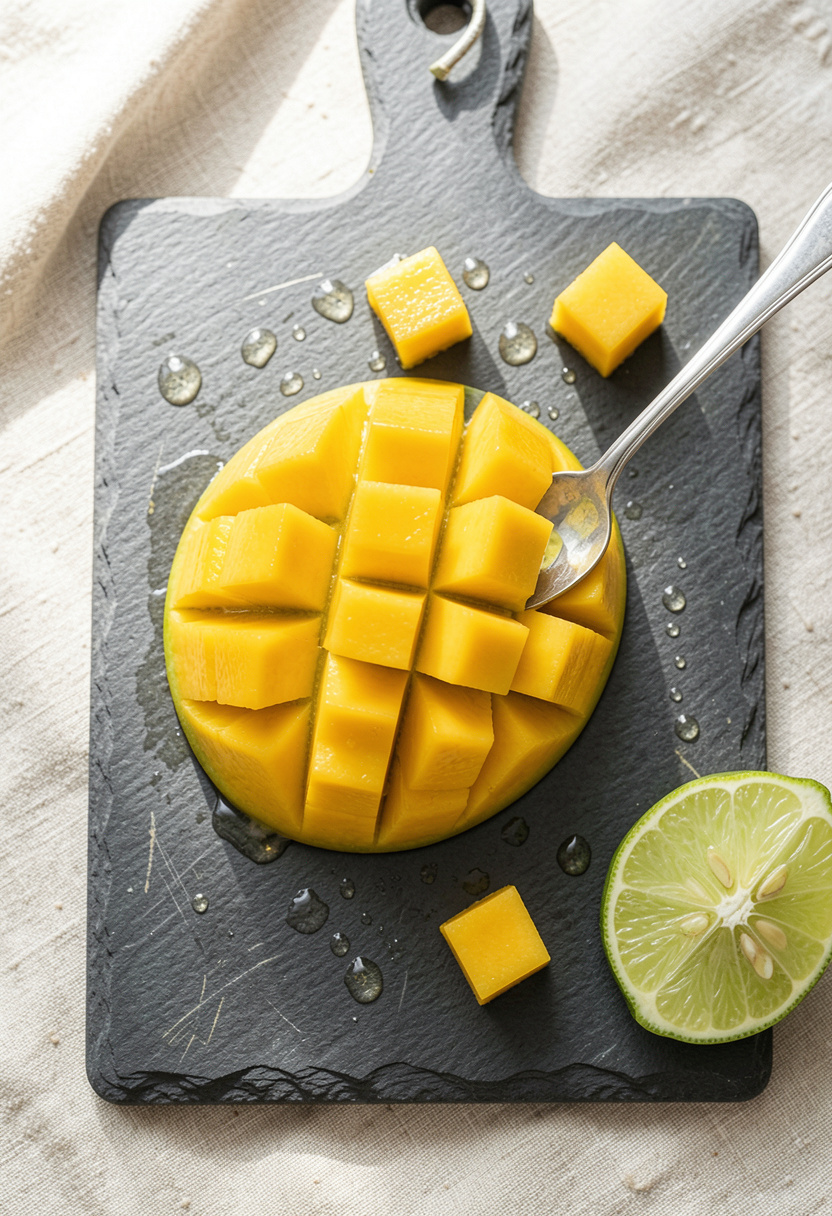

The hedgehog grid is famous, but it can waste the curvy margin near the skin and leave an awkward edge for plating.
For salsa or mousse, I still use grid-and-scoop: score 1/2-inch grids and use a spoon to pop cubes into a bowl. For tarts or layered desserts I favor strip slicing: thin, even ribbons from the cheek, peeled away with a spoon for flush edges.
A cheap trick I use: scrape the cheek flesh with a stainless steel spoon set to get every last bit after the main slices. This recovers the curved bits the grid misses.
Technique principle: match the cut to the presentation need. Hedgehog for volume, strip for beauty. Mistake: switching methods mid-cut and tearing the flesh. Pick one and finish that cheek before moving on.
4. Treat, Store, and Finish for Dessert-Ready Fruit
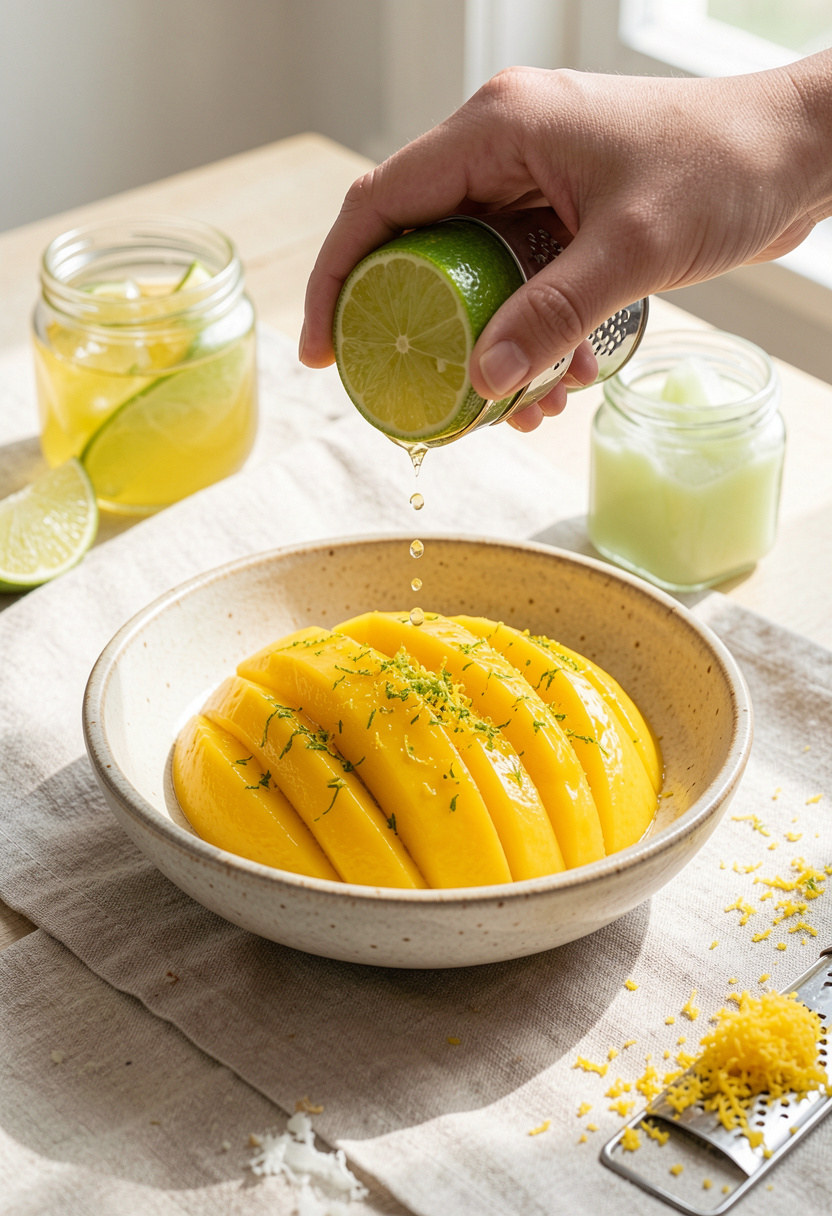

Once cut, prevent browning and mush by lightly tossing slices with 1 tsp fresh lime juice per mango. Acid stabilizes color and brightens flavor without making the flesh soggy.
Store in an airtight container with a paper towel to absorb excess juice, up to 24 hr in the fridge. For puree, blitz gently with an immersion blender and strain for silkier texture. I use a Vitamix immersion blender attachment for smooth purées.
Finish tips: a tiny sprinkle of flaky salt (Maldon style) on dulce de leche and mango is surprising and good. Common error: overdressing with sugar. Mango is sweet; a little acid and salt go farther than granulated sugar.
Common Cooking Mistakes to Avoid
Mistake: Cutting straight down the center to split the pit
Why it doesn't work: You lose the sweet meat clinging to the pit and risk a dull, wasted edge.
Do this instead: Trim 1/4 inch off-center and use a parring knife to follow the pit curve.
Mistake: Peeling before slicing
Why it doesn't work: Peeling first removes the visual guide for where the pit sits and makes clean slices harder.
Do this instead: Slice cheeks first, then peel with a Y-shaped peeler.
Mistake: Using a dull knife or sawing motion
Why it doesn't work: Tearing instead of clean shearing wastes flesh and yields ragged slices.
Do this instead: Keep a sharp chef's knife 8 inch or a paring knife on hand and slice smoothly.
What You'll Need to Make This
Pantry Staples
Kosher salt, Diamond Crystal 3 lb box around $5 to $8
Fresh limes (or bottled lime juice) around $4 to $8
Specialty Ingredients
Ataulfo mango (best for desserts) price varies seasonally
Toasted shredded coconut 8 oz around $5 to $10
Tools That Earn Their Counter Space
Mango splitter approx $8 to $18
OXO Good Grips paring knife 3 inch approx $8 to $16
Flexible cutting board set around $10 to $20
Cookbooks Worth the Shelf
Salt Fat Acid Heat by Samin Nosrat (price range $18 to $28)
The Food Lab by J. Kenji Lopez-Alt (price range $20 to $30)
Budget Swaps
Generic Y-peeler (Aldi has similar) around $5 to $10
Restaurant-quality paring knife alternative, Victorinox 3.25 inch around $10 to $18
Shopping Guide for This Recipe
Buy Peak Fruit: Buy fresh mangoes in May to August for best flavor; seasonal produce guide (price varies).
If You’re Out of Limes: Use a teaspoon of white vinegar per mango for color control, or keep bottled lime juice ($4 to $8).
Tool Splurge vs Save: Splurge on a quality paring knife like OXO Good Grips paring knife 3 inch ($8 to $16); save on a basic peeler.
2025 Trend Tip: Thin fruit layers are trending for tarts; invest in a flexible cutting board set for efficient prep ($10 to $20).

Conclusion
Start with the cheek cuts and a sharp paring knife. That one change recovered more fruit than any gadget I tried.
A squeeze of lime and proper storage keeps slices bright and dessert-ready. If you had to buy one thing, get a reliable paring knife and you’ll see immediate improvement.
Will you try the close-cut fillet or the strip-slice method first?