
My first attempt at how to make bolognese sauce was watery and slid off my pasta. My brother-in-law said it tasted fine but asked for napkins because the sauce refused to cling.
After cooking this a dozen times I learned what makes ragù stick: concentrated meat, starch, and a glossy emulsion off the heat. Read on and you will get a weeknight-friendly method (about 45 min hands-on, 1 hr 15 min total) that yields sauce that coats every forkful.
Bolognese here is Italian-American comfort with an honest ragù heart. This version leans meaty and balanced, not vinegary. It’s friendly for beginners, but the tricky bit is timing the simmer and finishing with pasta water so the sauce actually grabs the noodles.
I’ve noticed more home cooks in 2025 stretch meat with sautéed mushrooms or lentils for sustainability and texture. That’s useful when you want the same cling without using extra meat.
1. The Pre-Sear Setup: Dry Salt, Measure, and Temper
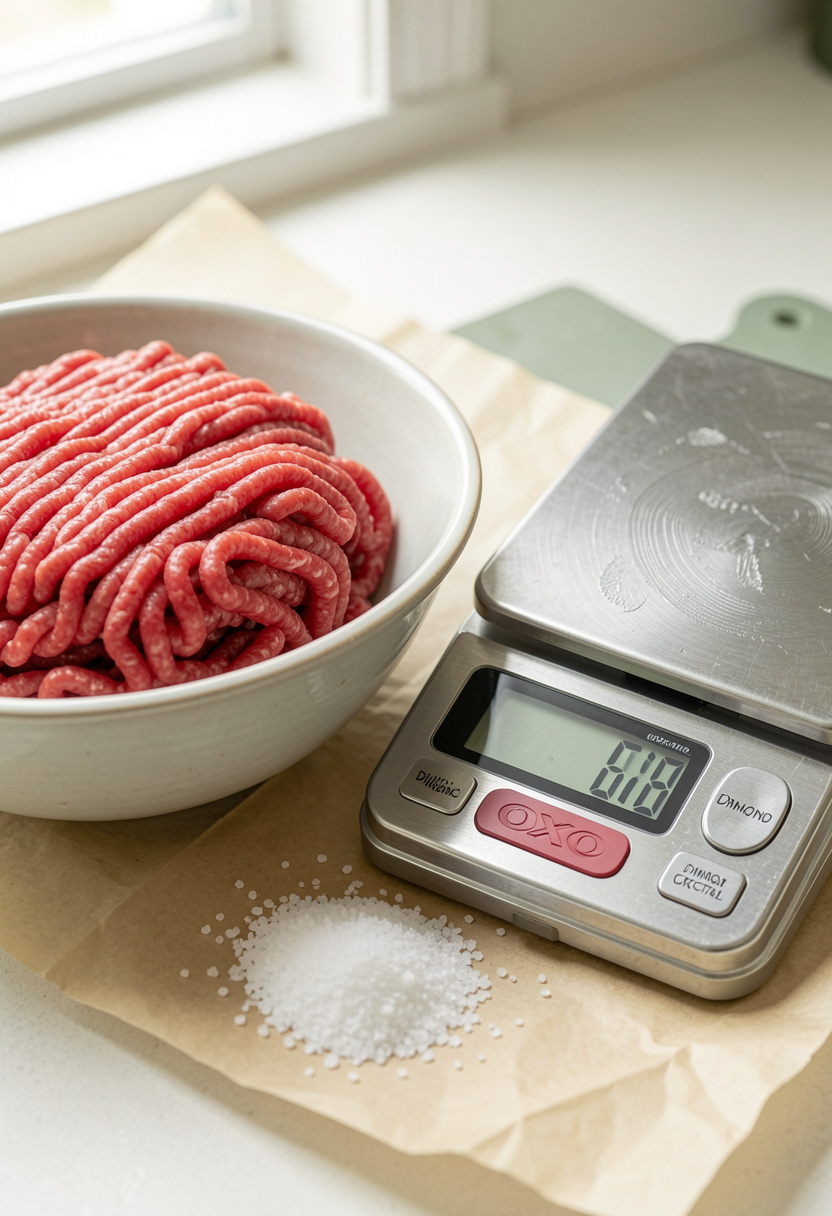
Start by seasoning the meat ahead of time. Salt draws moisture then reabsorbs it for deeper flavor and better browning.
Weigh your meat with an OXO digital kitchen scale so you can keep a 3:1 meat-to-tomato ratio by weight for a meat-forward ragù. Use Diamond Crystal kosher salt 3 lb box for predictable seasoning.
Temper the meat while you sweat the soffritto. Room temperature meat hits the pan evenly and develops a better crust. The principle here is simple: a drier, room-temp surface browns faster (Maillard reaction), which builds the savory backbone. Mistake to avoid: salting at the last second then crowding the pan—do the opposite and dry the meat briefly on paper towels if it’s wet.
2. The Sear in Smoking-Hot Cast Iron
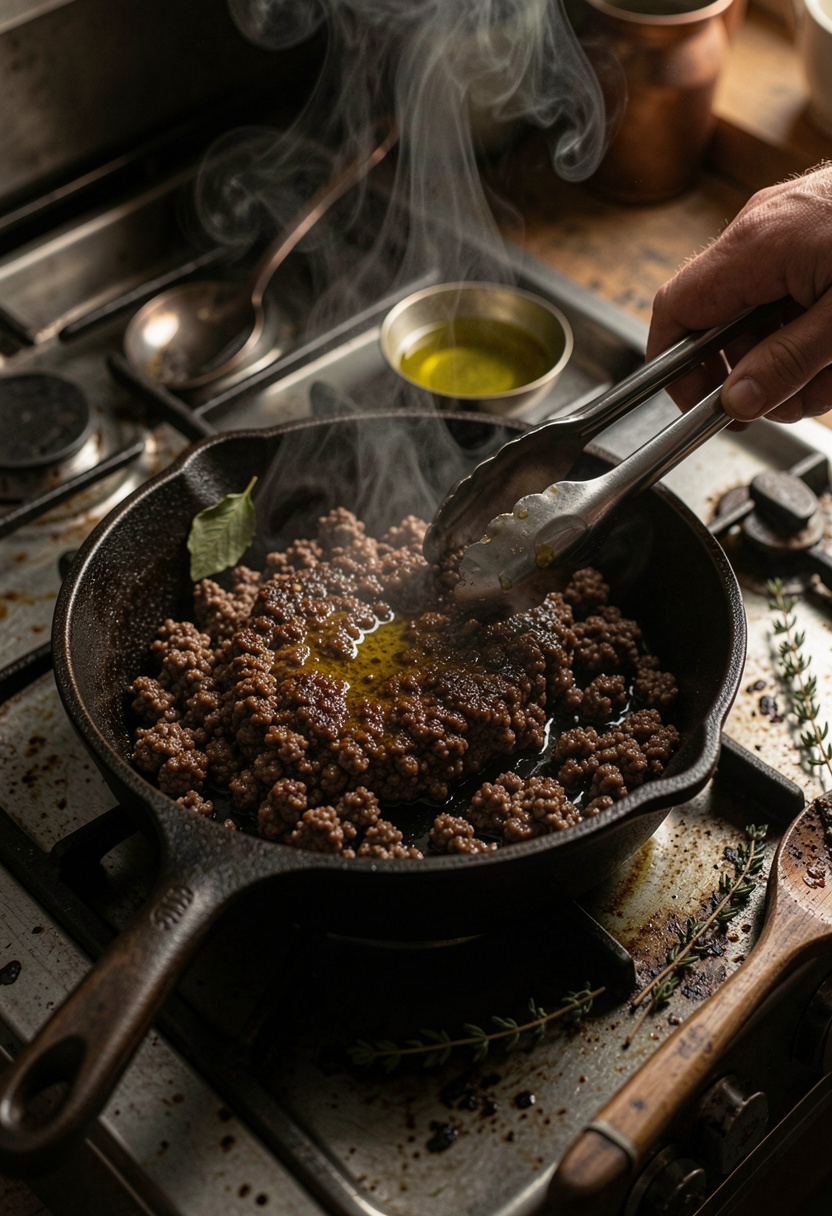
Heat is everything. Use a Lodge cast iron skillet 12 inch on medium-high. Add a tablespoon of Colavita extra virgin olive oil 17 fl oz and let it shimmer before the meat hits the pan.
Brown in batches so the pan stays hot and you get a deeply caramelized crust. That fond is what you will deglaze into flavor. Flip and break the meat minimally so you keep larger crumbles that give the sauce body. Exact cue: hear a steady sizzle and see rich mahogany spots in 4 to 6 min per batch.
Common flop: stirring the meat constantly. Stop moving it and let the crust form. Use tongs or a wooden spoon like this OXO wooden spoon to turn pieces once.
3. Build the Ragù: Soffritto, Pancetta, Wine, Milk
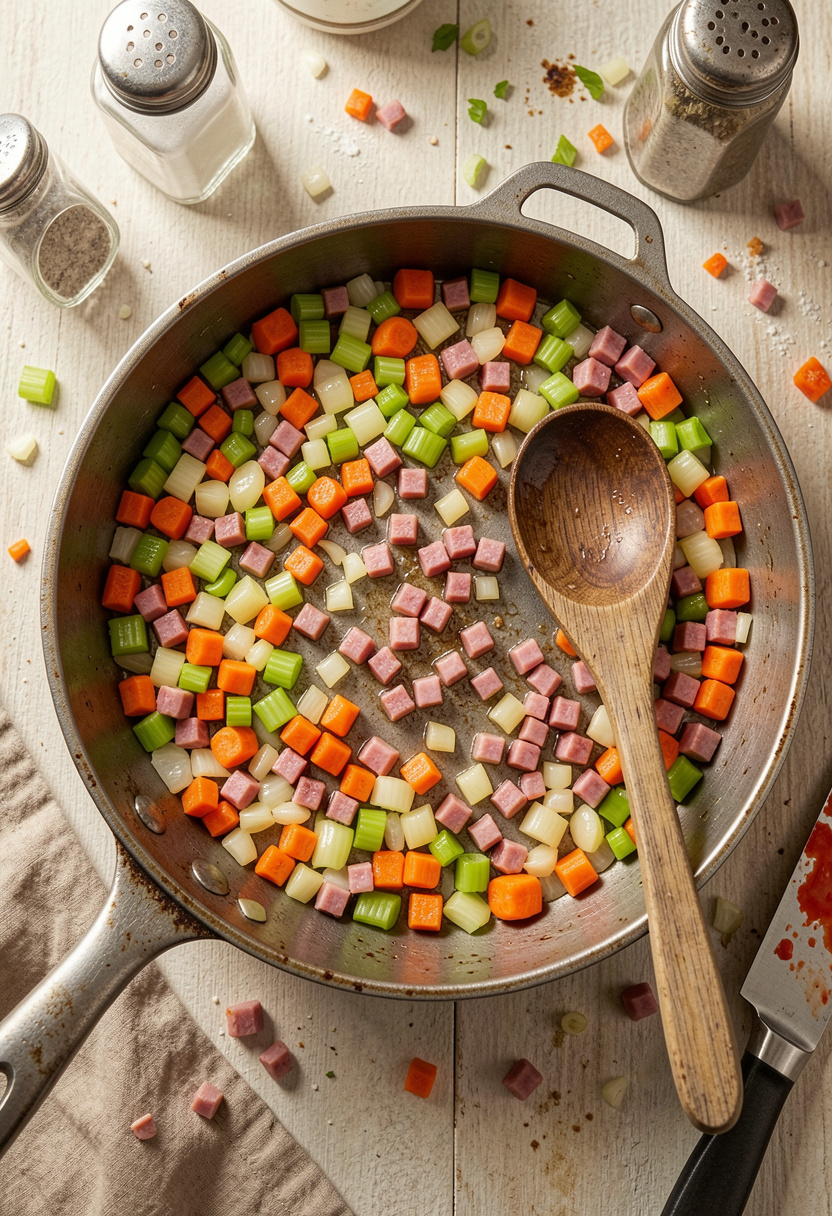
Start your soffritto in the same pan using rendered fat from a few ounces of pancetta 8 oz. Cook carrot, celery, onion until soft and golden, 8 to 10 min. This gentle sweat releases sugars that balance tomato acidity.
Add a splash of dry white wine to deglaze, then stir in a splash of whole milk (about 1/4 cup per pound of meat) to soften the meat and round the acidity. The milk helps with emulsification later. Use a sturdy saucepan like the All-Clad stainless saucepan 3 qt for the simmer stage.
Technique principle: slow protein breakdown and fond integration create depth. Mistake: dumping all the tomatoes in too early and simmering hard. Instead, simmer low at a gentle simmer for 45 min to 1 hr.
4. Simmer, Finish with Pasta Water, and Rest for Gloss
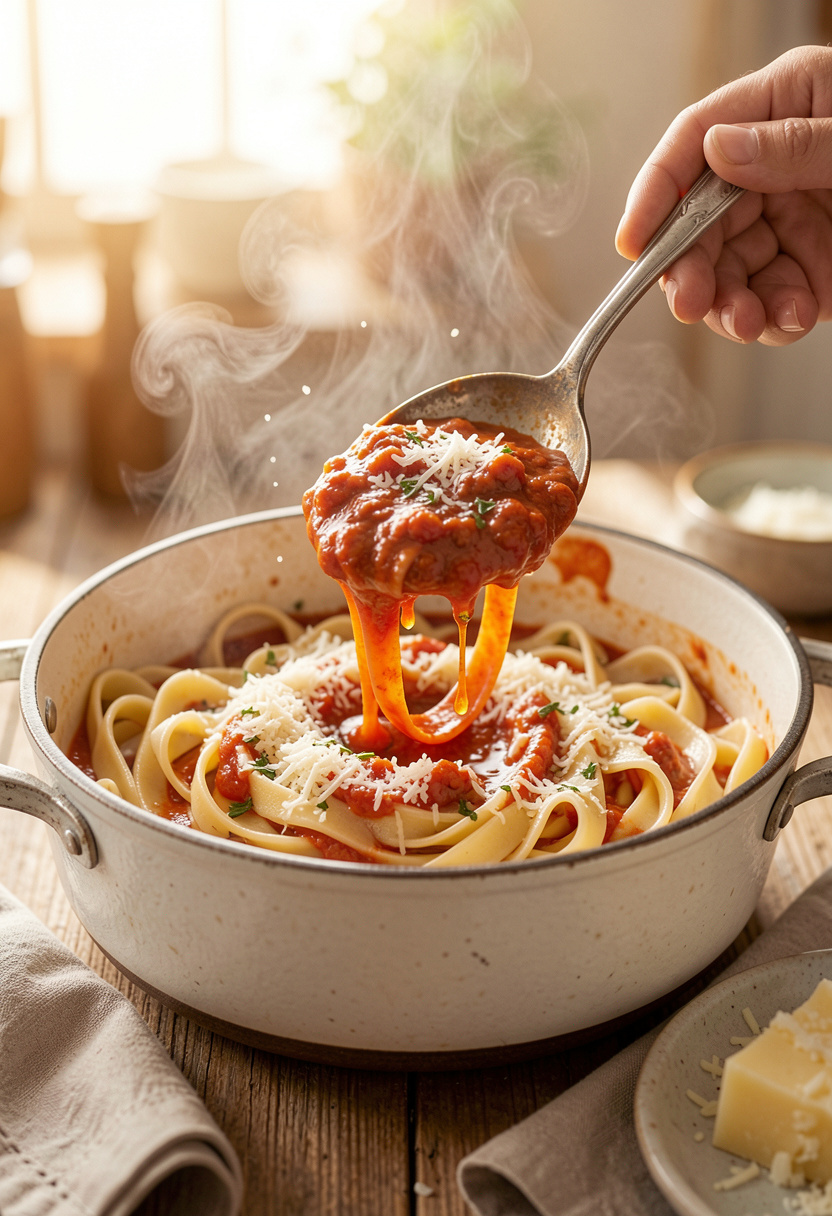
Once your ragù has simmered low and thickened, reserve 1 cup pasta water before draining the pasta. Cook De Cecco tagliatelle 500g to 1 to 2 min shy of package al dente.
Finish by tossing pasta and sauce in a wide pan with 1/4 cup pasta water and a knob of Kerrygold unsalted butter and 2 tbsp grated Parmigiano Reggiano 8 oz wedge. The starch in the water emulsifies with fat to create a glossy cling. Rest the plated pasta 2 minutes; the sauce grabs the noodles as it cools. Ugly truth: adding cold butter straight to a boiling sauce can break the emulsion, so temper it in the warm pan.
Common Cooking Mistakes to Avoid
Mistake: Crowding the pan when browning meat
Why it doesn't work: Pan temperature drops and you steam instead of caramelize.
Do this instead: Brown in batches using a Lodge cast iron skillet 12 inch so each piece gets a crust.
Mistake: Overdoing the tomatoes (too much canned juice)
Why it doesn't work: Sauce becomes runny and acidic.
Do this instead: Use a stronger meat-to-tomato ratio and a concentrated tube like Mutti tomato paste tube to control sweetness.
Mistake: Skipping pasta water at the finish
Why it doesn't work: Sauce will slide off the pasta.
Do this instead: Reserve 1 cup pasta water and add in tablespoons to reach a glossy, clingy finish. A good OXO Good Grips colander makes this easy.
What You'll Need to Make This
Pantry Staples
Diamond Crystal kosher salt 3 lb box around $5 to $8
Colavita extra virgin olive oil 17 fl oz around $8 to $15
Specialty Ingredients
San Marzano whole peeled tomatoes 28 oz around $3 to $10
Pancetta 8 oz around $6 to $12
Tools That Earn Their Counter Space
Lodge cast iron skillet 12 inch approx $25 to $40
OXO digital kitchen scale around $15 to $30
Cookbooks Worth the Shelf
Salt Fat Acid Heat by Samin Nosrat (price range $18 to $28)
The Food Lab by J. Kenji Lopez-Alt (price range $18 to $30)
Budget Swaps
Barilla tagliatelle 16 oz around $2 to $5 (Aldi has a solid store brand for less)
Shopping Guide for This Recipe
Pick whole peeled tomatoes for texture: Look for San Marzano or a plum variety; San Marzano whole peeled tomatoes 28 oz around $3 to $10.
Substitution hack: Out of beef? Use browned mushrooms and lentils to mimic mouthfeel; try a bag of dried lentils (cheap pantry swap) Lentils red 1 lb around $2 to $4.
2025 trend pick: Plant-forward ragùs are on the rise; mix 50/50 ground beef and sautéed porcini or mushrooms for depth (porcini powder link) Dried porcini mushrooms 2 oz around $8 to $15.
Splurge vs save: Splurge on a real Parmigiano Reggiano wedge; save on pasta with a good store brand. Parmigiano Reggiano 8 oz wedge around $12 to $20.
Conclusion
Start with the sear and the reserve pasta water; those two moves decide whether your ragù clings or slides. The final trick is emulsifying fat into starch off heat so the sauce becomes glossy and sticky.
If you try only one phase first, practice finishing with pasta water and butter. Which will you try first: a meat-first ragù or a plant-forward stretch?