
My kitchen used to smell like rubber every time I cooked pork. I was following old advice and ending up with chalky, overcooked chops.
Here I’ll show how to cook boneless pork chops so they come out tender, juicy, and with a brown crust in about 30 to 45 min total. It is beginner-friendly with one small timing trick that makes all the difference.
Pork here leans Italian-American weeknight: savory butter, thyme, a bright vinegar finish. Expect about 30 min hands-on time, a quick dry brine, a rip-roaring sear, and a five-minute rest.
I’ve noticed more cooks dry-brining before the sear lately. It works. The USDA recommends cooking pork to 145°F and letting it rest for three minutes, which balances safety and juiciness (USDA guidance). Cook’s Illustrated testing also supports salt-before-sear for better crust and moisture.
1. The Pre-Sear Setup: Dry Brine and Temper
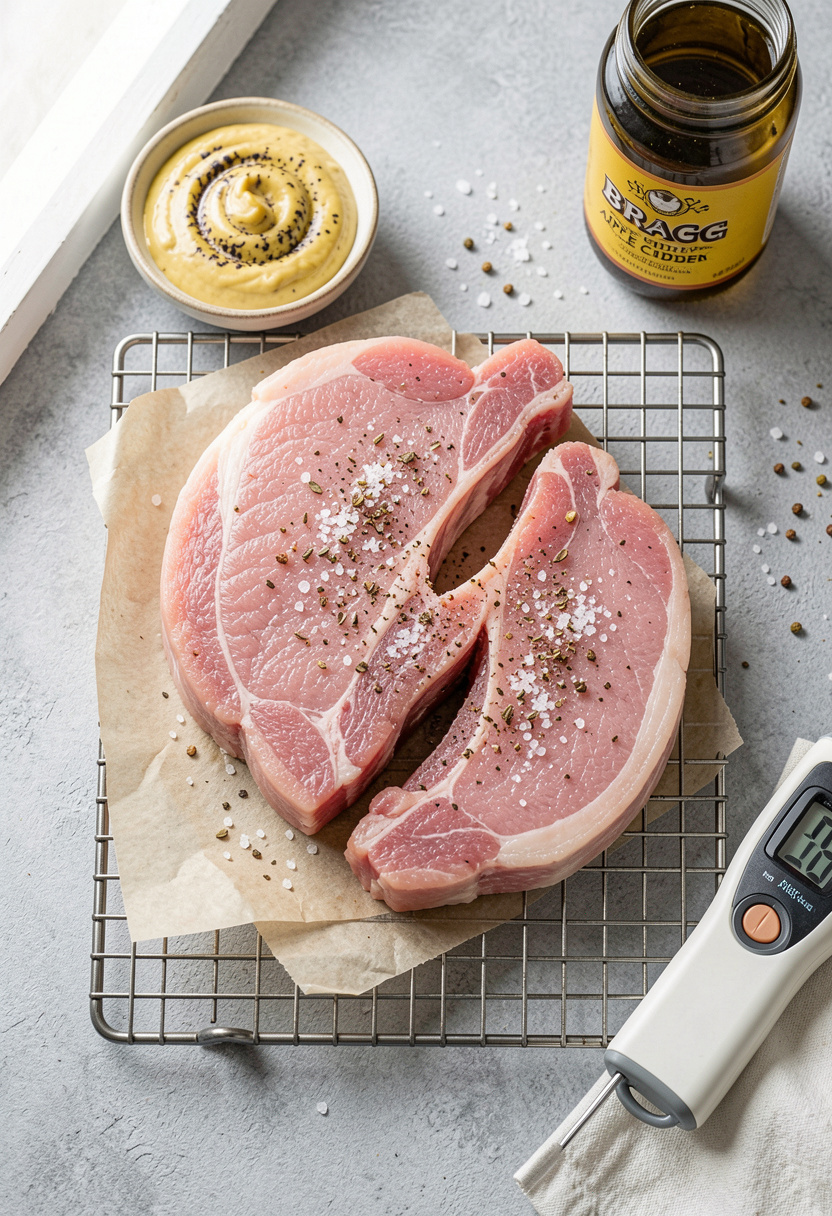
Salt early. Pat chops dry, then season both sides with about 3/4 tsp Diamond Crystal kosher salt per chop and a turn of black pepper. Put them on a wire rack in the fridge uncovered for 30 min to 4 hr. The surface dries and the salt starts to work its magic.
Why it goes first: salt restructures proteins and improves moisture retention and crust formation during the sear. That is the cooking principle at play: controlled protein denaturation for juiciness.
Tools to use: a Wilton cooling rack set and a ThermoPro instant-read thermometer help you track temps. Mistake to avoid: salting only at the end. That gives surface seasoning without improving texture.
Result: a drier surface that browns quickly and a chop that stays juicier when you slice it.
2. The Sear in Smoking-Hot Cast Iron
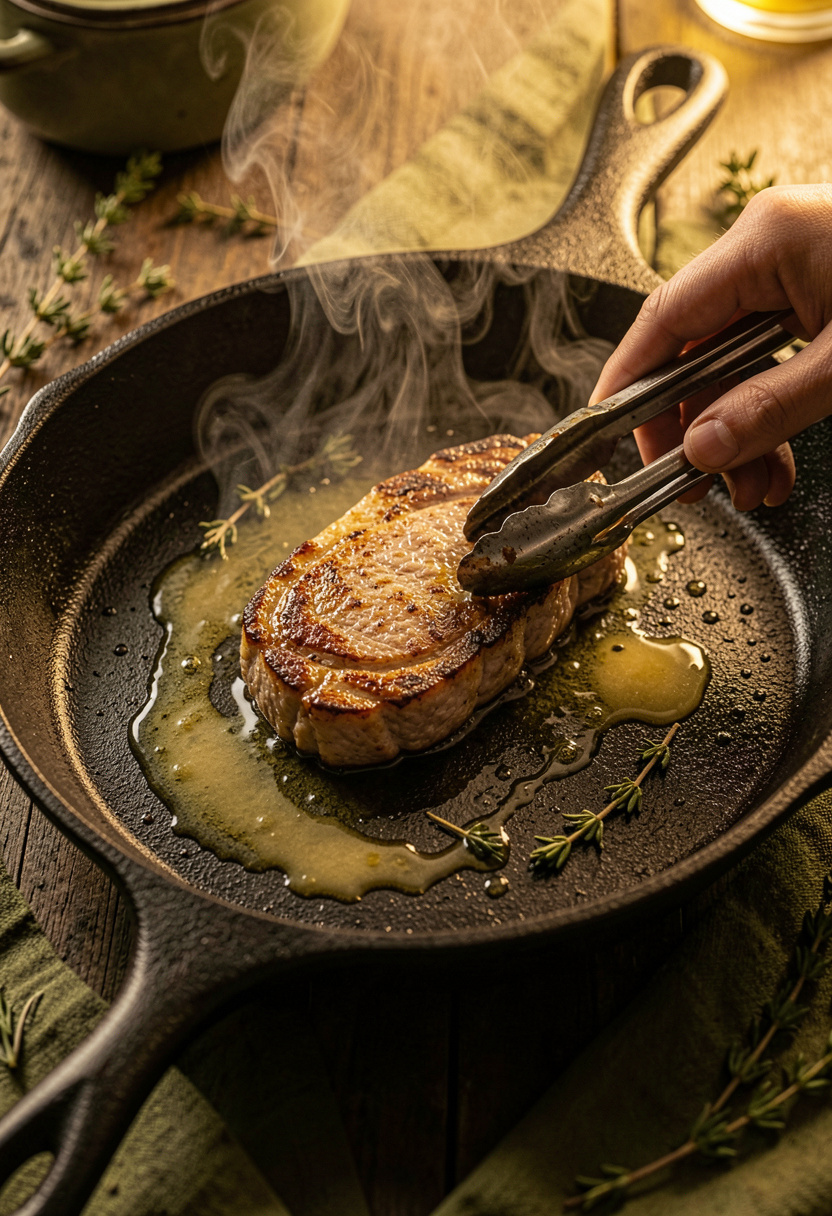
Heat is the answer. Preheat a Lodge cast iron skillet 12 inch on medium-high until a drop of water sizzles away. Add a tablespoon of Colavita extra virgin olive oil. Lay chops away from you and do not move them for 2 to 3 min.
The goal is Maillard reaction. That brown crust locks flavor and creates fond for a pan sauce. Flip when a deep golden crust forms and second side needs 1 to 2 min more.
Doneness cues: start checking internal temp at 125°F; target pull temp depends on thickness. For 1-inch chops, pull at 135°F to 140°F and rest to reach 145°F. Mistake: crowding the pan. That cools the surface and you steam instead of sear. Cook in batches if necessary.
3. The Butter Baste With Garlic and Thyme
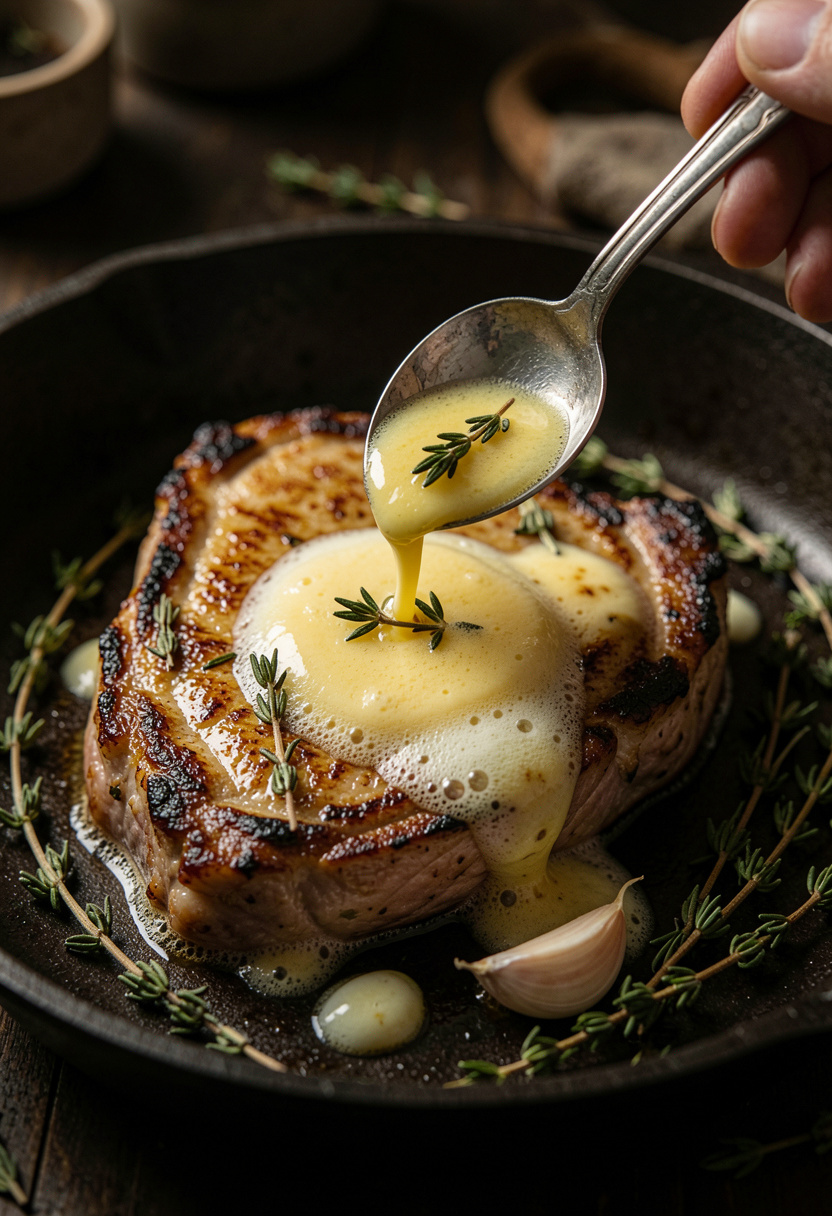
Here the flavor builds. Lower heat to medium. Add 1 tbsp unsalted Plugrá butter and two smashed garlic cloves and a couple sprigs of thyme. Tilt the pan and spoon the butter over the chops continuously for 30 to 60 seconds.
This bastes fat through the surface and carries herb and garlic flavor inward. The principle: fat as a flavor carrier and gentle conduction for final internal temp. A Silicone basting brush helps for delicate work.
Mistake: pouring butter in from the start and letting it burn. Add at medium heat, baste briefly, then remove pan from direct heat if butter starts to darken too fast. That glossy spooned finish is what people notice first.
4. The Rest That Makes Or Breaks The Bite
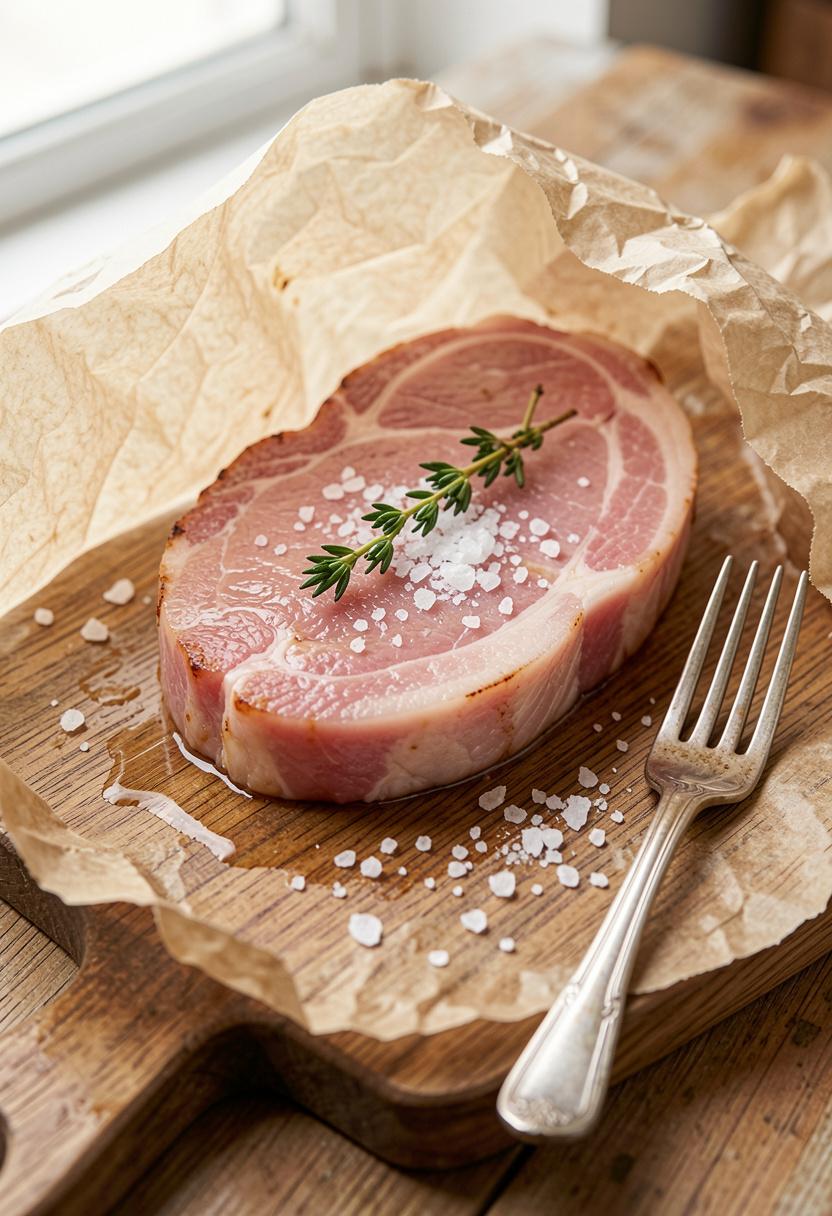
Resting is non-negotiable. After pulling from heat, transfer chops to a warm plate and rest 5 to 7 min loosely tented. Internal temp will rise a few degrees and juices redistribute.
Principle: carryover cooking and protein fibers relaxing. Slice too soon and all the juice hits the cutting board.
Finish with a quick acid hit: a splash of Bragg organic raw apple cider vinegar or a teaspoon of Maille Dijon mustard swirled into the pan fond to make a glossy pan sauce. Spoon over chops and finish with Maldon sea salt flakes for crunch.
Mistake: skipping rest and serving immediately. The texture changes. Rest and your chops will be tender, not dry.
Common Cooking Mistakes to Avoid
Mistake: Overcooking to a high, safe number (160°F) because you’re nervous
Why it doesn't work: Pork becomes dry and fibrous above recommended temps. USDA says 145°F with a three-minute rest.
Do this instead: Pull at 135°F to 140°F for medium and rest to reach 145°F using a ThermoPro instant-read thermometer.
Mistake: Crowding the pan when searing multiple chops
Why it doesn't work: Pan temp drops and you steam not sear.
Do this instead: Cook in batches with an empty inch between pieces using a Lodge cast iron skillet 12 inch.
Mistake: Relying on sugary marinades alone for tenderness
Why it doesn't work: Surface sugars burn before internal tenderizing happens.
Do this instead: Dry-brine first and add a short honey-mustard glaze at the end with Maille Dijon mustard 8.45 oz.
What You'll Need to Make This
Pantry Staples
Diamond Crystal kosher salt 3 lb box around $5 to $8
Colavita extra virgin olive oil 16.9 oz approx $8 to $14
Specialty Ingredients
Maille Dijon mustard 8.45 oz around $4 to $7
Lao Gan Ma chili crisp 7.4 oz approx $6 to $10
Tools That Earn Their Counter Space
Lodge cast iron skillet 12 inch approx $25 to $40
ThermoPro instant-read thermometer around $15 to $30
OXO stainless steel tongs 12 inch approx $10 to $18
Cookbooks Worth the Shelf
The Food Lab by J. Kenji López-Alt (price range $18 to $28)
Salt Fat Acid Heat by Samin Nosrat (price range $14 to $25)
Budget Swaps
Morton kosher salt 3 lb box around $4 to $7 (Aldi or your local store often has cheaper kosher salt)
Shopping Guide for This Recipe
Seasoning Choice: Pick Diamond Crystal for consistent results; Morton kosher salt 3 lb box is a fine budget swap around $4 to $7.
Chop Thickness: Buy 1-inch boneless chops for best sear-to-center ratio; ask your butcher to trim to 1 inch.
When to buy herbs: Fresh thyme is best year-round; grab it same day at the farmers market or grocery.
Splurge vs Save: Splurge on a reliable Thermapen MK4 if you cook meat often; save on a sheet pan like Nordic Ware half sheet pan approx $10 to $20.
Conclusion
Start with the dry-brine phase; it gives you the biggest payoff for the least work. The real trick is controlled heat and a short rest—those two moves turn ordinary chops into something you want to cook again.
If you buy one tool, make it a good instant-read thermometer like the ThermoPro instant-read thermometer.
Will you try the dry-brine first or jump straight to the butter baste?