



I ruined my first bento cake by overfilling a 6 inch pan and ending up with a leaning, sticky loaf. How to make bento cakes taught me to scale, chill, and accept small is precise.
You will learn how to bake, layer, crumb-coat, and finish a perfect 6 inch bento cake in about 90 min active time. Beginner friendly, with one tricky move: controlling crumb and frosting ratio.
This is a recipe for weeknight bakers who like tidy, personal cakes. I tested this three times and trimmed the common mistakes out of the method.
Google Trends shows search interest for "bento cake" surged and stayed elevated after 2021 (Google Trends). Pinterest also flagged small-format desserts as a 2025 microtrend (Pinterest Predicts 2025). That context matters when you want a cake that looks deliberate, not DIY sloppy.
1. The Batter That Fits a 6 Inch Pan

Start by scaling your usual 8-inch recipe to a true 6 inch pan. The trick is volume math: a 6 inch pan holds about half the batter of an 8 inch. I use a 6 inch pan to bake two thin layers rather than one tall cake.
Measure weight when you can. A small change in flour makes a dense cake. I reach for King Arthur unbleached all-purpose flour 5 lb and Domino granulated sugar 4 lb for consistent results.
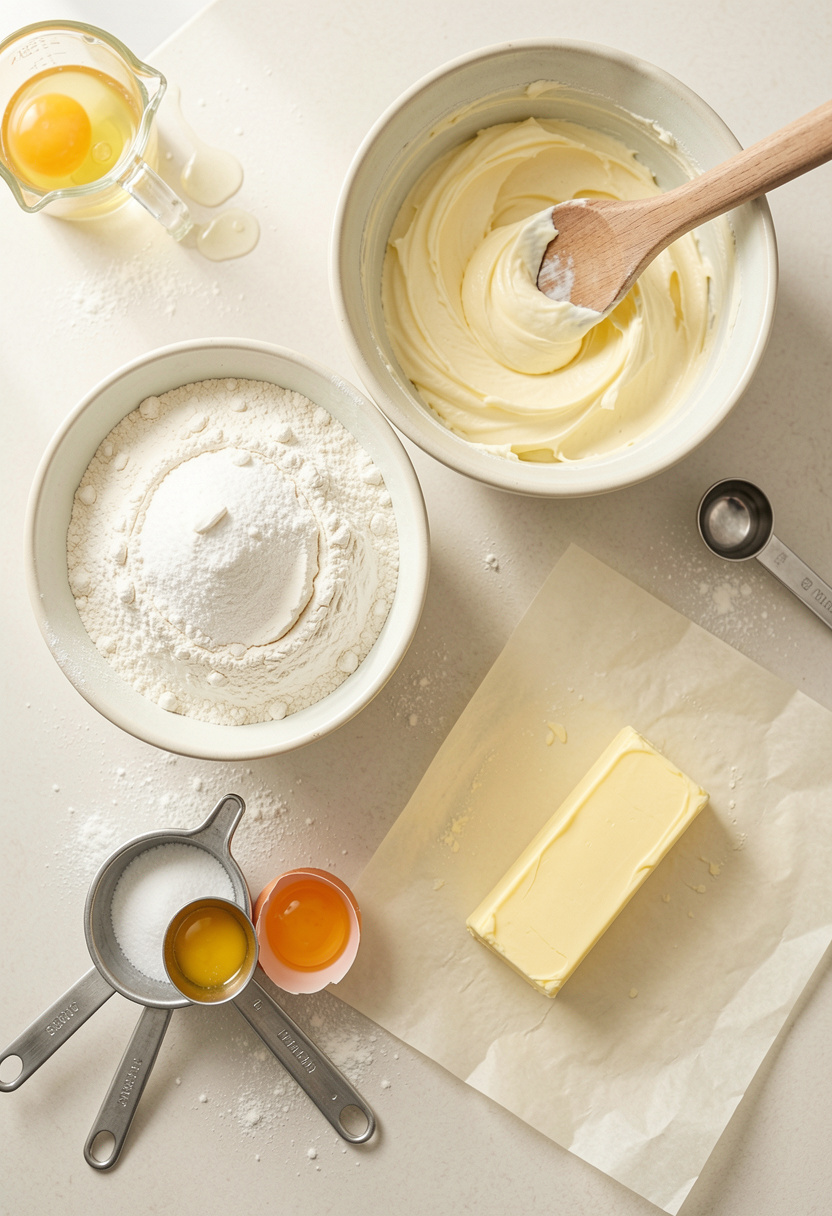
Why this order: creaming traps air that gives lift, but overmixing develops gluten. Mix butter and sugar 2 to 3 min until pale, add eggs one at a time, fold in dry ingredients with milk. Bake at 325°F for 18 to 22 min until a toothpick has a few moist crumbs.
Common mistake: plopping full-size batter into a 6 inch pan. It overflows or bakes gummy. Do this instead: halve an 8 inch recipe by weight, or use a second Wilton 6 inch round cake pan and aim for 3/4 inch layers.
2. The Bake That Gives Even Layers and Color
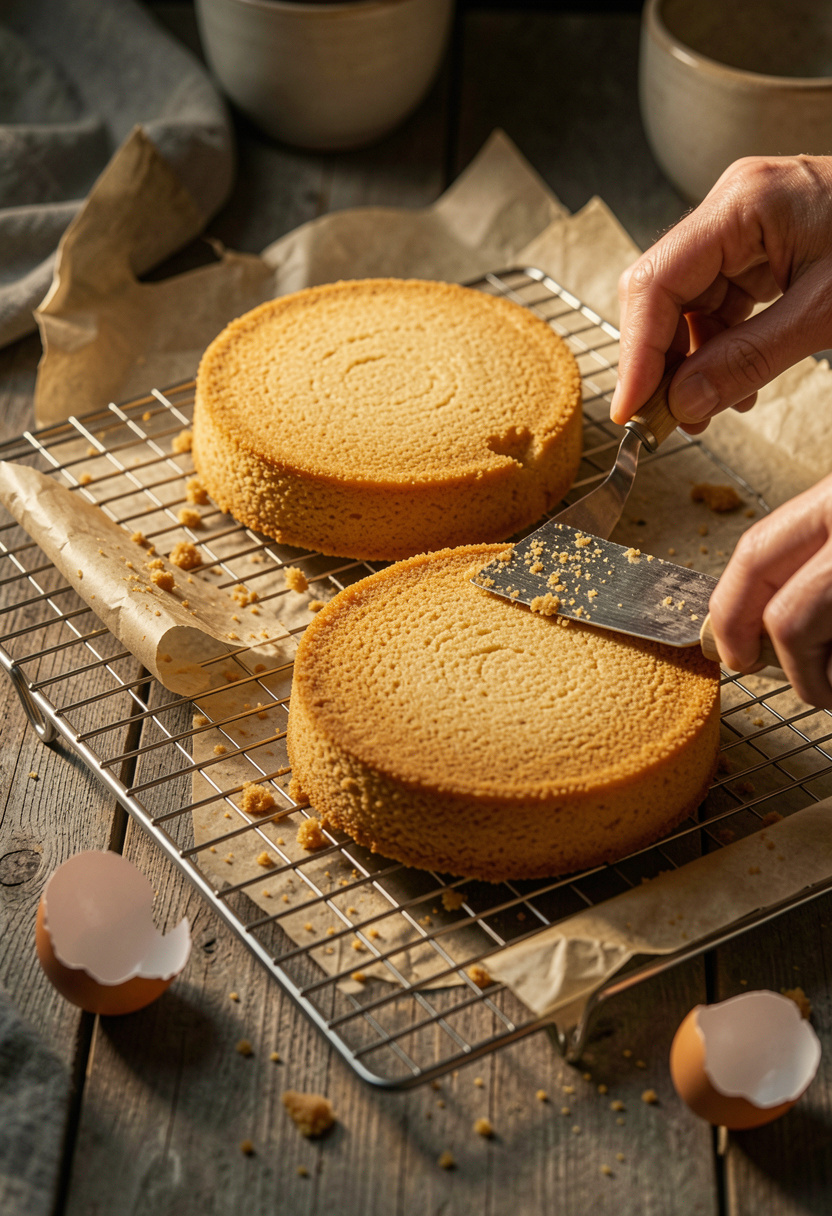

Heat control matters more with small pans. The batter hits the oven hot and browns fast. I lower the oven 15°F from larger-pan recipes to get even color.
If your oven runs hot, use an oven thermometer. I keep a Thermapen instant read thermometer for crumb checks. Bake the 6 inch layers at 325°F for 18 to 22 min. Listen for a soft spring when you press the center.
For texture contrast, bake until internal temp reads 200°F for a tender crumb, or 205°F if you like a slightly drier, sliceable texture. Rotate pans after 12 min if your oven has hotspots.
Mistake people make: opening the oven repeatedly to check. That drops temp and causes dome collapse. Use the window and a quick peek at 15 min. If the edge is golden and a toothpick shows moist crumbs, pull the layer and cool on a rack.
3. The Soak, Layer, and Crumb Coat That Keeps It Neat
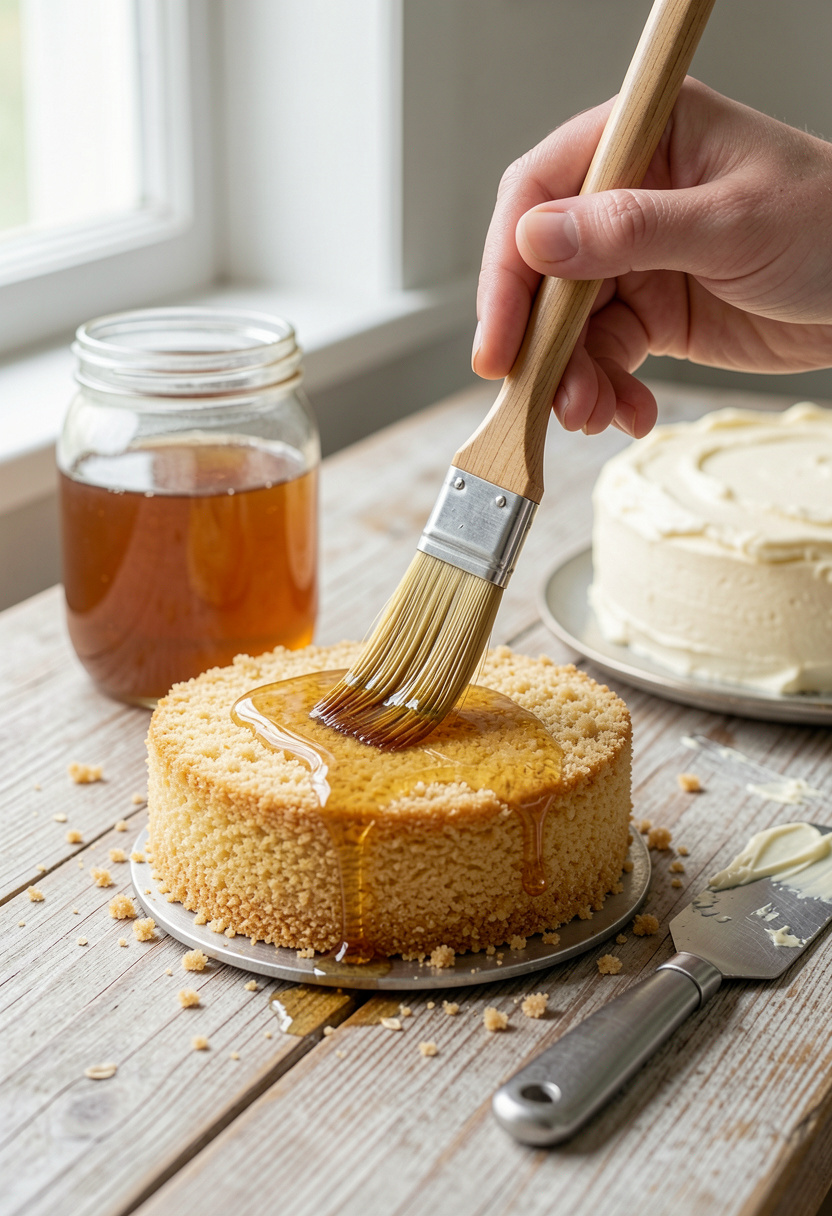

A tiny cake shows flaws. Simple syrup keeps layers moist without sogginess. I use a 1:1 sugar to water syrup, warmed until sugar dissolves, cooled. Brush 1 tbsp per layer for a subtle lift.
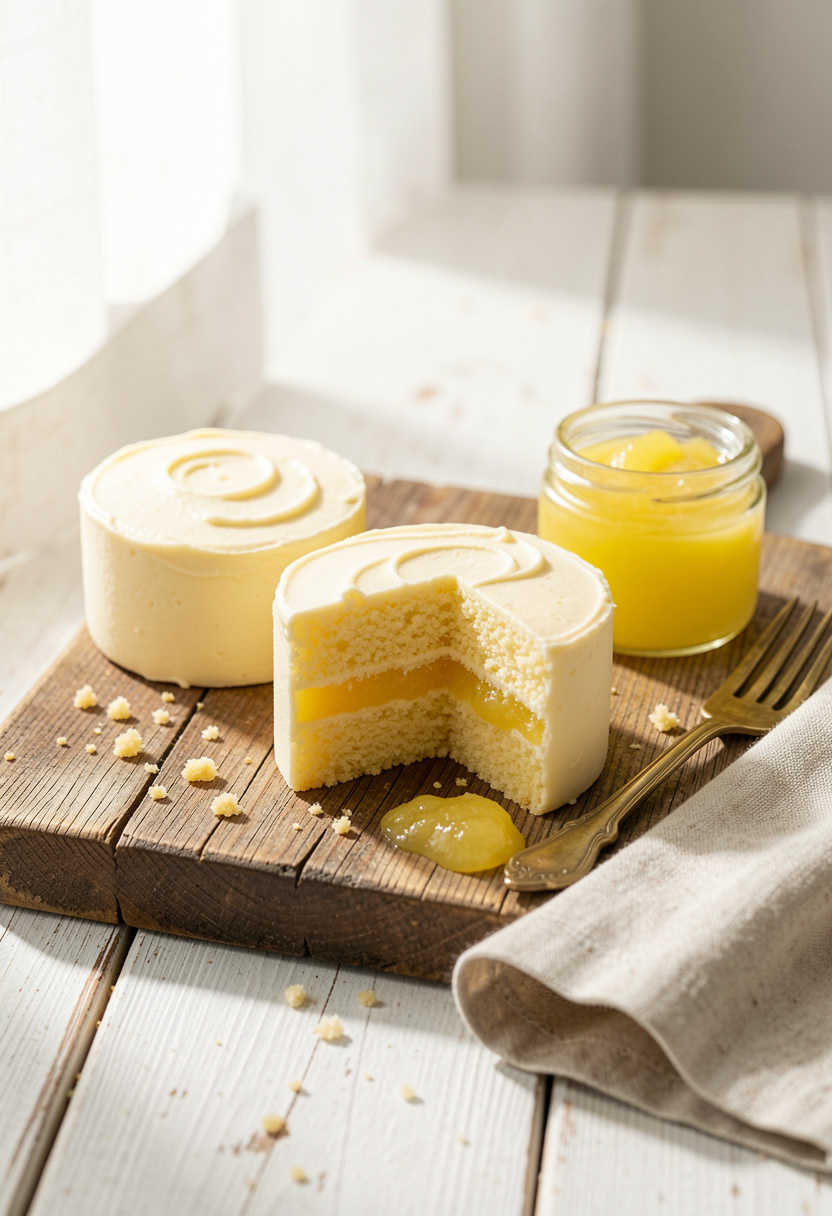
Build layers with 2 tbsp of filling between them. For berry cakes I like Bonne Maman lemon curd 9.5 oz or jam for acid. For richer cakes, a thin smear of pastry cream or Crème fraiche 8 oz thinned with a spoonful of syrup keeps structure.
Crumb-coat with a thin layer of buttercream and chill 15 to 20 min at 40°F to set. The principle is mechanical: chilled crumbs adhere to the coat, not the final finish. I use an Ateco 8 inch offset spatula and a light hand.
Mistake: skipping the chill. You will drag crumbs into your finish. Do this instead: crumb-coat, chill, then apply final coat.
4. The Finish That Makes Small Cakes Look Intentional
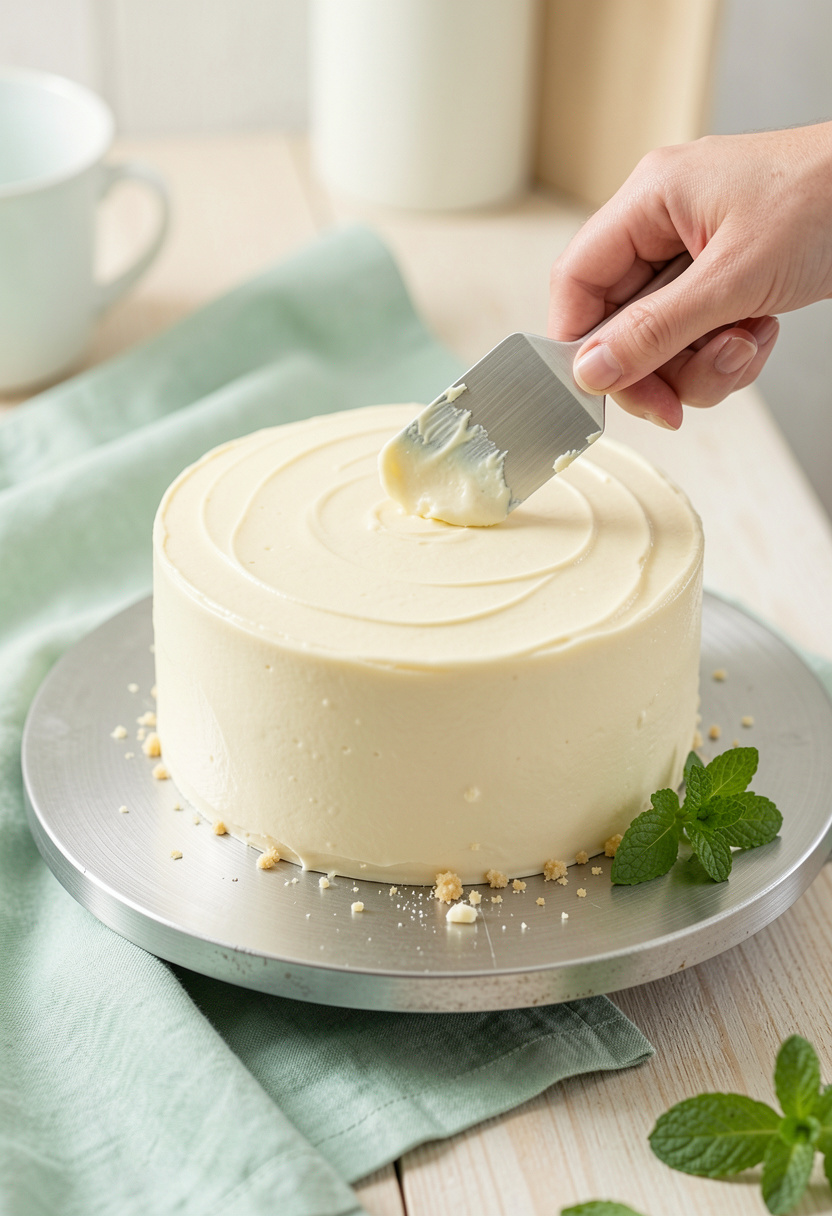

The finish is where proportion wins. For a 6 inch cake aim for a 1:1 ratio of frosting to cake by volume. Too much frosting buries the layers; too little reads unfinished.
Use a small Wilton small turntable and a small OXO bench scraper stainless steel. Apply a thin final coat, chill 10 min, then smooth with the scraper while spinning slowly.
For clean edges, warm the offset spatula with hot water, dry it, and run it along the rim. Add texture with a few scallops using a piping tip, like the Wilton piping tip set 6 piece.
Ugly truth: over-piping tiny rosettes looks cluttered. Minimal is more. Finish with a single fresh berry or a dusting of flaky salt, such as Maldon flaky sea salt 4.5 oz, for contrast.
Common Cooking Mistakes to Avoid
Mistake: Overfilling a 6 inch pan
Why it doesn't work: Batter overflows or bakes unevenly.
Do this instead: Halve by weight or use a second Nordic Ware 6 inch cake pan.
Mistake: Skipping the chill after crumb coat
Why it doesn't work: Crumbs mix into the final finish.
Do this instead: Chill 15 to 20 min in the fridge using a Wilton small turntable.
Mistake: Using too much filling between layers
Why it doesn't work: Cake slides or becomes top-heavy.
Do this instead: Use 1 to 2 tbsp filling per layer and a thin coat of buttercream with an Ateco 8 inch offset spatula.
What You'll Need to Make This
Pantry Staples
King Arthur unbleached all-purpose flour 5 lb around $8 to $12
Domino granulated sugar 4 lb around $4 to $7
Kerrygold unsalted butter 16 oz around $4 to $6
Specialty Ingredients
Nielsen-Massey vanilla extract 2 oz around $8 to $12
Bonne Maman lemon curd 9.5 oz around $6 to $9
Tools That Earn Their Counter Space
Wilton 6 inch round cake pan approx $10 to $18
Ateco 8 inch offset spatula approx $8 to $15
OXO bench scraper stainless steel approx $8 to $12
Cookbooks Worth the Shelf
Salt Fat Acid Heat by Samin Nosrat (price range $18 to $28)
The Food Lab by J. Kenji Lopez-Alt (price range $20 to $35)
Budget Swaps
Pyrex mixing bowl set 3 piece is a great swap for expensive mixing sets, around $15 to $25
Shopping Guide for This Recipe
Trim For Texture: Buy butter labeled unsalted and weigh it. Kerrygold unsalted butter 16 oz around $4 to $6.
Substitution Hack: Out of eggs? Use 3/4 cup plain Greek yogurt for one egg in a small cake; keep bake time similar. Crème fraiche 8 oz around $3 to $5.
2025 Trend Note: Small-format desserts are seeing flavor-forward finishes. Try a single floral accent like almond oil, e.g. La Tourangelle almond oil 8.4 oz approx $10 to $18.
Splurge vs Save: Splurge on a quality vanilla like Nielsen-Massey vanilla extract 2 oz for aroma. Save on a basic Parchment paper roll 60 sq ft around $6 to $10.

Conclusion
Start with the batter scale. Getting that right removes most problems and makes every later step calmer.
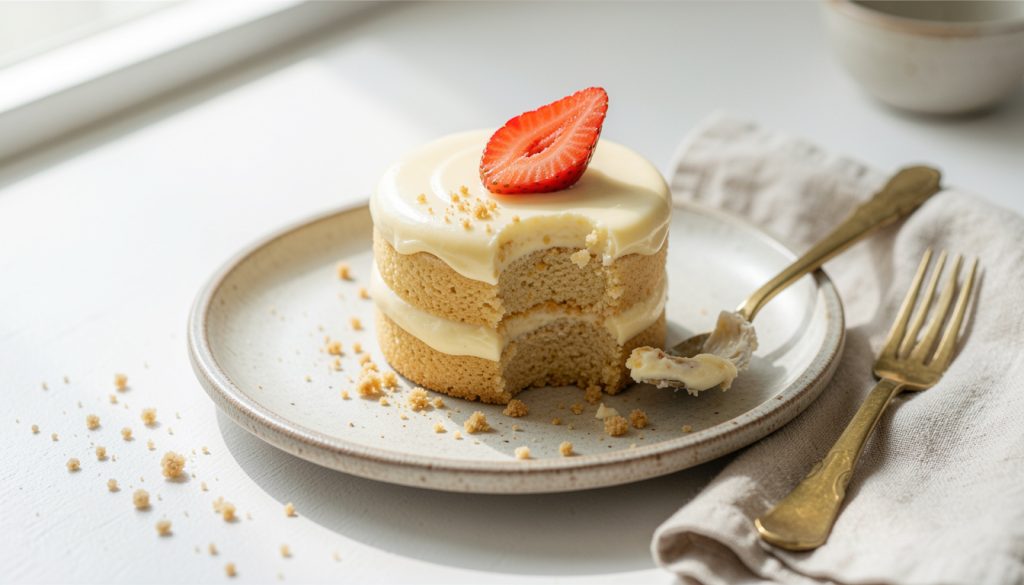
Finish with a simple flourish, like one halved strawberry or a light sprinkle of Maldon flaky sea salt 4.5 oz for contrast.
Will you try the dry layer soak first or jump straight to a minimal buttercream finish?