



I ruined an entire white kitchen towel the first time I roasted beets. Red hands, red counter, a napkin that looked modern art in the worst way.
If you want to know how to cook beets for salad without staining every towel you own, I’ll walk you through the exact tricks I use now. Expect a 45 to 75 min process, beginner-friendly, and a few small pieces of kit that actually earn their shelf space.
Beets are earthy, sweet, and a little grassy. I lean Mediterranean with lemon, olive oil, and tangy goat cheese, but this works across cuisines.
This takes about 45 min hands-on, 1 hr total for roasted beets, and is perfect for weeknight salads or a Sunday bowl. Lately I’ve noticed more cooks embracing root-to-stem ideas and quick fermentation for brightness. Try the quick-pickle phase if you want that tangy crunch.
1. The No-Stain Prep: Gloves, Bags, and Trim
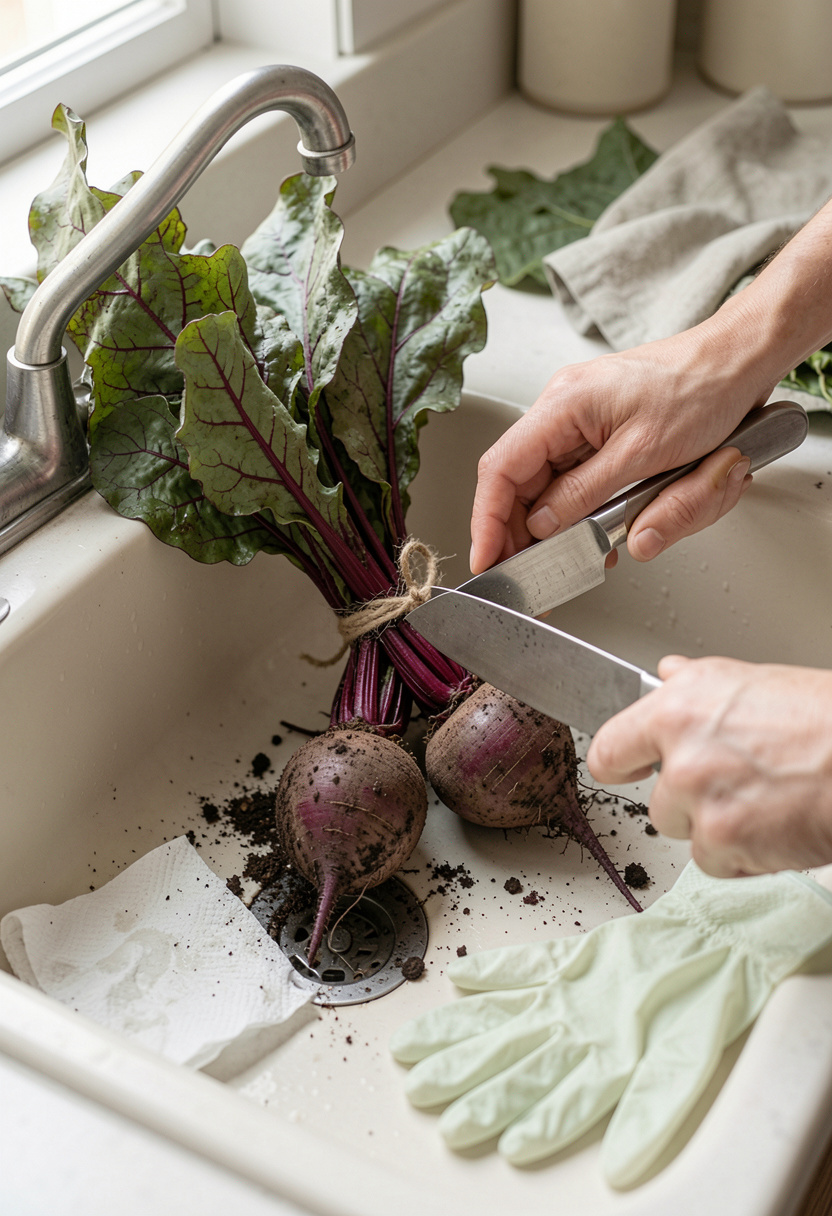

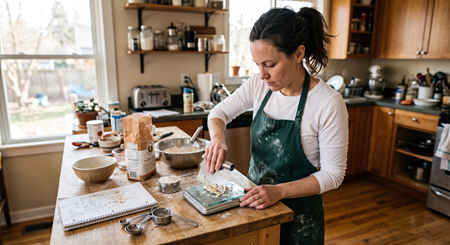
Start by protecting yourself and surfaces. Stain prevention is 80 percent about containment.
Put on disposable nitrile gloves around $8 to $15 and trim beet greens with a sharp Victorinox paring knife 3 inch approx $10 to $18. Work over a lined sheet pan or parchment so juice stays put.
Why this order? You want to handle the beets dry, cut the tops, then scrub. Salt or a quick dry-brine on the skin helps pull moisture out and concentrates sweetness. I dry-salt small beets for 10 to 15 min.
Common mistake: peeling raw beets on the counter. That sends stains everywhere. Peel after cooking or do the trimming over a bag so you can knot it closed and toss the peels.
2. Roast for Deep Flavor Without the Mess
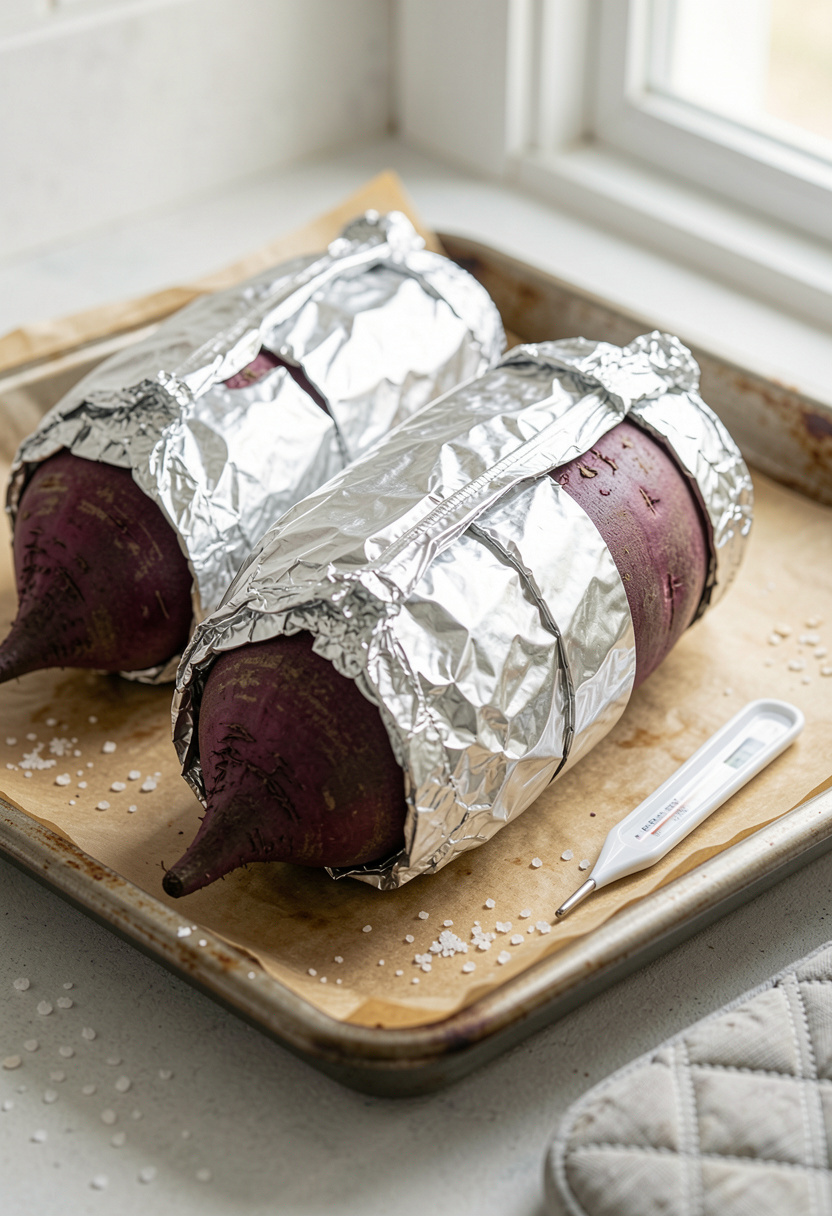

Roasting concentrates sugars and gives a silky texture. I roast whole beets in a parchment-and-foil pouch to trap juices and prevent splatter.
Preheat to 400°F. Toss medium beets in a little olive oil and salt, seal in foil, and roast 45 to 60 min depending on size. Bigger beets take longer. Check doneness with a fork; it should slide in without resistance.
Tools I reach for: a heavy rimmed sheet pan around $12 to $25 and heavy-duty aluminum foil approx $8 to $14. The cooking principle is caramelization and steam finishing inside the packet.
Mistake: boiling instead of roasting. Boiling leaches sweet compounds and gives a dull color. Roast for flavor and keep the juices contained so nothing stains the oven.
3. Shock, Peel, and Keep the Color Bright
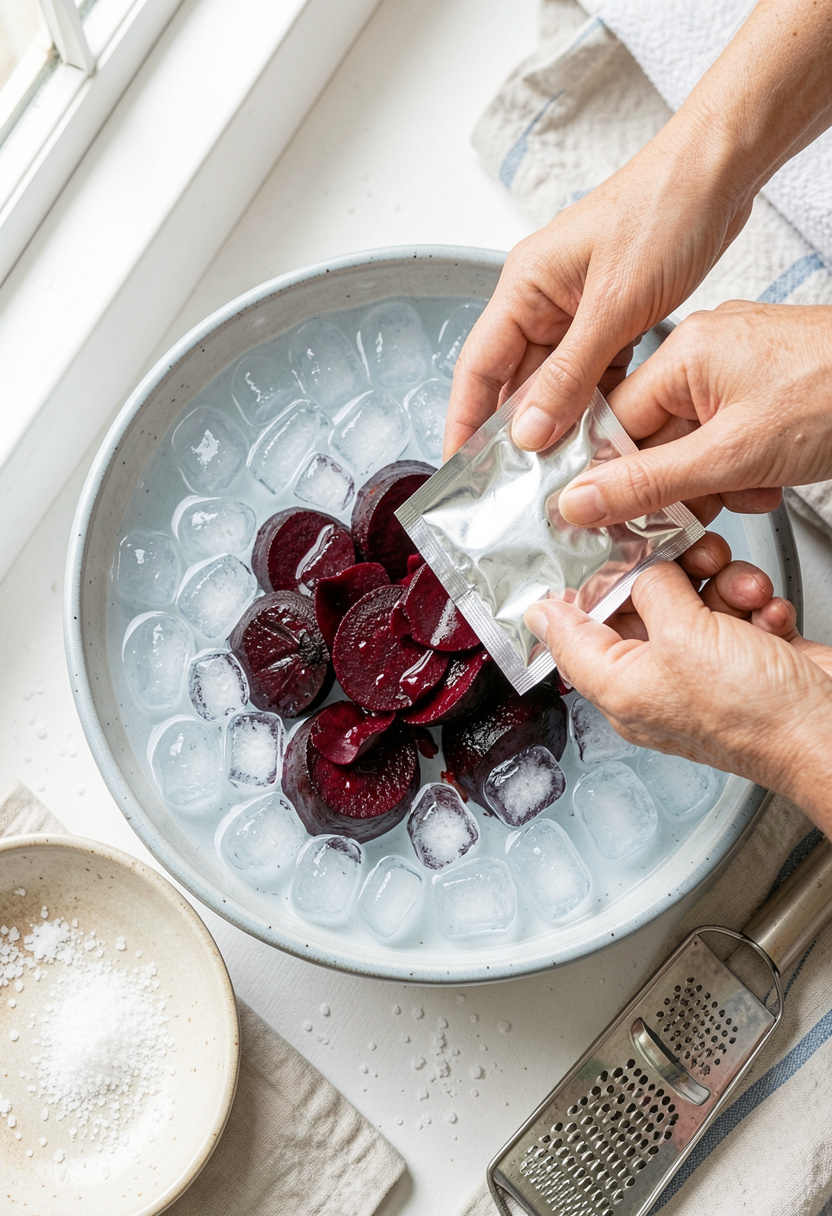

The trick to no-mess peeling is shock then slip. After roasting, drop beets into an ice bath for 3 to 5 min.
The cold stops carryover cooking and loosens the skin. Rub the skins off with your gloved hand or a paper towel. Peeling after cooking avoids red hands, stained towels, and lost juices.
For a color-preserving trick, toss hot-wet beets with a splash of acid. I use 1 tbsp lemon juice per two beets to brighten flavor and keep color vivid. Acid also stabilizes pigments through pH effects.
Mistake: scrubbing under a running tap with a white towel in the sink. Use a dedicated rag or disposable towels and pull skins straight into the trash or compost bag.
4. Thin Slices, Bright Vinaigrette, No Bleed Toss
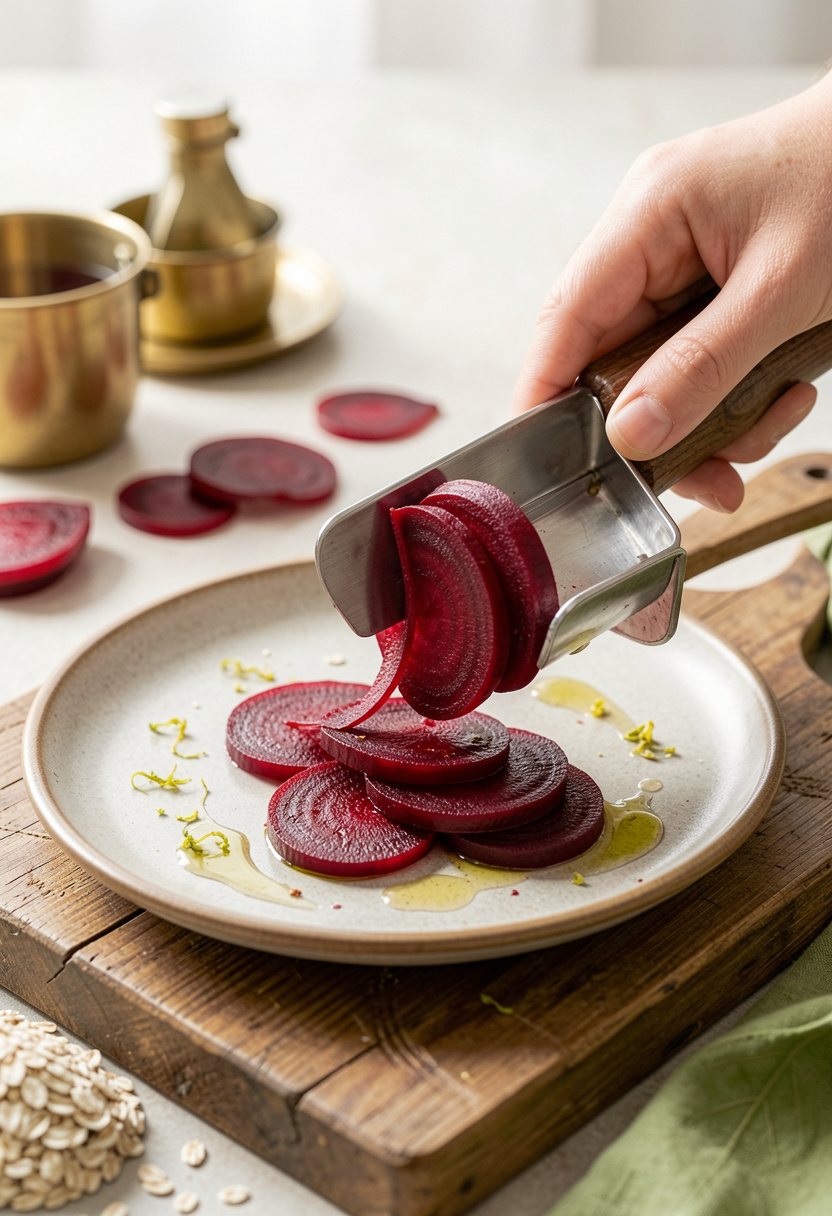

Slice beets thin for salad so they mingle with greens and dressing.
A Benriner mandoline approx $25 to $40 or a sharp chef’s knife works. Aim for 1.5 to 2 mm slices. Thin slices mean less exposed surface to bleed when you dress them.
Make a 3:1 ratio vinaigrette with good extra virgin olive oil $10 to $18, 1 part acid like sherry vinegar or lemon, a teaspoon Dijon for emulsification, and a pinch of flaky Maldon sea salt approx $8 to $14. Whisk or shake in a jar.
Big mistake: dressing beets too early. Let slices cool to room temp first. Dress them lightly just before serving. Too much acid or oil too soon pulls pigment into the dressing and stains leaves and linens.
5. Quick Pickle or Sous-Vide For Texture Control
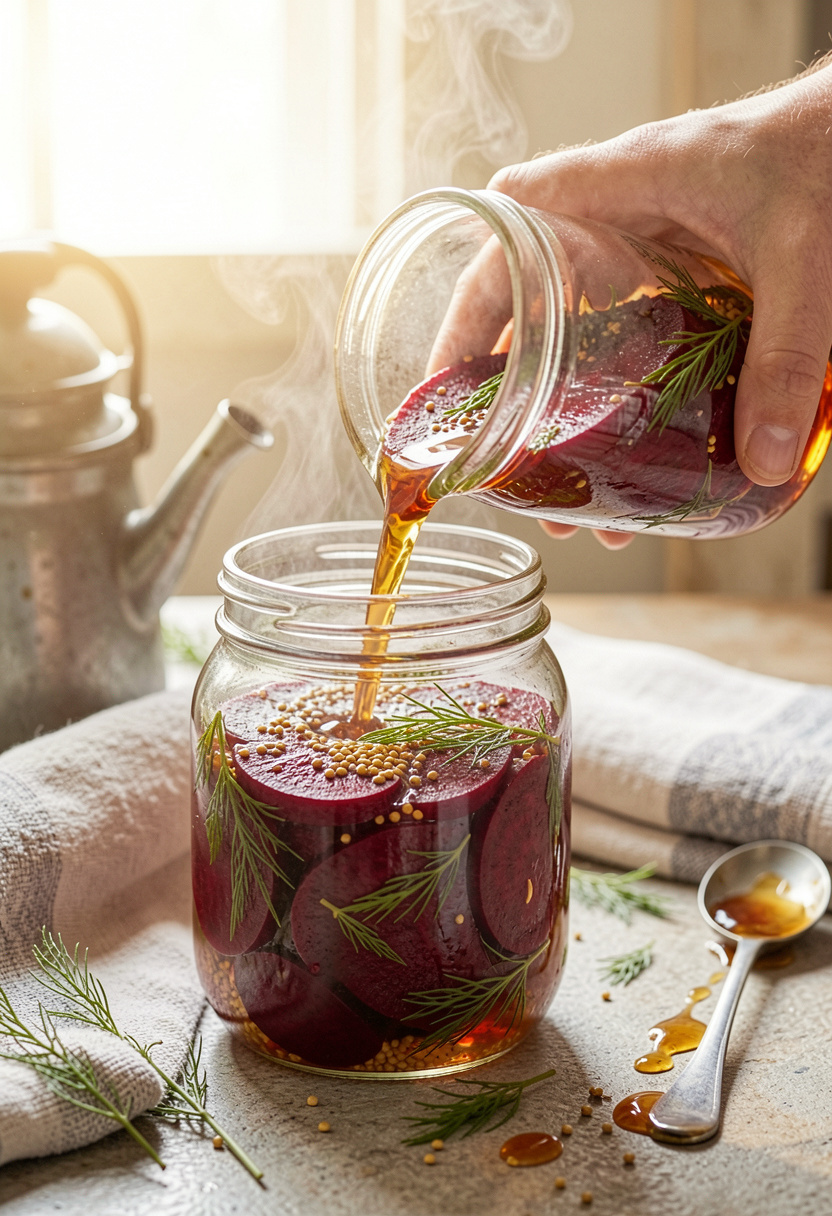

If you want snap and tang, quick-pickle beets for 1 to 24 hr. For a basic brine, heat 1 cup vinegar, 1 cup water, 1/3 cup sugar, 1 tbsp salt, a teaspoon mustard seed. Pour hot over warm beet slices and cool to room temp.
For uniform texture without stains, I also sous-vide whole beets at 185°F for 1 to 1.5 hr in sealed bags. Seal in a sous-vide bag approx $10 to $20 and use a sous-vide precision cooker around $100 to $200.
Pickled beets are great ahead of time and keep color in the jar. Sous-vide gives a velvet texture and sealed juices, which means less cleanup and less chance of stains during handling.
Common Kitchen Mistakes to Avoid
Mistake: Peeling raw beets with a vegetable peeler
Why it doesn't work: Skin rubs and juices spray, staining hands and counters.
Do this instead: Trim greens, roast whole, then slip skins off. Try a disposable glove box around $8 to $15.
Mistake: Boiling beets for salad
Why it doesn't work: Flavor and color leach into the water, leaving bland flesh.
Do this instead: Roast in a foil pouch on a rimmed sheet pan $12 to $25 for concentrated sweetness.
Mistake: Tossing beets with vinaigrette while hot
Why it doesn't work: Hot beets break down leaves and cause bleed-through to dressings.
Do this instead: Cool beets to room temp, then dress gently with a glass mason jar $8 to $15 to shake the vinaigrette.
Mistake: Using a dull knife or mandoline without a guard
Why it doesn't work: Uneven slices and safety risk.
Do this instead: Use a Benriner mandoline approx $25 to $40 with the hand guard.
What You'll Need to Make This
Pantry Staples
Colavita extra virgin olive oil 16.9 oz $10 to $18
Maldon sea salt flaky 4.4 oz $8 to $14
Specialty Ingredients
Goat cheese log 4 oz $4 to $8
Sherry vinegar 12.7 oz $8 to $15
Tools That Earn Their Counter Space
Benriner mandoline approx $25 to $40
Rimmed sheet pan half sheet $12 to $25
Nitrile gloves disposable box $8 to $15
Cookbooks Worth the Shelf
Salt Fat Acid Heat by Samin Nosrat (price range $18 to $28)
Budget Swaps
Muir Glen canned beets 15 oz $2 to $4 when you need a quick swap instead of fresh beets
Shopping Guide for This Recipe
Pick firm beets: Choose beets the size of a golf ball to tennis ball for even roasting; avoid soft spots. Try farmers market or Whole Foods seasonal roots $2 to $4 per lb.
Substitution hack: No goat cheese? Use ricotta salata or feta for a similar tang and crumble. See feta cheese 8 oz $5 to $10.
2025 trend pick: Quick ferments and jarred roots are trending; a fermentation kit $25 to $40 makes pickling effortless.
Splurge vs save: Splurge on a good extra virgin olive oil and save on jarred beets; quality oil matters for finishing. See Colavita extra virgin olive oil $10 to $18.

Conclusion
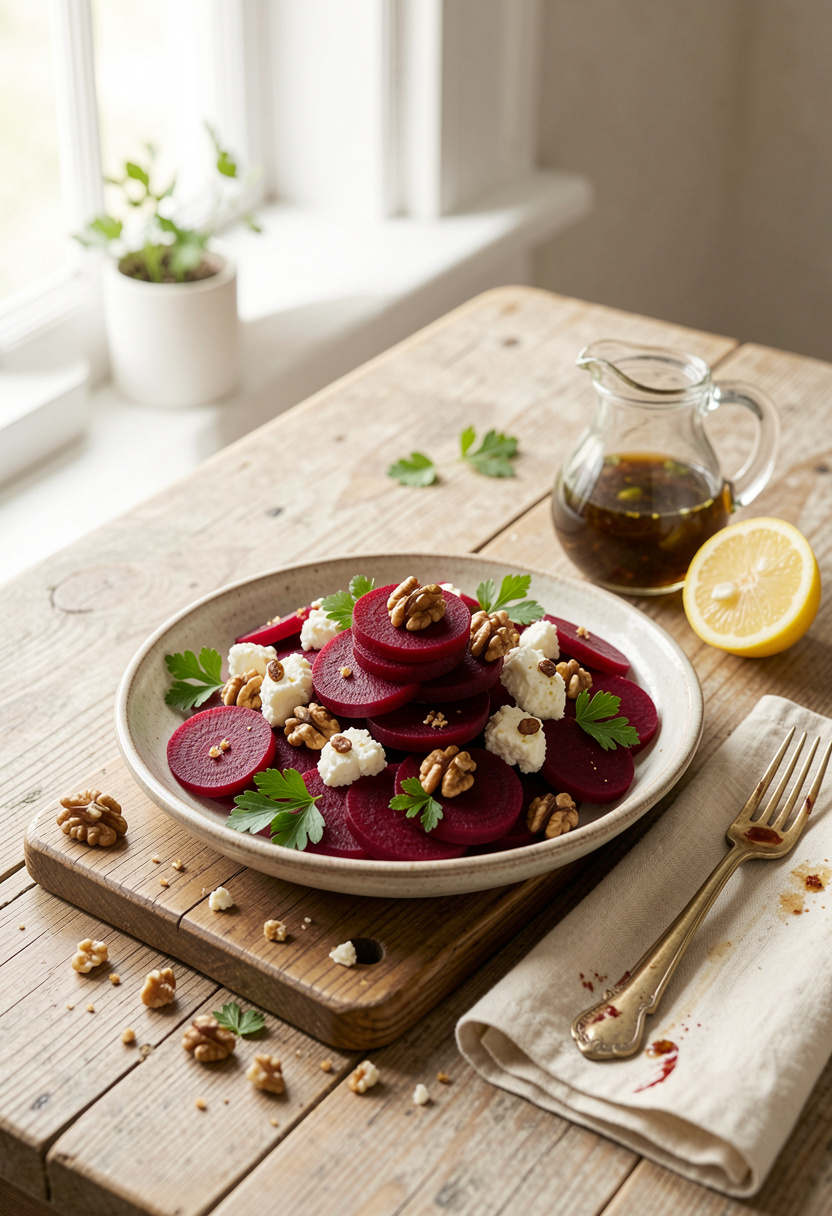
Start with the no-stain prep and roasting pouch. Those two phases cut the chaos and yield the sweetest beets with the least cleanup.
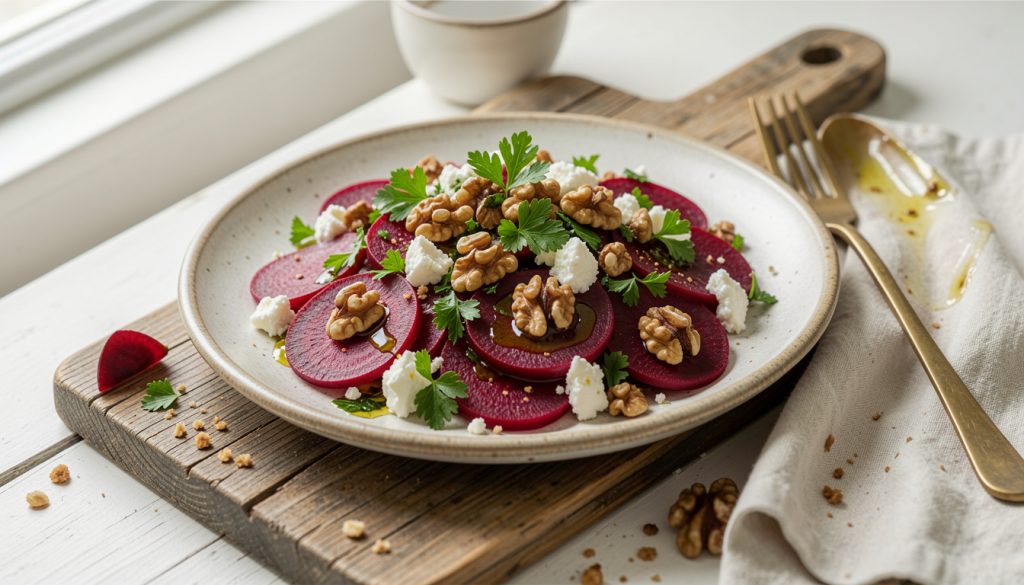
One finishing tip I always use: reserve a tablespoon of dressing to dot on the plate after plating for gloss and shine.
Will you try the roasted-and-shocked method first or jump to quick pickles for crunch?